Egyptian Koshari
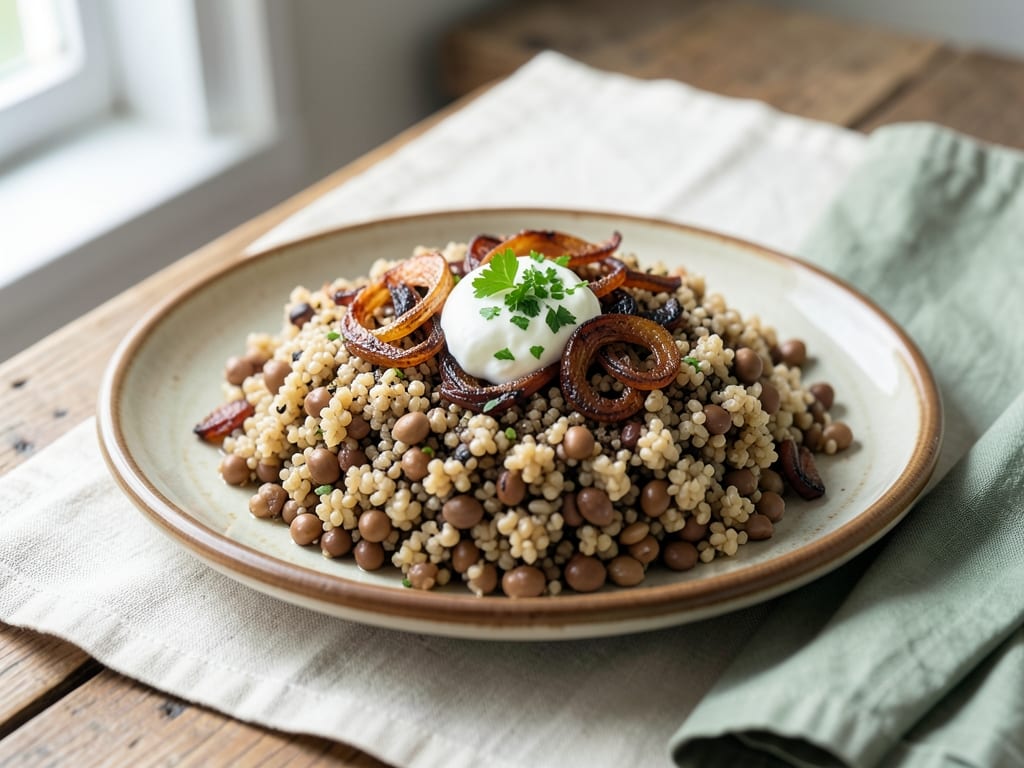
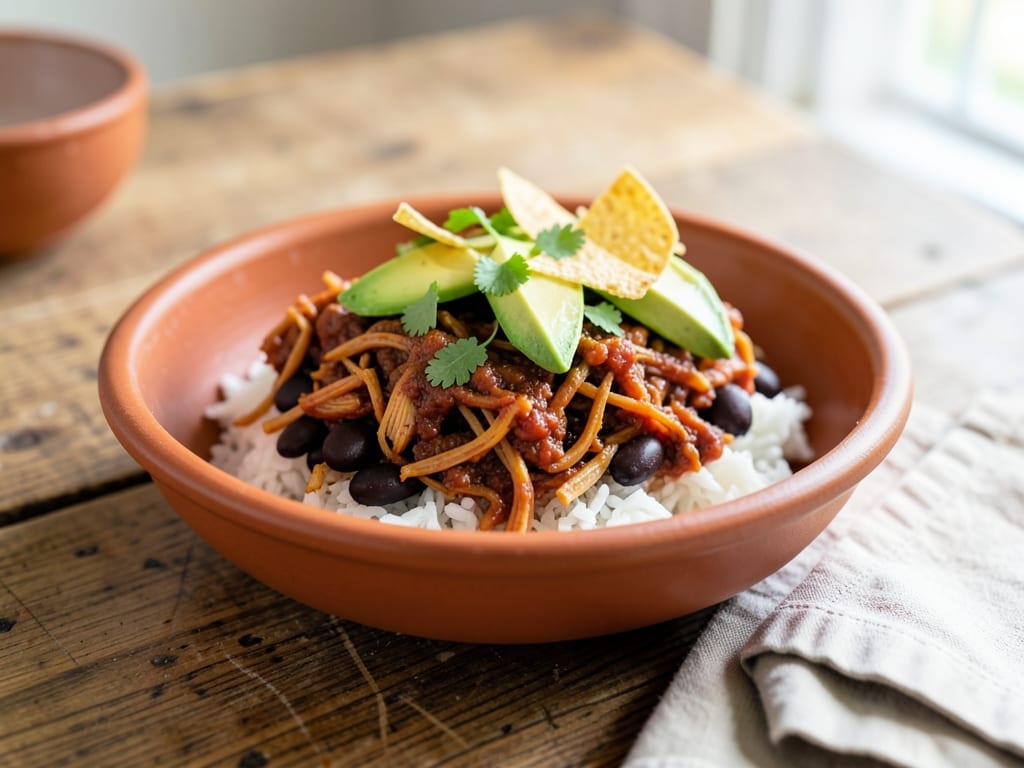
Egyptian Koshari is a celebrated street food that brings together layers of fluffy rice, tender cooked lentils, al dente pasta, and creamy chickpeas, all topped with a warm, spiced tomato sauce and shatteringly crispy fried onions. This vegetarian one-plate meal is affordable, satisfying, and endlessly customizable. Each component cooks independently, then combines into something far greater than the sum of its parts—a dish that's equally at home as a quick weeknight dinner or casual entertaining.
- Prep
- 15 min
- Cook
- 25 min
- Wait
- 5 min
- Total
- 45 min
- Makes
- 4 servings (approximately 2 cups per person)
Steps
Before you start
- Read through all instructions to understand the timeline and parallel cooking
- Gather all ingredients and measure them out
- Have 4 medium saucepans ready, plus 1 large pot for pasta and 1 medium skillet for frying
- Ensure you have enough neutral oil on hand for frying the onions (about 1/2 cup)
Measure and prepare all ingredients
- Measure out the rice, lentils, and pasta into separate bowls.
- Mince the garlic cloves.
- Peel and slice the 2 large yellow onions into thin rings about 1/8 inch (3 mm) thick.
- Drain and rinse the canned chickpeas in a colander under cold running water.
- Gather all spices, salt, black pepper, and oils near your cooking area.
- Set everything beside the stove so it's ready when needed.
+ Show details− Hide details
Ready when: All ingredients are measured and ready to cook
Tip: Having everything prepped and ready (called mise en place) prevents overcooking while you scramble to prep ingredients
Cook the lentils
- Fill a medium saucepan with 2 cups water and bring to a boil over high heat.
- Add the lentils and a small pinch of salt.
- Once boiling, reduce heat to medium-low and cover partially with a lid.
- Simmer for 20-25 minutes, stirring occasionally, until the lentils are tender but still hold their shape and haven't begun to break down.
- Test by pressing a lentil between your tongue and the roof of your mouth; it should break easily but not turn to mush.
- The lentils should look intact, not like a stew.
+ Show details− Hide details
Ready when: Lentils are soft enough to break with a fork but still hold their individual shape
Tip: Don't stir constantly or the lentils will break apart. If your lentils are over 2 years old, add salt only in the last 5 minutes, as older dried lentils need more time to soften
Cook the rice
- In a second medium saucepan, bring 2 cups water to a boil over high heat with a small pinch of salt.
- Add the rice, stir once, and return to a boil.
- Reduce heat to low, cover completely with a lid, and simmer without lifting the lid for 15-18 minutes.
- The rice is done when all the water is absorbed and the grains are fluffy and tender to bite—some grains may look slightly translucent at the center, which is fine.
+ Show details− Hide details
Ready when: All water is absorbed, rice grains are fluffy and separate, no liquid remains in the pan
Tip: Don't lift the lid while cooking; it releases steam and results in unevenly cooked rice with some hard grains
Make the spiced tomato sauce
- While the lentils and rice cook, heat 2 tablespoons of olive oil in a medium saucepan over medium heat.
- Add the minced garlic and sauté for about 30 seconds, stirring constantly, until fragrant but not brown (burnt garlic turns bitter).
- Immediately add the ground cumin, ground coriander, and paprika, stirring constantly for 20-30 seconds to lightly toast the spices and deepen their flavor.
- Pour in the 2 cups of tomato sauce and stir well until smooth.
- Season with a small pinch of salt, a light grinding of black pepper, and the cayenne pepper if using.
- Reduce heat to medium-low and simmer, stirring occasionally, for 10-12 minutes.
- The sauce should thicken slightly and the raw spice flavors should mellow into a warm, savory taste.
+ Show details− Hide details
Ready when: Sauce is noticeably thickened, fragrant, with no raw spice taste; color is deep red-brown
Tip: Toast the spices for only 20-30 seconds—if they smell burnt or acrid, discard and start over with fresh oil and spices
Cook the pasta until al dente
- When the lentils and rice are about 10 minutes from done (around 15-20 minutes after you started them), fill a large pot with 6 cups of water and a generous pinch of salt, and bring to a rolling boil over high heat.
- Add the pasta and cook according to package directions, usually 8-12 minutes depending on the shape (elbow macaroni typically takes 9 minutes).
- The pasta should be tender but still have a slight firmness when you bite it—this is called al dente.
- Drain the pasta in a colander and set aside.
- Don't rinse it, as the starch helps the pasta hold together and absorb flavor.
+ Show details− Hide details
Ready when: Pasta is tender but still has a slight firmness (resistance) when chewed, not soft or mushy
Tip: Slightly undercooked pasta is better than overcooked, as it will soften more when mixed with the warm sauce
Make crispy fried onions
- Pour about 1/2 cup of neutral oil (vegetable or canola) into a medium skillet and heat over medium-high heat for about 2 minutes until shimmering and very hot—you'll see heat waves rising from the oil.
- Working in batches so you don't overcrowd the pan, add the sliced onions and fry, stirring frequently with a slotted spoon or chopsticks, until they turn deep golden brown and crispy—about 8-10 minutes total for both batches.
- The onions should smell sweet and caramelized, never acrid or burnt.
- Transfer the finished onions to a paper towel-lined plate and immediately sprinkle lightly with salt while still hot.
- As they cool, they'll crisp up even more and become shatteringly crispy.
+ Show details− Hide details
Ready when: Onions are deep golden brown and crispy throughout; they make a crackling sound and smell caramelized (sweet), not burnt
Tip: This step can go wrong fastest—onions go from golden to burnt in seconds. Keep stirring constantly and watch carefully, especially in the final 2 minutes
Heat the chickpeas
- In a small saucepan, heat 1 tablespoon of olive oil over medium heat.
- Add the drained chickpeas, a very small pinch of ground cumin (just 1/8 teaspoon or less), and a light seasoning of salt and black pepper.
- Stir gently with a wooden spoon for 3-4 minutes until the chickpeas are heated through and coated with oil and spices.
- You can lightly mash a few chickpeas with the back of the spoon if you like a slightly creamier texture, or leave them all whole for a firmer bite.
- Transfer to a small bowl and set aside.
- (Alternatively, if you've finished frying the onions, you can use a corner of that skillet to warm the chickpeas in the residual oil.)
+ Show details− Hide details
Ready when: Chickpeas are heated through, fragrant, and coated with oil and spices
Tip: Don't mash all of them; leaving most whole provides nice texture contrast and structure in the final dish
Assemble and serve
- Work quickly so all components stay warm.
- Divide the cooked rice among 4 serving bowls or plates, creating an even base in each bowl.
- Top each portion of rice with one-quarter of the cooked lentils, spreading them evenly.
- Then top with one-quarter of the cooked pasta.
- Follow with one-quarter of the warm chickpeas.
- Pour a generous portion (about 1/2 cup) of the warm tomato sauce over the top of each serving.
- Finally, crown each serving with a generous handful of the crispy fried onions on top, distributing them evenly.
- Serve immediately while hot.
- If desired, pass additional hot sauce (like a vinegar-based chili sauce or harissa) at the table for guests to add extra heat to their preference.
+ Show details− Hide details
Tip: Some people prefer to keep the components as distinct, visible layers, while others prefer to mix everything together—both are authentic and delicious ways to eat koshari
Good to know
Tips
- You can cook the rice, lentils, and pasta simultaneously if you have enough stovetop space and burners, which maximizes efficiency and gets everything done faster
- Don't skip the crispy fried onions—they provide the essential final texture contrast, aroma, and flavor that make koshari special
- Traditional koshari is often served with a spicy vinegar-based hot sauce on the side (like a harissa-vinegar blend or a simple vinegar with red pepper flakes) so guests can customize the heat level to their taste
- The beauty of koshari is that you can adjust the proportions to your preference—use more lentils if you want more protein, more pasta if you want more carbs, or increase the sauce if you like more moisture
Make ahead
The rice, lentils, and pasta can be cooked up to 4 hours ahead and stored separately at room temperature in covered bowls. The sauce can be made up to 6 hours ahead and reheated gently over medium-low heat. The crispy onions can be made up to 2 hours ahead and stored in an airtight container at room temperature (reheat in a 350°F / 175°C oven for 3-4 minutes to re-crisp if they've softened). Assemble just before serving.
Storage & reheating
Room temperature: Best served immediately, but leftovers can sit in an airtight container for up to 2 hours. Refrigerator: Store components separately in airtight containers for up to 3 days. Reheat each component separately on the stovetop over medium heat (rice and lentils stir occasionally, pasta with a splash of water, sauce gently). Crispy onions should be kept in a separate container and either reheated in a 350°F (175°C) oven for 3-4 minutes to re-crisp or added fresh before serving. Freezer: Not recommended—the texture of the pasta, lentils, and especially the crispy onions will suffer significantly when thawed.
Substitutions
- brown or green lentils, uncooked → Yellow or red lentils. Yellow and red lentils cook much faster (15-18 minutes total) and will be softer and creamier, almost mushy—still delicious but less structured than brown lentils. Add them toward the very end of their cooking time so they don't fall apart.
- white or brown rice, uncooked → Brown rice, jasmine rice, or bulgur wheat. Brown rice will need 5-10 extra minutes of cooking time (25-28 minutes total). Jasmine rice will cook in about the same time but will be more fragrant. Bulgur wheat should be added to 2 cups of boiling water, covered, and left for 15 minutes off heat.
- canned tomato sauce or crushed tomatoes → Fresh crushed tomatoes or tomato paste mixed with water. Use 1 (28 oz) can of crushed tomatoes, or mix 3-4 tablespoons of tomato paste with 2 cups of water to approximate the flavor and consistency. You may need to add 1/4 teaspoon of sugar to balance acidity.
- canned chickpeas → White beans, black-eyed peas, or cooked dried chickpeas. Avoid canned kidney beans—they don't work as well texturally. Use an equal amount by volume (1 can / 15 oz), drained and rinsed.