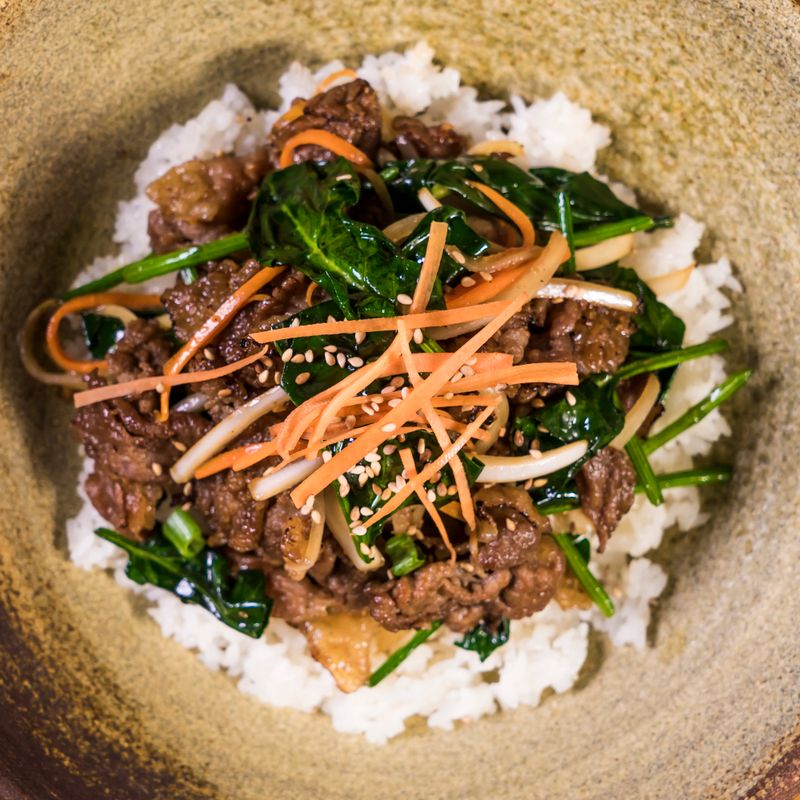
Korean Beef Bulgogi Quinoa Bowls with Gochujang
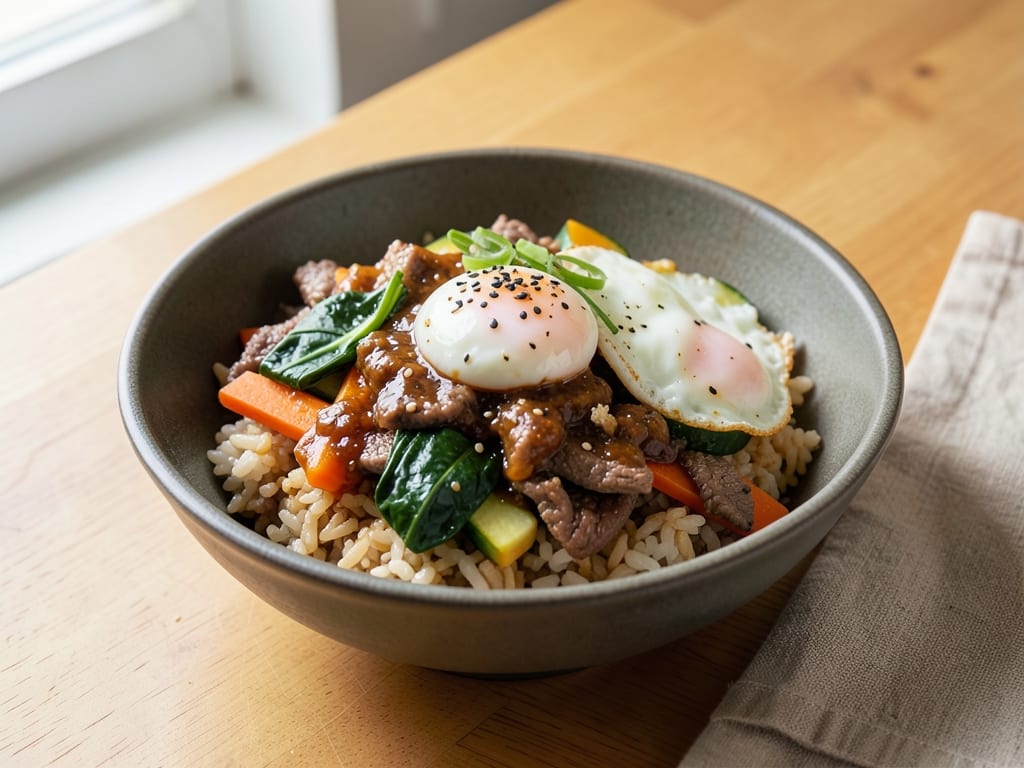
Tender, thinly sliced beef bulgogi marinated in a sweet-savory blend of soy, sesame, garlic, and pear, served over fluffy quinoa with crisp fresh vegetables and a creamy-spicy gochujang drizzle. This bowl brings together Korean flavors in a nutritious, gluten-free (with substitutions) meal that's restaurant-quality but made on the stovetop in under an hour. The beef cooks quickly in a hot skillet while the quinoa simmers gently, making this ideal for weeknight dinners or meal prep.
Steps
Before you start
- Slice beef ribeye thinly (¼ inch thick) against the grain—for easier slicing, partially freeze the meat for 30 minutes first, or ask your butcher to slice it
- Rinse the quinoa under cold water in a fine-mesh strainer to remove bitterness
- Gather and measure all ingredients before you begin cooking (mise en place)
- Read through the timeline: quinoa cooks while you prep vegetables and make the marinade
Start the quinoa
- Pour 1 cup of rinsed quinoa into a medium saucepan.
- Add 2 cups of vegetable broth and ½ teaspoon of salt.
- Bring to a boil over high heat (about 2–3 minutes), stirring once.
- Once boiling, reduce the heat to medium-low, cover the pan with a lid, and let it simmer undisturbed for 15 minutes until all the liquid is absorbed and the quinoa grains are tender.
+ Show details− Hide details
Ready when: Liquid is completely absorbed; each grain is fluffy and shows a small translucent ring on the edge
Tip: Do not stir or lift the lid while simmering. Let the quinoa steam undisturbed for the best texture
Prep vegetables and garnishes
- While the quinoa cooks, use a sharp knife to julienne or thinly slice 1 medium English cucumber and 1 large carrot.
- Set each on separate plates.
- Mince 4 garlic cloves, keeping them in one pile (you'll use 3 in the marinade and 1 in the sauce).
- Mince 1 tablespoon of fresh ginger.
- Slice 4 scallions crosswise, separating the white and light green parts from the dark green parts.
- Grate ½ medium Asian pear using a box grater; set aside in a small bowl.
+ Show details− Hide details
Ready when: All vegetables are cut to size and ready to use; garlic and ginger are minced, scallions are sliced
Tip: Prepare vegetables before the marinade so they're ready to go. If you froze the beef earlier, take it out now to begin slicing thinly against the grain
Make the beef marinade
- In a small bowl, combine 4 tablespoons of soy sauce, 2 tablespoons of sesame oil, the 3 minced garlic cloves, 1 tablespoon of minced ginger, the grated pear, 1 tablespoon of brown sugar, 1 tablespoon of rice vinegar, and the white and light green parts of the sliced scallions.
- Stir well with a spoon until the sugar dissolves completely and the mixture is smooth.
+ Show details− Hide details
Ready when: All ingredients are incorporated and the sugar is fully dissolved; the marinade is smooth and fragrant
Tip: The grated pear contains natural enzymes that help tenderize the beef; if unavailable, substitute 1 tablespoon of honey, though the tenderizing effect will be less pronounced
Marinate the beef
- Place the 1 pound of thinly sliced beef ribeye in a large bowl.
- Pour the prepared marinade over the beef and gently toss until every slice is evenly coated and glistening.
- Do not crush or break the slices.
- Cover the bowl loosely and let it marinate at room temperature for 15–20 minutes while the quinoa finishes cooking.
+ Show details− Hide details
Ready when: All beef slices are evenly coated with glossy marinade and smell fragrant
Tip: Do not marinate longer than 20 minutes; the acid from the vinegar and fruit enzymes will begin breaking down the meat texture too much, making it mushy
Make the gochujang sauce
- In a clean small bowl, add 3 tablespoons of gochujang paste.
- Using a whisk or fork, break up any lumps.
- Whisk in 2 tablespoons of sesame oil, 1 tablespoon of rice vinegar, 1 tablespoon of honey, the remaining 1 minced garlic clove, and ¼ cup of water.
- Whisk vigorously for about 1 minute until the sauce is smooth, uniform in color, and pourable.
- If the sauce seems too thick, add 1–2 tablespoons more water, one at a time, whisking after each addition.
+ Show details− Hide details
Ready when: Sauce is bright red, smooth with no visible lumps, and flows slowly from a spoon
Tip: Whisk thoroughly to fully incorporate the thick gochujang paste; lumps will remain if you don't whisk enough. The sauce will thicken slightly as it cools
Finish the quinoa
- Remove the saucepan from the heat and let it sit, covered, for 5 minutes.
- This allows the residual steam to finish cooking and hydrating the grains.
- Carefully remove the lid (steam will be very hot), and fluff the quinoa gently with a fork, breaking up any clumps and separating the grains.
+ Show details− Hide details
Ready when: Quinoa is fluffy, grains are completely separated, and no liquid remains in the bottom of the pan
Tip: Do not stir the quinoa while it sits. Opening the lid too early will release steam and result in undercooked grains
Cook the beef bulgogi
- Heat 1 tablespoon of vegetable oil in a large skillet or wok over high heat for about 1 minute until the oil shimmers and just begins to smoke at the edges.
- Working in two batches to avoid crowding the pan (overcrowding lowers the temperature and causes steaming instead of browning), carefully lay the marinated beef slices in a single layer, leaving a little space between each piece.
- Do not stir.
- Let the beef cook undisturbed for 2–3 minutes until the first side develops a deep golden-brown crust.
- Using tongs, flip each piece individually and cook the second side for another 2–3 minutes until browned and cooked through but still tender when gently pressed.
+ Show details− Hide details
Ready when: Beef is deep golden-brown on both sides, no pink remains in the center, and meat is tender when pressed with tongs
Tip: Do not move the beef around the pan while it sears; undisturbed beef develops a flavorful crust. If the pan is crowded, cook in two batches rather than layering the beef
Assemble the bowls
- Divide the fluffed quinoa evenly among 4 serving bowls, creating a bed for the toppings.
- Top each bowl with a quarter of the cooked beef bulgogi, arranging the slices in a loose pile.
- Add ¼ of the julienned cucumber and carrot to each bowl.
- If using kimchi, add about 2–3 tablespoons to each bowl.
- Drizzle each bowl generously with the gochujang sauce, aiming for about 2–3 tablespoons per bowl.
- Finally, sprinkle the raw sesame seeds over the top, and scatter the reserved dark green scallion slices over each bowl.
- If using nori, tear it into thin strips with your hands and place on top for a finishing touch.
+ Show details− Hide details
Ready when: Bowls are fully composed with all components visible and evenly distributed
Tip: Serve immediately while the beef is warm for the best contrast between the warm meat and cool vegetables. Guests can mix the components together or eat them in layers
Good to know
Tips
- To ensure thin, even slices of beef, partially freeze the ribeye for 30 minutes before slicing against the grain with a very sharp knife. A partially frozen cut is much easier to slice cleanly. Alternatively, ask your butcher to slice it for you
- The gochujang sauce can be made up to 1 day ahead and stored in an airtight container in the refrigerator. It will thicken slightly as it cools; whisk in a little water when you're ready to serve if you prefer a thinner consistency
- For maximum flavor, serve the beef warm and the vegetables cool for a pleasant temperature and texture contrast. However, leftovers are delicious eaten at room temperature or reheated
- This recipe is naturally gluten-free when using tamari (wheat-free soy sauce) and certified gluten-free gochujang. Check labels, as some gochujang brands contain wheat
Make ahead
The beef marinade and gochujang sauce can both be prepared up to 1 day in advance and stored in separate airtight containers in the refrigerator. The cooked quinoa can be made up to 2 days ahead and reheated gently with a splash of broth in a saucepan over medium heat. For meal prep, cook and store all components separately in airtight containers (up to 4 days), then assemble fresh just before eating for best texture and freshness.
Storage & reheating
Store leftover components in separate airtight containers in the refrigerator for up to 4 days. The beef bulgogi keeps best if stored in a shallow container with minimal sauce. Reheat the beef gently in a skillet over medium heat for 2–3 minutes until warmed through. The quinoa can be microwaved with a small splash of water or reheated on the stovetop. Vegetables keep crisp if stored dry. The gochujang sauce keeps well; whisk again before serving if it separates. This dish is best served fresh, but reheated leftovers are enjoyable within 3 days. Not recommended for freezing due to the texture of the marinated beef and fresh vegetables.
Substitutions
- Asian pear → Ripe mango, kiwi, or 1 tablespoon honey. The pear contains natural enzymes that tenderize the beef; other fruits will add sweetness but won't tenderize as effectively. Honey is the most reliable substitute for sweetness and body
- beef ribeye → Flank steak or sirloin, sliced very thinly against the grain. Ribeye is chosen for its tenderness, but leaner cuts work too if sliced paper-thin and not overcooked. Partially freeze before slicing for easier, thinner cuts
- vegetable broth → Beef broth, chicken broth, or water. Vegetable broth is lighter and lets the beef shine. Beef broth adds deeper umami. Water works but lacks flavor. Do not use instant bouillon cubes (too salty)
- gochujang (Korean red chili paste) → Sriracha mixed with 1 tablespoon mayo and 1 teaspoon soy sauce. Less traditional but provides similar heat and savory depth. Sriracha alone is much thinner and less complex. The mayo and soy add body and umami
More rice bowls
See all →
Find more like this
- Meal
- Dinner
- Cuisine
- Korean
- Diet
- Dairy-FreeHalal
- Method
- Stovetop
- Quick & Easy
- Meal PrepMake Ahead