Korean Bibimbap-Inspired Grain Salad with Gochujang
A vibrant, customizable grain salad inspired by bibimbap's layered flavors. Warm brown rice is topped with seasoned vegetables, crispy kimchi, a runny egg, and gochujang-sesame sauce. Mix everything together to create a balanced, spicy-umami bowl in under 30 minutes.
Steps
Before you start
- Use cooked brown rice (warm is best, or reheat cooled rice gently). Have all vegetables prepped and ready since assembly is quick.
- Set a small skillet heating for the eggs while you prepare the bowl components.
- Make the gochujang sauce while rice reheats.
Prepare the gochujang sauce
- In a small bowl, whisk together 2 tablespoons gochujang, 1 tablespoon toasted sesame oil, 1 tablespoon rice vinegar, 1 teaspoon honey, minced garlic, and 2 tablespoons water.
- Whisk until smooth and well combined.
- The sauce should be thick but pourable—add more water if too thick.
- Taste and adjust seasoning.
- Set aside.
+ Show details− Hide details
Ready when: Sauce is smooth and no lumps of gochujang remain
Tip: Don't skip whisking—gochujang can clump if not mixed well into the liquid.
Warm the rice
- If using cooled rice, place 1.5 cups into a skillet or saucepan over medium heat with a splash of water (about 1 tablespoon).
- Stir gently for 1–2 minutes until warmed through.
- If rice is already warm, skip this step.
- Transfer to a small bowl and keep warm.
+ Show details− Hide details
Ready when: Rice is steaming and warm to the touch
Tip: Avoid stirring too much or the rice will become mushy.
Sauté the spinach
- In the same skillet over medium-high heat, add a tiny drizzle of oil or butter.
- Add 1.5 cups fresh spinach and a small pinch of salt.
- Cook, stirring often, for about 30 seconds until spinach is just wilted and bright green.
- Transfer to a small plate.
+ Show details− Hide details
Ready when: Spinach is wilted and has released some liquid but is still bright green
Tip: Overcook spinach and it becomes drab and mushy—keep it quick.
Optional: sauté the mushrooms
- If using mushrooms, return the skillet to medium-high heat with a small drizzle of oil.
- Add 3 ounces thinly sliced mushrooms and a pinch of salt.
- Sauté, stirring occasionally, for 3–4 minutes until golden and any liquid released has mostly evaporated.
- Transfer to the plate with spinach.
+ Show details− Hide details
Ready when: Mushrooms are golden and liquid has cooked off
Tip: Don't crowd the pan or mushrooms will steam instead of brown.
Fry the eggs
- Reduce heat to medium.
- Add 0.5 tablespoon butter to the skillet.
- Once melted and foaming, crack both eggs into the pan.
- Cook undisturbed for 2–3 minutes until the whites are set but yolks are still runny (this is essential for mixing into the rice).
- Season with a pinch of salt and pepper.
- If you prefer fully cooked yolks, add another 30 seconds, but runny is traditional.
+ Show details− Hide details
Ready when: Egg whites are completely set and opaque; yolk still jiggles when nudged
Tip: Use medium heat to avoid crispy, overcooked edges before the whites are set. A lid is not needed.
Build the first bowl
- Divide the warm rice between 2 large bowls (about ¾ cup per bowl).
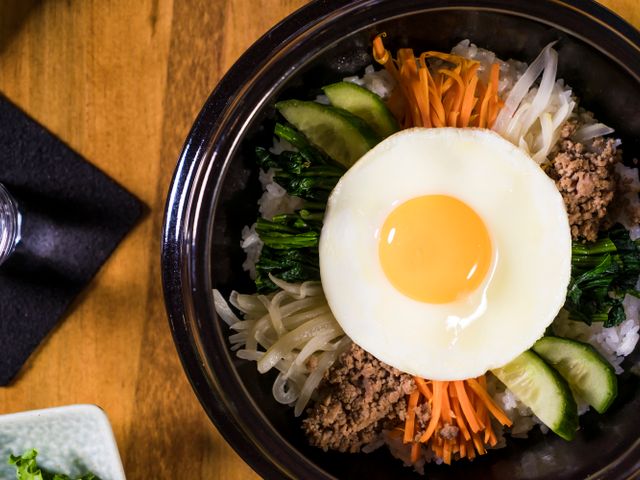
- Arrange the wilted spinach, sliced cucumber, julienned carrot, sautéed mushrooms (if using), and chopped kimchi in separate clusters around the rice, leaving the center clear for the egg.
+ Show details− Hide details
Tip: Arrange components in distinct piles—the visual appeal is part of the experience, and it looks more like traditional bibimbap.
Top with egg and garnish
- Carefully slide 1 fried egg into the center of each bowl.
- Drizzle about 2 tablespoons of the gochujang sauce over the rice and egg.
- Sprinkle 1 tablespoon toasted sesame seeds and a small handful of sliced scallion over the top of each bowl.
+ Show details− Hide details
Tip: Reserve a tiny bit of sauce to drizzle in after mixing if you like more sauce—gochujang is potent, so you can always add more but can't remove it.
Mix and serve
- At the table, mix everything together thoroughly with your spoon or chopsticks, breaking the yolk into the rice and incorporating all the vegetables and sauce.
- This is the signature bibimbap move.
- The warm rice and runny egg yolk create a creamy, savory base.
- Taste and add extra salt, pepper, or additional gochujang sauce if desired.
+ Show details− Hide details
Tip: Mixing well ensures every spoonful has rice, vegetables, sauce, and egg. Don't be shy—bibimbap is meant to be completely mixed together.
Rest before eating
- Let the mixed bowl rest for 1 minute.
- This allows the flavors to meld and the rice to absorb some of the sauce and runny egg.
- Enjoy while warm.
+ Show details− Hide details
Tip: A minute of rest makes a noticeable difference in flavor integration.
Good to know
Tips
- Brown rice takes about 45 minutes to cook from dry, so plan ahead or use a rice cooker the night before. White rice cooks in 15 minutes if you need faster prep.
- Runny egg yolk is essential to bibimbap—it acts as a creamy sauce when mixed. If you prefer firm yolk, increase cooking time by 1–2 minutes, but the texture will be less luxurious.
- Gochujang varies in heat level and saltiness by brand. Start with less sauce and add more to taste—you can't take it back.
- This bowl is highly customizable: add leftover roasted vegetables, cooked tofu, thinly sliced beef, or steamed broccoli. The formula is warm grain + protein + vegetables + gochujang sauce + egg + sesame.
Make ahead
Prepare all vegetables and the gochujang sauce up to 4 hours ahead. Store the sauce in an airtight container in the fridge; keep vegetables in separate containers or a covered plate. The components must be assembled fresh to keep the rice warm and the egg runny.
Storage & reheating
Eat immediately for the best experience (warm rice, runny egg, crisp vegetables). Leftover mixed bibimbap keeps, covered, in the refrigerator for up to 2 days—reheat gently in a skillet over medium heat or microwave in 30-second intervals. The yolk will firm up, and the vegetables will soften. Do not freeze the complete bowl. Individual uncooked components (cooked rice, kimchi, vegetables) can be frozen separately for up to 1 month.
Substitutions
- gochujang (Korean red chili paste) → sriracha or sambal oelek mixed with a pinch of sugar. Use about 1.5 tablespoons sriracha + 0.5 teaspoon sugar for similar heat and sweetness, though the umami depth will be less.
- cooked brown rice, warm → white rice, sushi rice, or other cooked grain (quinoa, farro, or millet). Any cooked grain works; adjust heat level and seasoning to taste. White rice cooks faster if you're starting from scratch.
- kimchi, chopped → pickled radish (daikon), sauerkraut, or a mix of quick pickled vegetables. Kimchi adds fermented funk; pickled vegetables provide acidity and crunch instead.
- toasted sesame oil → neutral oil like grapeseed or avocado oil plus a drizzle of truffle oil (optional). Sesame oil provides a unique flavor—if omitted, the sauce loses some character. Use a smaller amount of a strong oil or add a touch of soy sauce for depth.