Italian Risi e Bisi: Creamy Pea Rice
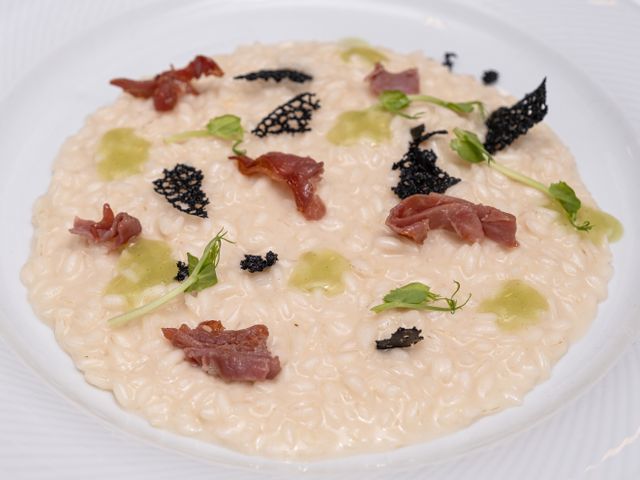
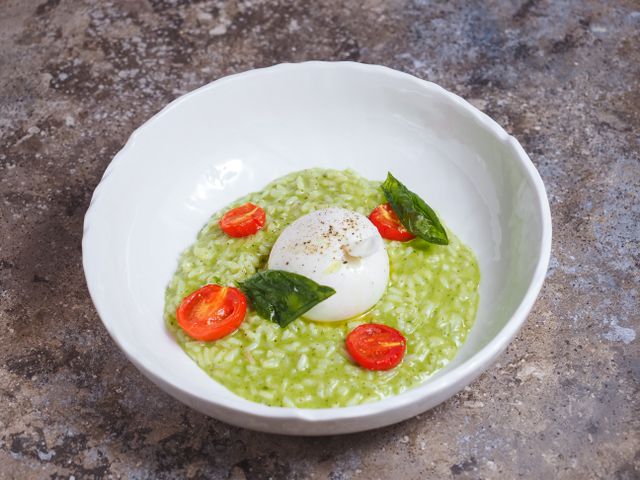
Risi e Bisi is a traditional Venetian dish that sits somewhere between a soup and a risotto—creamy, bright with fresh peas, and enriched with butter and cheese. The technique is straightforward but requires gentle stirring and patience to coax out the arborio rice's starch and create a luxurious, velvety sauce. Finished with crispy prosciutto and pecorino, it's comfort food with Italian elegance.
- Prep
- 10 min
- Cook
- 25 min
- Wait
- 5 min
- Total
- 40 min
- Makes
- 4 servings (about 1.5 cups each)
Steps
Before you start
- Bring chicken stock to a gentle simmer in a separate pot and keep it hot throughout cooking—cold stock will interrupt the risotto's creamy development.
- Have all ingredients prepped and within arm's reach before you start stirring; risotto waits for no one.
- If using frozen peas, don't thaw them—they'll be added directly to the risotto.
Toast the rice
- Heat 3 tablespoons (40 g) of butter in a large heavy-bottomed pot over medium heat.
- Once foaming, add the diced onion and cook, stirring often, for 2–3 minutes until softened and fragrant but not browned.
- Add the arborio rice and stir constantly for 1–2 minutes, coating each grain with butter.
- You'll hear a subtle clicking sound as the rice toasts; this develops nutty flavor and helps it release starch gradually.
+ Show details− Hide details
Ready when: Rice grains are coated and smell faintly nutty
Tip: Don't skip the toasting step; it prevents gummy risotto and improves texture.
Deglaze with wine
- Pour the dry white wine into the pot and stir constantly until it's almost completely absorbed, about 1–2 minutes.
- The wine adds acidity and deepens flavor.
- The rice should still look slightly wet but not soupy.
+ Show details− Hide details
Ready when: Wine is mostly absorbed; rice looks slightly moist
Begin adding stock
- Add the hot chicken stock one ladleful at a time (about 1 cup/240 ml), stirring frequently.
- Let each addition absorb before adding the next—this usually takes 2–3 minutes per ladle.
- The rice will gradually become creamy as it releases starch.
- Continue this process for about 18–20 minutes, tasting the rice at the 18-minute mark.
+ Show details− Hide details
Ready when: Rice is tender with a slight bite at the center (al dente); sauce is creamy
Tip: Stir regularly but not constantly—too much stirring can make risotto gluey, too little makes it stick and burn. Aim for a stir every 30 seconds.
Add peas and prosciutto
- When the rice is nearly tender (around the 18-minute mark), add the fresh or frozen peas and most of the chopped prosciutto, reserving a small handful for garnish.
- Stir gently to distribute.
- The peas will cook in the residual heat and the risotto's warmth in about 1–2 minutes; they should stay bright green and tender, not mushy.
+ Show details− Hide details
Ready when: Peas are bright green and tender; prosciutto softens slightly
Tip: If peas turn dull olive-green, you've overcooked them—add them just before serving next time.
Finish with butter and cheese
- Remove the pot from heat.
- Stir in the remaining 1 tablespoon (15 g) of cold butter and the grated pecorino romano cheese.
- This is the "mantecatura" (finishing technique)—it emulsifies the risotto, making it silky.
- Stir vigorously for about 30 seconds until fully incorporated.
- The risotto should flow gently on a plate like lava, not sit in a stiff mound.
+ Show details− Hide details
Ready when: Risotto is creamy and flows slightly; cheese is evenly distributed
Tip: Never add cold butter or cheese while the pot is on heat—it breaks the emulsion and creates a grainy texture.
Season and rest
- Taste and adjust seasoning with sea salt and freshly ground black pepper.
- Remember that pecorino is salty, so taste before adding much salt.
- Let the risotto rest, off heat, for 2 minutes so the flavors meld and the texture becomes even creamier.
+ Show details− Hide details
Ready when: Risotto has settled slightly and flows gently
Serve
- Divide the risotto among four shallow bowls.
- Garnish each portion with the reserved chopped prosciutto and an extra pinch of freshly ground black pepper.
- Serve immediately while steaming hot.
+ Show details− Hide details
Tip: Risotto cannot wait; serve immediately after finishing or it will set and lose its creamy, flowing texture.
Good to know
Tips
- Keep the stock simmering the entire time—adding cold stock will shock the rice and interrupt the creamy development. Use a thermometer if needed to keep it at 160°F (70°C) or warmer.
- The risotto is done when the rice grains are tender but still have a slight firmness (al dente) at the center when you bite one. Overcooked risotto becomes mushy; undercooked feels chalky.
- The final consistency should flow gently on a plate like lava, not stand upright like mashed potatoes. If it seems too thick after finishing, add a ladle of warm stock and stir until creamy.
- Risi e Bisi is a springtime dish—use fresh peas when in season for the best flavor. Frozen peas work well year-round and need no thawing.
Storage & reheating
Risi e Bisi is best served immediately. If you must make it ahead, cool completely and refrigerate in an airtight container for up to 2 days. To reheat, place in a pot over low heat, add a splash of warm stock or water, and stir gently until creamy again—it will never be quite as velvety as fresh. Freezing is not recommended as the texture breaks down.
Substitutions
- prosciutto di Parma, thinly sliced → pancetta, diced and crisped, or 2 tablespoons (30 g) chopped fresh parsley as a vegetarian option. Pancetta adds a similar salty, smoky depth. Parsley keeps the dish vegetarian but loses the meat's savory richness.
- pecorino romano cheese, finely grated → parmigiano-reggiano (Parmesan). Milder and less sharp than pecorino; use the same amount for a gentler finish.
- dry white wine → dry vermouth or additional stock. Vermouth adds herbaceous notes; extra stock keeps the flavor mild and lets the peas shine.
- fresh or frozen english peas → fresh fava beans (peeled), spring peas, or sugar snap peas (halved). Each adds slightly different sweetness and texture—fava beans are earthier; snap peas add a delicate crunch.