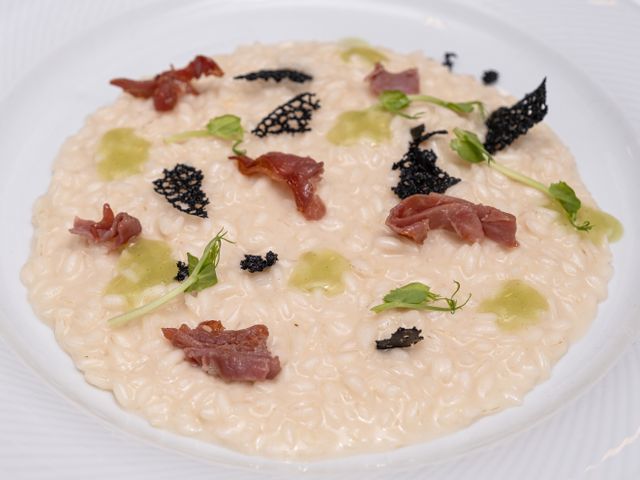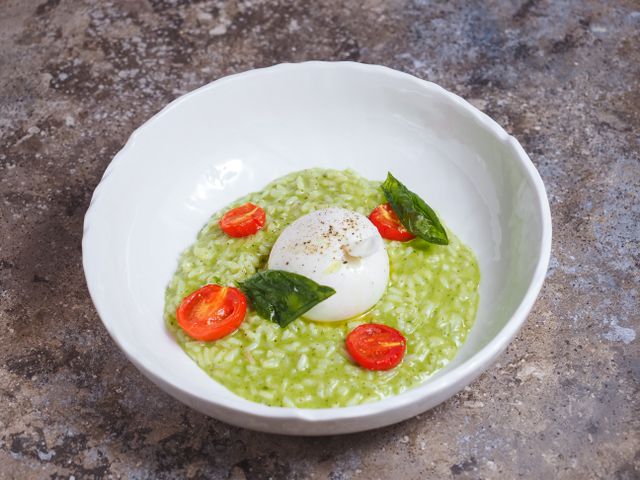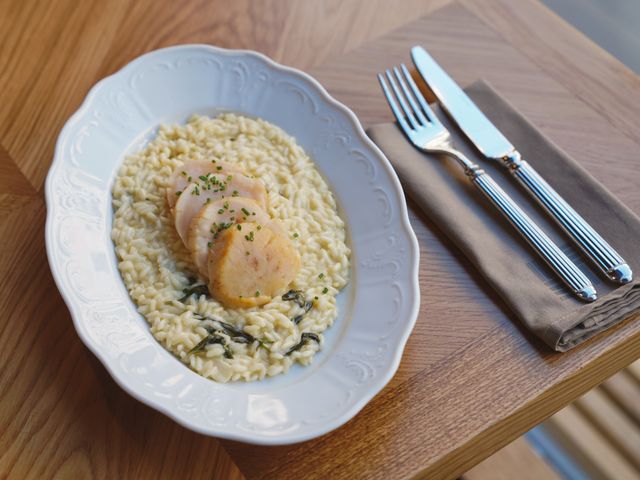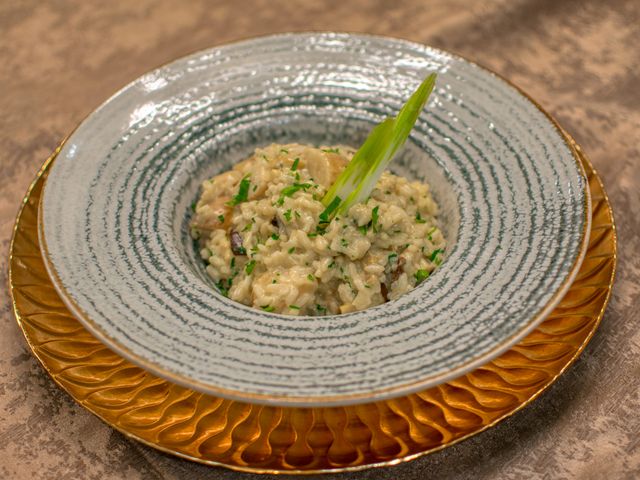
Arborio Rice Roasted Brussels Sprout Truffle Risotto
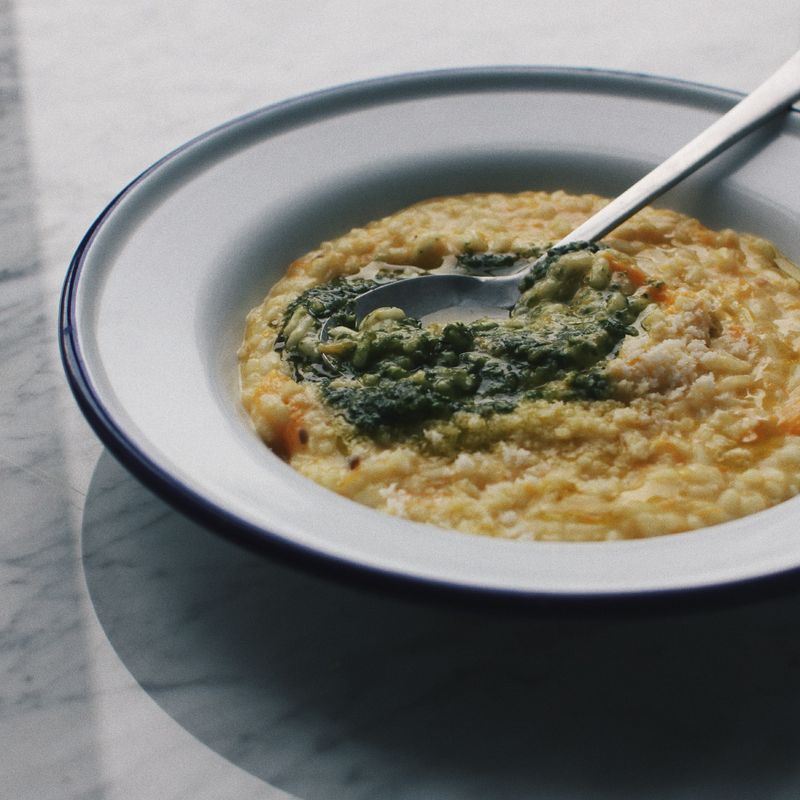
Creamy Arborio risotto studded with caramelized roasted Brussels sprouts and finished with black truffle oil and fresh Parmigiano-Reggiano. The nuttiness of roasted sprouts pairs beautifully with earthy truffle, while constant stirring creates the characteristic silky, flowing texture.
- Prep
- 20 min
- Cook
- 35 min
- Wait
- 15 min
- Total
- 1 hr 10 min
- Makes
- 4 servings (about 1.5 cups each)
Steps
Before you start
- Trim and halve Brussels sprouts, toss with oil, and roast at 425°F for 20 minutes before you start the risotto so they're ready to fold in
- Heat vegetable broth in a separate saucepan and keep at a gentle simmer throughout cooking
- Have all ingredients within arm's reach—risotto requires constant attention and won't wait for prep
- Use a heavy-bottomed saucepan or shallow Dutch oven (3-quart capacity) for even heat distribution
Roast Brussels sproutsOven 425°F / 220°C
- Preheat oven to 425°F (220°C).
- On a large sheet pan, toss halved Brussels sprouts with 3 tbsp (45 ml) olive oil, sea salt, and freshly ground black pepper until well coated.
- Arrange cut-side down in a single layer.
- Roast for 20–22 minutes, stirring halfway through, until the flat sides are deeply caramelized and golden brown and the leaves are crispy.
- The Brussels sprouts should be tender when pierced with a knife.
- Remove from oven and set aside; they'll be folded into the risotto near the end.
+ Show details− Hide details
Ready when: Brussels sprouts are golden brown on cut sides and crispy at edges; centers are tender when pierced
Tip: Cut-side down ensures maximum caramelization and creates a flavorful, crispy surface that contrasts beautifully with the creamy risotto.
Heat broth and prepare mise
- While the Brussels sprouts roast, pour vegetable broth into a separate saucepan and bring to a gentle simmer over medium heat.
- Keep the broth at a bare simmer throughout the risotto cooking—this ensures each ladle of hot broth integrates smoothly into the rice.
- Mince the shallot and garlic, grate the Parmigiano-Reggiano, zest the lemon if using, and cut the cold butter into small cubes.
- Have everything within arm's reach.
+ Show details− Hide details
Ready when: Broth steams gently; shallot and garlic are minced, butter is cubed, cheese is grated
Tip: Having everything prepped and close at hand is critical—risotto demands constant attention and won't tolerate stepping away to chop mid-cook.
Toast rice briefly
- Set a large heavy-bottomed saucepan over medium heat.
- Add 1 tbsp of the cold butter and let it melt.
- Once foaming, add the minced shallot and sauté for 2–3 minutes, stirring often, until softened and just beginning to turn translucent.
- Add the minced garlic and cook for 30 seconds more, until fragrant.
- Add the Arborio rice and stir constantly with a wooden spoon for 2 minutes.
- The grains should be coated in butter and look slightly translucent at the edges; you should hear a gentle clicking sound as the spoon stirs—this toasting begins to seal the starch inside each grain.
+ Show details− Hide details
Ready when: Rice grains are glossy, lightly toasted, and translucent at the edges; a subtle clicking sound is audible
Tip: Do not skip the toasting step—it seals the rice and prevents mushiness by setting up a protective starch barrier that allows the risotto to stay firm inside while absorbing liquid.
Deglaze with wine
- Pour in the dry white wine (½ cup / 120 ml) and stir continuously for 2–3 minutes, allowing the wine to be almost completely absorbed into the rice.
- You should smell the alcohol beginning to evaporate.
- The mixture will become slightly viscous.
+ Show details− Hide details
Ready when: Wine is almost entirely absorbed into the rice; the pan appears nearly dry
Tip: Stir frequently to ensure even absorption and to prevent the rice from sticking or burning on the bottom.
Begin adding broth
- Using a ladle, add about 1 cup (240 ml) of the hot simmering vegetable broth to the rice.
- Stir gently but constantly with a wooden spoon, allowing the liquid to be slowly absorbed (2–3 minutes).
- The rice will gradually soften and release starch, creating a creamy texture.
- Once the broth is mostly absorbed, add another ladle of hot broth (about 1 cup / 240 ml).
- Continue this process—add broth, stir, let it absorb, repeat—for 15–17 minutes total.
- The rice should look creamy and flow slightly on the plate when finished, not pile in a mound.
+ Show details− Hide details
Ready when: Rice has absorbed most broth and appears creamy; grains are tender but still have a slight firmness (al dente) in the center when bitten
Tip: Constant stirring is essential—it coaxes starch from the rice, creating the signature creamy risotto texture. Resist the urge to walk away; this is active cooking that demands attention.
Finish with butter and cheese
- When the rice is nearly tender (tasting one grain should show a slight firm center), remove the pan from heat.
- Add the remaining cold butter cubes (1 tbsp / 14 g) and the freshly grated Parmigiano-Reggiano (¾ cup / 75 g).
- Stir vigorously for 30–45 seconds—this is the "mantecatura" or finishing technique that creates the final silky, flowing consistency.
- The risotto should now move slowly across a tilted plate, not stick rigidly.
+ Show details− Hide details
Ready when: Risotto is creamy and flows slightly on the plate; no lumps remain; texture is smooth
Tip: Cold butter and grated cheese are key to achieving the luxurious, velvety consistency. Work quickly off heat so the cheese doesn't separate or become grainy.
Fold in Brussels sprouts and truffle oil
- Gently fold the roasted Brussels sprouts into the risotto (they should still be warm).
- Drizzle in 2 tbsp (30 ml) of black truffle oil and stir to distribute evenly.
- If using lemon zest, fold it in now as well.
- Taste and adjust seasoning with sea salt and black pepper as needed.
+ Show details− Hide details
Ready when: Brussels sprouts and truffle oil are evenly distributed throughout; no streaks of oil remain visible
Tip: Fold gently to keep the caramelized Brussels sprouts intact. Add truffle oil at the end so its delicate, volatile aromatics aren't lost to heat.
Plate and serve immediately
- Divide the risotto among four warm bowls or shallow plates.
- Serve immediately while the risotto is creamy and hot.
- A drizzle of additional truffle oil over the top and a small shaving of Parmigiano-Reggiano add elegance.
+ Show details− Hide details
Ready when: Risotto flows slightly on the warm plate and is served immediately
Tip: Risotto waits for no one—it must be plated and eaten right away while the texture is perfect. Cold plates will cool the risotto too quickly.
Good to know
Tips
- Stir the risotto constantly during the broth addition phase—this friction releases the starch from the rice, which thickens and creates the creamy sauce. Stirring also prevents the bottom from sticking and burning.
- Use a good quality black truffle oil; the difference in flavor between premium and budget versions is substantial. Store truffle oil in a cool, dark place and use within a year of opening for best aroma.
- If your Brussels sprouts are very large, cut them into quarters rather than halves so they cook evenly and develop maximum caramelization in the same 20 minutes.
- Risotto is an active dish that demands presence—it cannot be successfully made while multitasking or stepping away. Plan your menu so you can focus entirely on the pan for 25–30 minutes.
Storage & reheating
Risotto is best served fresh and should not be stored as leftovers. However, if you have extra, refrigerate it in an airtight container for up to 2 days. To reheat, place the risotto in a saucepan over medium-low heat with a splash of warmed vegetable broth or water, stirring frequently, until warmed through (3–5 minutes). It will not regain its original silky texture but becomes more of a creamy rice dish.
Substitutions
- black truffle oil, high-quality → high-quality extra virgin olive oil or walnut oil. True truffle oil can be expensive and of variable quality. A premium olive oil adds richness and a fruity note, while walnut oil provides earthiness without the truffle cost.
- fresh Brussels sprouts, small to medium → asparagus or mushrooms (cremini or oyster), roasted or sautéed. Asparagus offers a slight bitterness and tender-crisp texture; mushrooms provide a meaty, umami quality that complements truffle equally well.
- dry white wine → vegetable broth in equal amount. If you prefer to avoid alcohol, substitute with additional broth. The risotto will be slightly less complex in flavor but still delicious.
- Parmigiano-Reggiano cheese → Pecorino Romano or aged Asiago. Pecorino offers a sharper, saltier profile; Asiago is nuttier. Both work beautifully with roasted vegetables and truffle.