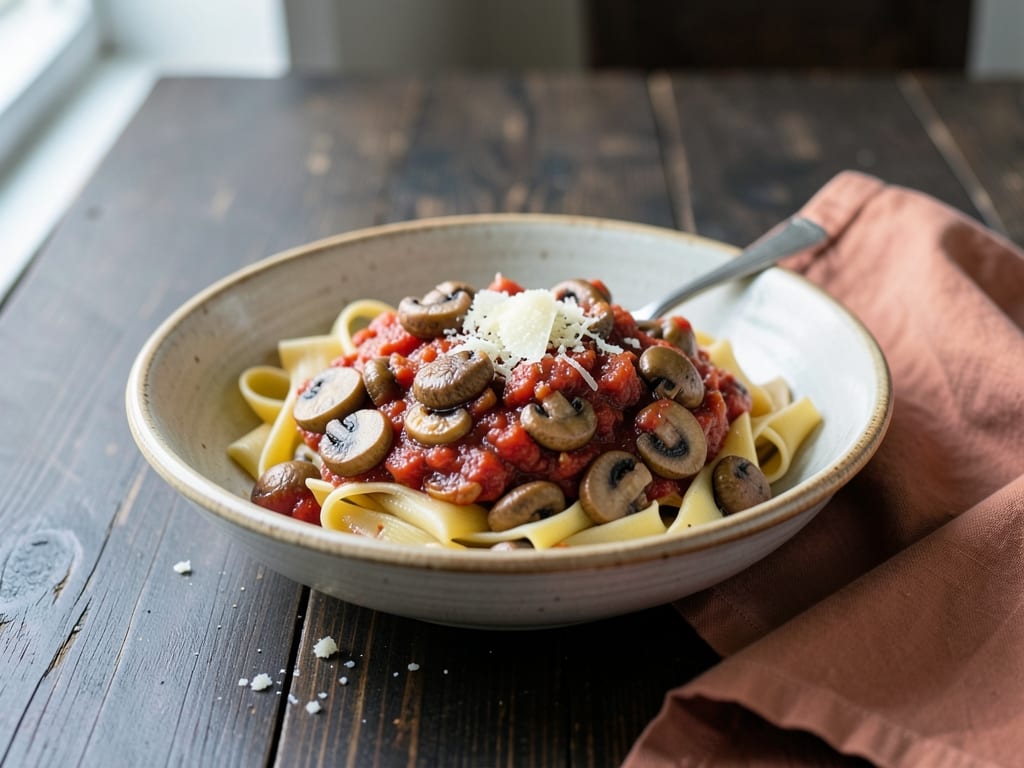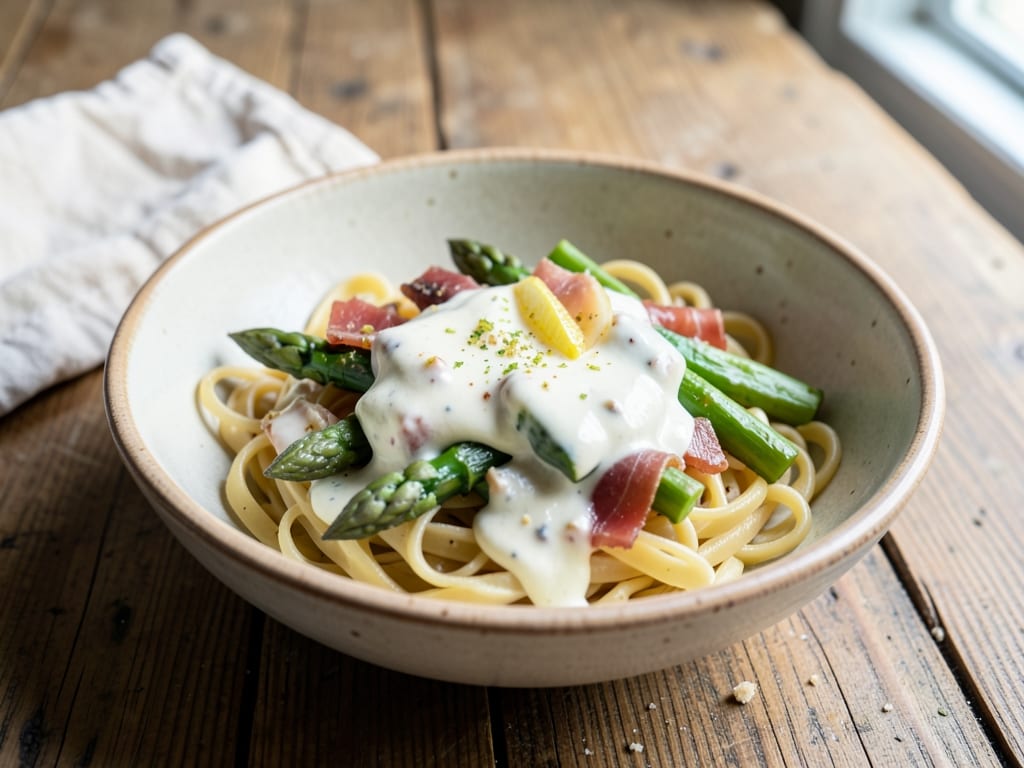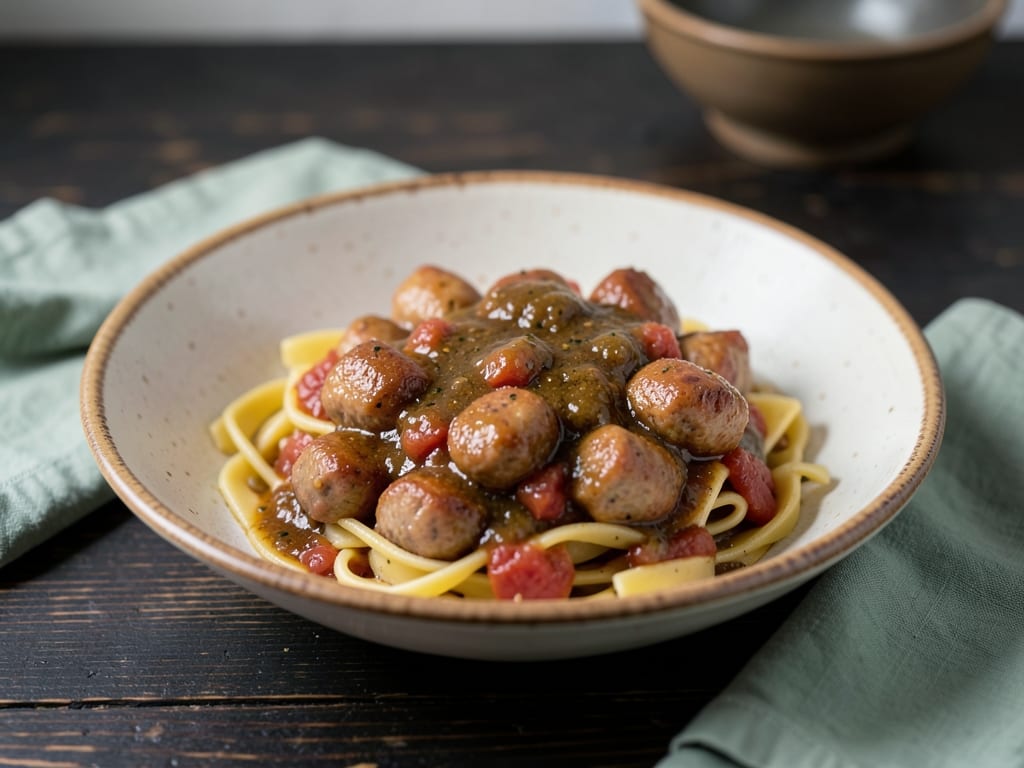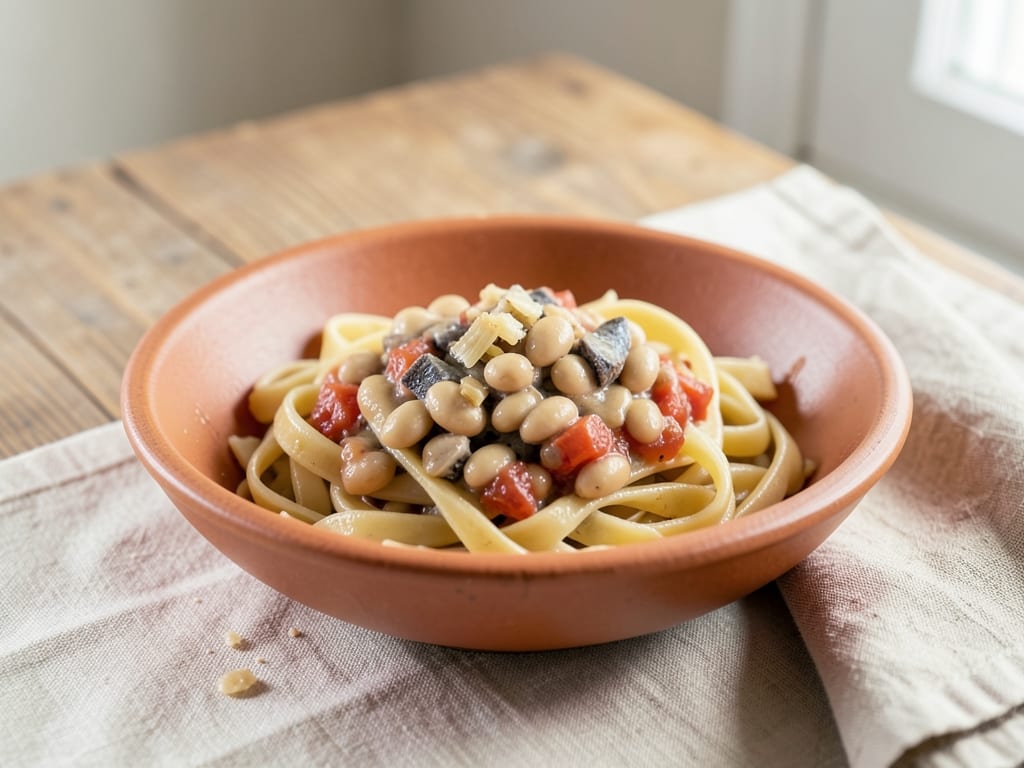
Italian Pappardelle with Creamy Yogurt Sage Sauce
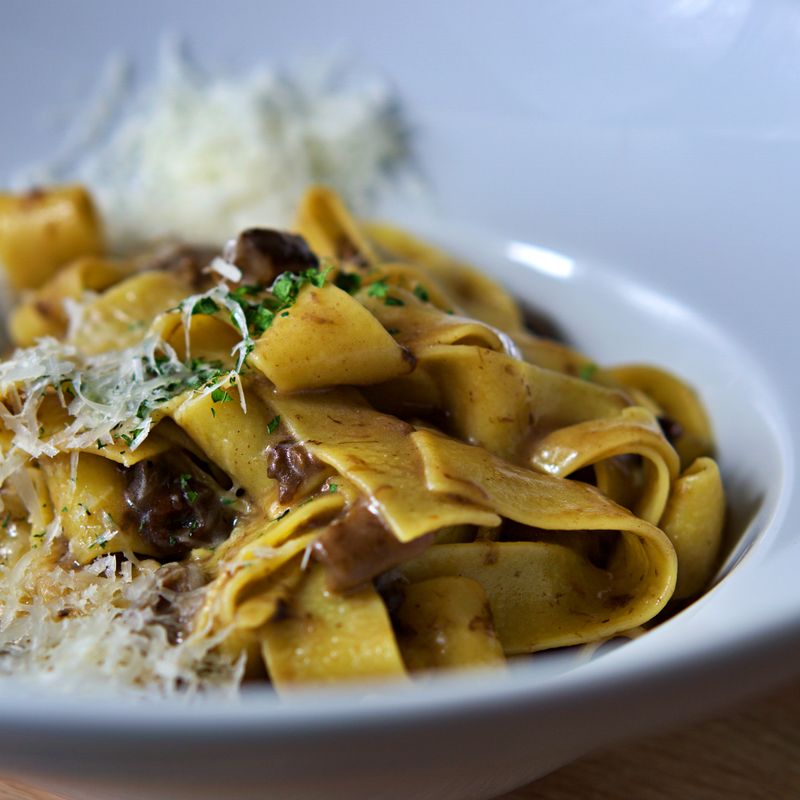
This elegant weeknight pasta celebrates the classic Italian pairing of butter, sage, and Parmesan with a creamy twist—silky yogurt replaces cream for a lighter, brighter sauce that's ready in minutes. Rustically ribboned pappardelle captures every drop of the herbaceous, tangy dressing.
Steps
Before you start
- Bring Greek yogurt to room temperature at least 30 minutes before cooking
- Have a 12-inch skillet and 6–8 quart pot ready on the stove
- Keep a 1-cup measuring cup or small bowl nearby to reserve pasta water
- Read through all steps so you're prepared to work quickly during the sauce-making phase
Prepare the mise en place
- Mince the 4 garlic cloves as finely as possible and place in a small bowl.
- Roughly chop the 15 fresh sage leaves and set aside in a separate small bowl.
- Finely grate the Parmigiano-Reggiano cheese into a small bowl and set aside.
- Having all ingredients prepped and within arm's reach will allow you to work quickly once the heat is on.
+ Show details− Hide details
Ready when: All ingredients are minced, chopped, or grated and arranged in bowls
Tip: Prep all ingredients before turning on any heat—there's no time to do this once the butter is melting.
Bring salted water to a boil
- Fill a large pot (6–8 quart capacity) with 6 quarts of water.
- Add a generous 2 tablespoons of kosher salt to the water.
- Place the pot over high heat and bring to a rolling boil, which should take about 3–5 minutes if starting with cold water.
+ Show details− Hide details
Ready when: Water is at a rolling boil with large bubbles breaking the surface
Tip: Use plenty of salt—the water should taste like the sea. This is your only opportunity to season the pasta itself.
Cook the pappardelle
- Once the water is at a rolling boil, add the 1 pound of dried pappardelle and immediately stir with a wooden spoon to prevent the ribbons from sticking together.
- Cook according to the package directions, usually 9–12 minutes for dried pappardelle, stirring occasionally.
- About 1 minute before the expected finish time, taste a single strand: it should be tender with just a slight firmness when you bite it—al dente, not chalky or mushy.
- Before draining, scoop out 1 cup of the starchy pasta cooking water into a small bowl and set aside.
- Drain the pappardelle in a colander.
+ Show details− Hide details
Ready when: Pasta is tender with a slight firmness when bitten; no longer chalky in the center
Tip: Stir the pasta immediately when it hits the water to prevent sticking. Save the pasta water before draining—its starch is essential for the sauce.
Melt butter and cook garlic
- While the pasta is cooking, place a large skillet (12-inch diameter) over medium heat.
- Add the 3 tablespoons of unsalted butter and let it melt completely, about 1 minute.
- Once the butter is melted and foaming, add all the minced garlic and stir constantly with a wooden spoon for exactly 1 minute until the garlic is fragrant but still pale in color (not yet browned).
+ Show details− Hide details
Ready when: Butter is foaming; garlic is fragrant and pale, not golden or brown
Tip: Do not let the garlic brown or it will taste bitter and ruin the delicate sauce. Keep the heat at medium—higher heat will scorch the garlic in seconds.
Add sage and infuse the butter
- Add the roughly chopped sage leaves to the garlic-butter mixture and stir gently with a wooden spoon for exactly 1 minute.
- The heat will infuse the butter with the sage's herbaceous, slightly peppery flavor.
- The mixture should smell fragrant and green.
+ Show details− Hide details
Ready when: Sage leaves are wilted and the mixture smells herbaceous and fragrant
Tip: Fresh sage is essential here; dried sage is too potent and will overpower the delicate yogurt sauce.
Create the yogurt sauce
- Immediately remove the skillet from the heat—do not let the mixture cook any longer or the heat will curdle the yogurt.
- Pour the entire 1 cup of room-temperature Greek yogurt directly into the skillet.
- Using a whisk, stir vigorously and constantly for about 1 minute until the yogurt is fully incorporated and the sauce is completely smooth with no streaks or lumps remaining.
- The sauce should be silky and pale green from the sage.
- Season generously with kosher salt and freshly ground black pepper to taste—start with about 1/4 teaspoon of each and adjust as needed.
- The sauce should taste pleasantly tangy and herbaceous.
+ Show details− Hide details
Ready when: Yogurt is completely smooth and silky with no streaks; sauce is pale green
Tip: The yogurt must be at room temperature—cold yogurt will curdle when whisked into the hot butter. Whisk constantly until perfectly smooth or the sauce will break. Remove from heat first to prevent curdling.
Combine pasta with sauce and finish
- Transfer the drained pappardelle directly to the skillet containing the yogurt sage sauce.
- Using tongs or two wooden spoons, toss the pasta constantly and vigorously for 1–2 minutes, ensuring every ribbon gets thoroughly coated with the creamy sauce and no dry strands remain.
- If the sauce appears too thick or seems to clump, add the reserved pasta water 2 tablespoons at a time, tossing well between each addition, until the sauce becomes silky and clings lightly to the pasta without pooling excessively at the bottom of the skillet.
- Divide the pappardelle evenly among four shallow bowls or wide pasta plates.
- Top each serving generously with the finely grated Parmigiano-Reggiano cheese and finish with a crack of freshly ground black pepper.
- Serve immediately while the pasta is still hot.
+ Show details− Hide details
Ready when: Pasta is evenly coated with creamy sauce; no dry strands are visible
Tip: Don't add all the pasta water at once—you can always add more, but you can't take it out. The sauce should lightly coat the noodles and cling to them, not pool at the bottom like soup. Serve immediately; this dish cools and thickens quickly once plated.
Good to know
Tips
- The Greek yogurt must be at room temperature (at least 30 minutes out of the refrigerator) before adding to the hot butter sauce—cold yogurt will curdle and break the emulsion, resulting in a grainy, separated sauce that cannot be salvaged.
- Always use fresh sage leaves for this dish; dried sage is too potent, musty, and harsh and will completely overwhelm the delicate, tangy yogurt sauce.
- Pasta water is not optional—its starch is essential for emulsifying the sauce and achieving that signature silky, clinging consistency that makes this dish special. Reserve it before draining.
- Serve immediately in warm bowls. This dish does not hold well if left standing, as the yogurt sauce thickens and cools quickly, losing its elegant, fluid consistency.
Make ahead
The yogurt sage sauce can be made up to 2 hours ahead and kept at room temperature in the skillet. If made longer ahead, store in an airtight container in the refrigerator and bring back to room temperature, whisking in a splash of milk or water if needed before tossing with hot pasta. Do not make the full dish ahead; assemble only when ready to serve.
Storage & reheating
Store leftovers in an airtight container in the refrigerator for up to 3 days. To reheat, place the pasta in a skillet over medium-low heat, stirring constantly and adding a splash of milk or pasta water a little at a time to loosen the thickened sauce. This dish does not freeze well due to the yogurt base, which can separate and become grainy when thawed.
Substitutions
- plain Greek yogurt → regular plain yogurt. Use 1.5 cups instead of 1 cup. The sauce will be slightly thinner and more pourable, but equally delicious and tangy.
- plain Greek yogurt → sour cream. Use 3/4 cup sour cream. The sauce will be tangier with a richer, more luxurious mouthfeel.
- fresh sage leaves → fresh mint leaves. Use 15 leaves of fresh mint roughly chopped. The flavor will be brighter, more herbaceous, and less earthy than sage—a lighter variation.
- Parmigiano-Reggiano cheese → Pecorino Romano cheese. Use the same amount (0.5 cup grated). The cheese will be sharper, saltier, and more assertive than Parmigiano-Reggiano.