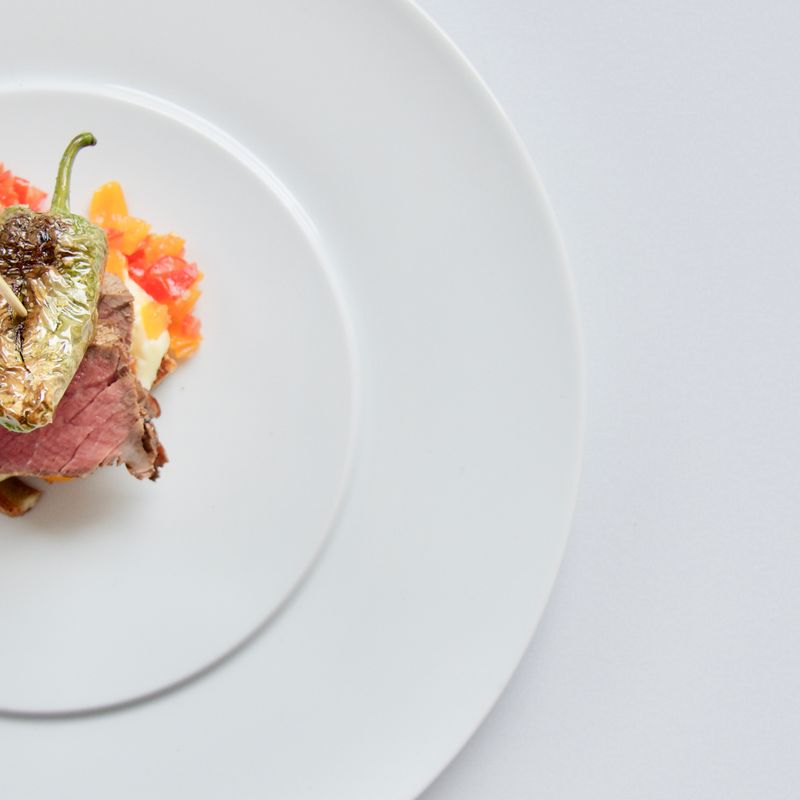
Italian Ossobuco-Inspired Beef Shank Chili
A sophisticated take on chili that draws from the Italian braise ossobuco, using cross-cut beef shanks simmered with white wine, tomatoes, carrots, celery, and garlic until fork-tender. Finished with a bright gremolata (parsley, lemon zest, garlic) and a touch of anchovy paste for depth, this is chili for a dinner party—hearty, aromatic, and nothing like a Tex-Mex bowl.
- Prep
- 20 min
- Cook
- 3 hr
- Total
- 3 hr 20 min
- Makes
- 4 servings (about 2 cups per person)
Steps
Before you start
- Pat beef shanks dry so they brown properly.
- Preheat your Dutch oven on the stovetop before searing.
- Gather all aromatics and prep them before you start cooking (mise en place).
Season and sear the shanks
- Pat the beef shanks thoroughly dry.
- Season all sides with kosher salt and freshly ground black pepper.
- Heat the Dutch oven over medium-high heat (about 4–5 minutes) until a drop of water sizzles on contact.
- Pour in the olive oil.
- Working in two batches, place the shanks in the pot and sear for 3–4 minutes per side, until deeply golden brown.
- Transfer to a plate; do not crowd the pot.
- Leave the browned bits (fond) in the bottom.
+ Show details− Hide details
Ready when: Shanks are deeply golden brown on all sides
Tip: Don't skip searing or move the shanks too early—those brown bits add incredible flavor to the braise.
Build the aromatic base
- Reduce heat to medium.
- Add the diced onion, carrots, and celery to the Dutch oven, stirring often, for 6–8 minutes until the vegetables soften and begin to caramelize.
- Add the minced garlic and cook for 1 minute more until fragrant.
- Do not let garlic burn.
+ Show details− Hide details
Ready when: Vegetables are softened and onion is translucent; garlic is fragrant
Tip: Stir frequently to keep garlic from sticking or scorching on the bottom.
Deglaze and build the braising liquid
- Pour in the dry white wine, scraping up all the browned bits from the bottom of the pot with a wooden spoon.
- Let it bubble gently for 2–3 minutes to cook off some of the alcohol.
- Stir in the tomato paste and cook for 1 minute, stirring constantly, until it caramelizes slightly.
- Pour in the beef broth and add the canned tomatoes (with their juice).
- Add the bay leaves, thyme sprigs, rosemary sprigs, anchovy paste, and red pepper flakes.
- Stir to combine.
+ Show details− Hide details
Ready when: Liquid is homogenous and tomato paste is no longer streaky
Tip: Anchovy paste dissolves into the liquid and adds umami depth—you won't taste 'fish,' just rich savory flavor.
Return shanks and braise low and slowOven 300°F / 150°C
- Nestle the browned beef shanks back into the pot, submerging them as much as possible in the braising liquid.
- Bring to a simmer over medium heat (about 3–4 minutes), then reduce heat to low, cover with the lid, and transfer to a 300°F (150°C) oven.
- Braise for 2.5 to 3 hours, turning the shanks halfway through (at about 1.5 hours).
- The meat should be fork-tender and beginning to pull away from the bone; the marrow should be soft and yielding.
+ Show details− Hide details
Ready when: Meat is very tender and yields easily to a fork; marrow slides from the bone with a spoon
Tip: Resist the urge to rush by raising the temperature—low and slow is what makes ossobuco magic. Turn the shanks once to ensure even cooking.
Skim fat and adjust seasoning
- Remove the Dutch oven from the oven.
- Skim any excess fat from the surface using a spoon or ladle.
- Discard the bay leaves, thyme, and rosemary sprigs.
- Taste the braising liquid and adjust seasoning with additional salt and pepper as needed.
- The sauce should be rich, slightly thick, and coat the back of a spoon lightly.
+ Show details− Hide details
Ready when: Sauce coats a spoon and flavors are balanced
Tip: Tasting is key here—the wine and tomato should be balanced with savory depth; it should not taste too tart.
Prepare the gremolata
- While the chili rests, combine the finely minced parsley, lemon zest, and minced garlic in a small bowl.
- Stir to combine.
- This bright, herbaceous garnish is essential—it cuts through the richness of the braise.
+ Show details− Hide details
Ready when: All ingredients are finely minced and combined
Tip: Make gremolata just before serving so the parsley stays bright and the lemon zest doesn't oxidize.
Plate and garnish
- Ladle the chili and its sauce into deep bowls, ensuring each serving includes one or two pieces of shanks with bone.
- Top each bowl with a generous spoonful of gremolata.
- Serve hot with crusty bread for soaking up the sauce.
+ Show details− Hide details
Ready when: Bowls are full and gremolata is visible on top
Tip: Serve immediately so the gremolata stays fresh and provides its full bright contrast to the rich chili.
Good to know
Tips
- This chili pairs beautifully with soft polenta, creamy risotto, or thick pasta such as pappardelle. Serve with crusty bread to soak up every drop of sauce.
- The marrow in the beef shank bone is edible—scoop it out with a small spoon and spread it on bread or stir it into the sauce for extra richness.
- Make this dish a day or two ahead. The flavors meld and deepen as it sits, and reheating allows you to skim fat more easily. Plus, it frees up oven time on the day you serve.
- If your braising liquid seems thin after cooking, transfer the shanks to a serving dish, cover with foil, and simmer the liquid on the stovetop over medium heat for 10–15 minutes to reduce and concentrate the flavors.
Make ahead
Prepare the chili through step 5 up to 1 day ahead. Store in an airtight container in the refrigerator. Reheat gently on the stovetop over medium-low heat, covered, for 15–20 minutes until warmed through. Skim any solidified fat from the top before reheating. Prepare gremolata fresh just before serving.
Storage & reheating
Refrigerator: up to 4 days in an airtight container. Freezer: up to 3 months (thaw overnight in the refrigerator before reheating). Reheat on the stovetop over medium-low heat, covered, until warmed through (15–20 minutes). Do not reheat gremolata; prepare fresh before serving.
Substitutions
- dry white wine (such as Pinot Grigio or Sauvignon Blanc) → dry red wine (such as Barbera or Chianti) or chicken broth. Red wine will deepen the color; broth will keep it lighter and shift flavor toward the beef. Both work, but white wine is more traditional for ossobuco.
- anchovy paste → 1 tablespoon fish sauce or 2 finely minced anchovy fillets. All three add umami and depth. Fish sauce is more assertive; use less if concerned. Omit entirely for a vegetarian-friendly (though not vegetarian) version, but the depth will be reduced.
- fresh flat-leaf parsley → fresh mint, basil, or a mix of both. Mint adds a cooling note; basil adds sweetness. Parsley is most traditional and classic, but these alternatives work if you don't have it or prefer a different flavor.
- beef shank, cut into 2-inch-thick cross sections (ossobuco-style) → short ribs or beef chuck, cut into 2-inch cubes (reduce cooking time to 2 hours). Shanks are meatier and have more collagen, which creates a silky sauce. Chuck and short ribs are fattier and will need longer to render and become tender.
More chili
See all →


Find more like this
- Meal
- Dinner
- Cuisine
- Italian
- Main ingredient
- Beef RoastCarrots
- Method
- Oven