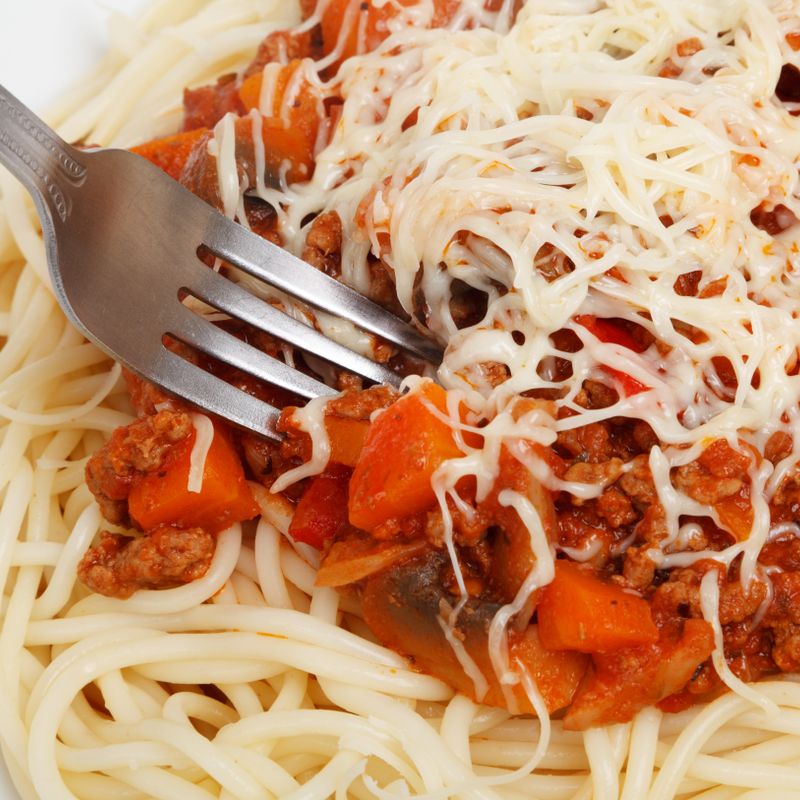
Italian Bolognese-Inspired Chili with Pancetta
A robust, slowly simmered chili that borrows the aromatic soffritto base and umami-rich depth of Italian Bolognese ragù. Ground beef is cooked with crispy pancetta, a holy trinity of carrots, celery, and onion, then enriched with tomato paste, red wine, and a splash of whole milk for velvety texture. Warm spices—cinnamon, cumin, and crushed red pepper—add gentle heat and complexity. Serve with crusty bread, cheese, or over soft polenta for an Italian-leaning take on chili.
- Prep
- 15 min
- Cook
- 1 hr 15 min
- Total
- 1 hr 30 min
- Makes
- 6 servings (about 8 cups total)
Steps
Before you start
- Have all ingredients prepped before you begin; the cooking process moves quickly once you start.
- Use a heavy-bottomed pot (at least 5-quart capacity) so the chili simmers evenly without scorching.
- If using fresh tomatoes instead of canned, choose ripe ones or add a pinch of sugar to balance acidity.
Render the pancetta
- Place the diced pancetta in your 5-quart pot over medium heat.
- Cook, stirring occasionally, for 5–6 minutes until the pancetta is crispy and has released its fat.
- The pancetta should be golden brown and very fragrant.
- You should have about 2–3 tablespoons (30–45 ml) of rendered fat in the pot.
+ Show details− Hide details
Ready when: Pancetta is golden and crispy; fat is translucent and aromatic
Tip: Don't let the pancetta burn—it should be browned but still with some bite. This fat will flavor the entire dish.
Brown the ground beef
- Increase heat to medium-high.
- Add the cold ground beef to the pot, breaking it into small pieces with a wooden spoon as it cooks.
- Stir frequently, scraping the bottom, for 8–10 minutes.
- The meat should lose its raw color and develop a light brown crust.
- As the beef releases liquid, some of it will evaporate; this is normal and desired.
- The meat will reach a safe internal temperature of 160°F (71°C) well before it finishes browning.
+ Show details− Hide details
Ready when: Beef is no longer pink; small curds have formed and are lightly browned
Tip: Don't stir too quickly—let the meat brown in contact with the pot for better flavor development. Patience here builds depth.
Build the soffritto base
- Add the diced onion, carrot, and celery to the pot.
- Stir well to combine with the meat and pancetta fat.
- Reduce heat to medium and cook, stirring occasionally, for 8–10 minutes until the vegetables are softened and beginning to caramelize at the edges.
- The mixture should smell sweet and savory.
+ Show details− Hide details
Ready when: Vegetables are soft and translucent; edges are lightly golden
Tip: Dice the vegetables uniformly so they cook evenly. This soffritto base is the soul of the chili—don't rush it.
Add garlic and aromatics
- Stir in the minced garlic, crushed red pepper flakes, cumin, and cinnamon.
- Cook for 1 minute, stirring constantly, until fragrant.
- The garlic should not burn; keep the heat at medium.
+ Show details− Hide details
Ready when: Spices and garlic are very fragrant
Tip: Blooming spices in fat releases their essential oils and deepens their flavor. This step takes just a minute—watch carefully so nothing burns.
Caramelize the tomato paste
- Add the tomato paste to the pot and stir well, coating the meat and vegetables.
- Continue cooking over medium heat for 2–3 minutes, stirring frequently.
- The tomato paste will darken slightly and become even more concentrated in flavor.
+ Show details− Hide details
Ready when: Tomato paste is darker and concentrated, sticking slightly to the pot
Tip: This brief caramelization deepens the umami and reduces any sharp, acidic edge from the paste. Don't skip it.
Deglaze with wine
- Pour in the red wine, using a wooden spoon to scrape up any browned bits stuck to the bottom of the pot.
- These fond bits contain tons of flavor.
- Bring to a simmer over medium-high heat and cook for 3–4 minutes, stirring occasionally, until the wine reduces by about half and the alcohol smell subsides.
+ Show details− Hide details
Ready when: Wine has reduced to about ½ cup (120 ml); alcohol aroma is gone
Tip: Scrape the bottom of the pot thoroughly—this fond is liquid gold for your chili's depth.
Add tomatoes and broth
- Stir in the crushed tomatoes (including their juice), beef broth, and bay leaves.
- Bring the mixture to a gentle simmer over medium heat.
- Stir once to combine everything thoroughly.
+ Show details− Hide details
Ready when: Liquid is simmering gently; small bubbles break the surface regularly
Tip: A gentle simmer (not a rolling boil) will produce a silky, melded sauce rather than a watery one.
Simmer the chili
- Once simmering, reduce heat to medium-low and let the chili simmer gently, uncovered, for 45–50 minutes.
- Stir occasionally, every 10–15 minutes, and taste as you go.
- The liquid will reduce, the flavors will meld, and the sauce will thicken slightly.
- The chili is ready when it smells deeply rich, the oil separates slightly on the surface, and the beef is very tender.
+ Show details− Hide details
Ready when: Sauce is thickened and coats a spoon; flavors are deep and balanced; fat glistens on surface
Tip: If the chili seems too thin after 40 minutes, keep the lid off and increase heat slightly. Too thick? Add a splash of broth. Taste often and adjust seasonings as it cooks.
Add the milk and finish
- Stir in the whole milk, which will enrich the sauce and soften the heat from the red pepper.
- Simmer for 2 more minutes, stirring gently, to incorporate.
- Remove the bay leaves.
- Taste and adjust seasoning with kosher salt and freshly ground black pepper.
- The chili should taste savory, slightly sweet from the carrots, and warmly spiced—not at all like typical American chili.
+ Show details− Hide details
Ready when: Milk is fully incorporated; color is rich, dark brown with reddish undertones
Tip: The milk shouldn't curdle—keep heat gentle and stir as you add it. This step brings everything into balance and adds a subtle, luxurious texture.
Serve
- Ladle the chili into bowls.
- Top with grated Parmigiano-Reggiano if desired.
- Serve alongside crusty bread, polenta, or over pasta for a truly Italian spin.
- A small bowl of extra grated cheese on the side is traditional.
+ Show details− Hide details
Tip: This chili is even better the next day or two as flavors continue to marry. Reheat gently over low heat or in a microwave.
Good to know
Tips
- Mise en place is essential: Have all ingredients prepped and within reach before you start cooking. This chili moves quickly once the pancetta hits the pot, and you don't want to scramble for a chopped onion mid-way.
- The holy trinity of onion, carrot, and celery (soffritto) is the backbone of Italian cooking. Don't skip it or rush it; those 8–10 minutes of gentle cooking are what build the chili's savory foundation.
- Tomato paste caramelization (step 5) is a crucial step many home cooks overlook. That brief, direct heat transforms the paste from sharp and acidic to deep and umami-rich.
- The milk is not a mistake—it's a classic Bolognese trick. It mellows the acidity, rounds the spice, and adds a silky mouthfeel. If you dislike dairy, omit it, but try it once; you may be surprised.
Make ahead
Prepare the vegetables (onion, carrot, celery, garlic) up to 1 day ahead and store in separate airtight containers in the refrigerator. The chili itself is best made the day before serving, as this allows flavors to develop further overnight. Simply reheat gently before serving.
Storage & reheating
Store in an airtight container in the refrigerator for up to 4 days. Freeze for up to 3 months in an airtight container or freezer bag; thaw overnight in the refrigerator before reheating. Reheat gently over medium-low heat on the stovetop (about 10 minutes, stirring occasionally) or in a microwave until warmed through, adding a splash of broth if it seems too thick.
Substitutions
- pancetta, diced → guanciale or bacon (diced and rendered the same way). Guanciale (cured pork jowl) is most authentic to Italian cooking; bacon works too but is smokier. Either will render similarly and add excellent fat and flavor.
- dry red wine (such as Sangiovese or Barbera) → dry white wine (such as Pinot Grigio) or additional beef broth (1 cup / 240 ml total). Red wine adds earthy depth, but white wine offers a lighter, more delicate note. Broth alone is mild but still works.
- crushed San Marzano tomatoes, canned → 1 lb (450 g) fresh ripe tomatoes, roughly chopped, or 2 cans (14.5 oz / 411 g each) diced tomatoes, blended until smooth. Fresh tomatoes require an extra 5–10 minutes of simmering to break down; add a pinch of sugar if they are very acidic.
- whole milk → heavy cream (use the same amount for richer texture) or omit entirely for a leaner version. Cream will make it silkier; skipping it gives a more rustic, tomato-forward result. Both are valid.
More chili
See all →



Find more like this
- Meal
- Dinner
- Cuisine
- Italian
- Main ingredient
- Ground Beef
- Method
- Stovetop