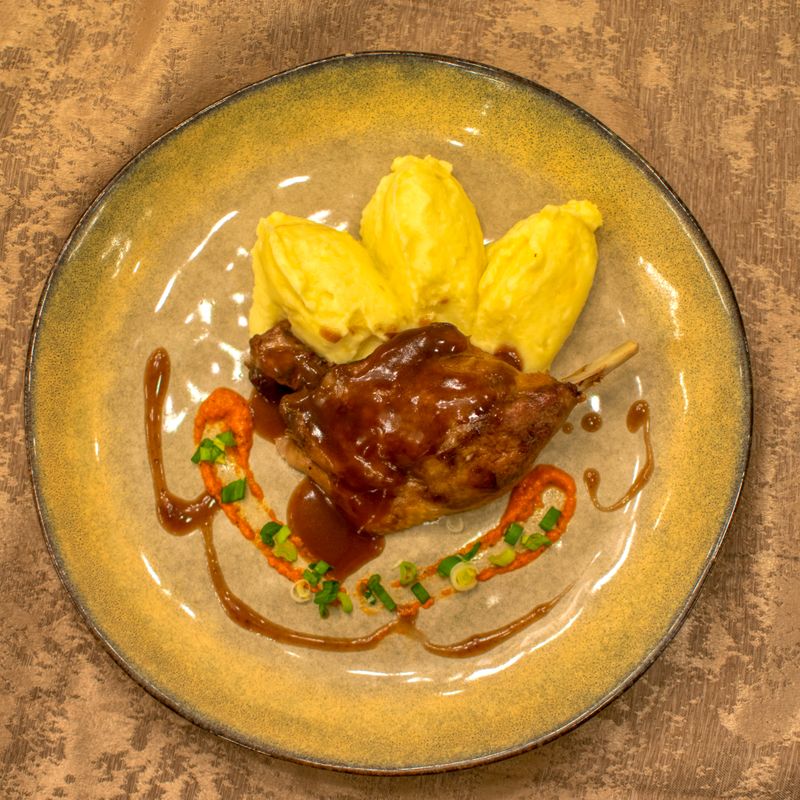
Irish Colcannon with Cabbage and Leeks
A traditional Irish side dish of creamy mashed potatoes folded with buttery sautéed cabbage and leeks. Colcannon is warming, garlicky, and deeply flavorful—perfect alongside roasted meats or as a vegetarian main with a fried egg on top. The vegetables soften and caramelize slightly while the potatoes become silky and rich.
- Prep
- 20 min
- Cook
- 25 min
- Total
- 45 min
- Makes
- 4 servings (about 1¼ cups each)
Steps
Before you start
- Fill a large pot with cold salted water and bring to a boil
- Have a colander ready to drain the potatoes
- Cut the leeks in half lengthwise and rinse thoroughly between layers to remove any soil
Boil the potatoes
- Add the peeled and chunked potatoes to the pot of boiling salted water.
- Maintain a gentle boil and cook for 12–15 minutes, until the potatoes are completely tender and a fork pierces them with no resistance.
- The pieces should be soft enough to break apart easily.
+ Show details− Hide details
Ready when: Potatoes break apart easily when pierced with a fork
Tip: Don't overcrowd the pot; if needed, use two batches so potatoes cook evenly and don't become waterlogged.
Sauté the vegetables
- While the potatoes cook, melt 3 tbsp (43 g) butter in a large skillet over medium heat.
- Add the sliced leeks and cook for 4 minutes, stirring occasionally, until they begin to soften.
- Add the minced garlic and cook for 30 seconds until fragrant.
- Stir in the sliced cabbage and a pinch of salt; cook, stirring often, for 5–7 minutes until the cabbage is tender and lightly caramelized at the edges, with some golden-brown spots.
- The vegetables should be soft but still have a slight bite.
+ Show details− Hide details
Ready when: Cabbage is tender with light golden edges; leeks are soft and translucent
Tip: Stir the vegetables regularly so they brown evenly without burning. If they seem dry, add a splash of water to keep them from sticking.
Drain the potatoes
- When the potatoes are tender, drain them thoroughly in a colander.
- Return the hot, drained potatoes to the empty pot (off heat).
- The residual heat will help evaporate excess moisture.
+ Show details− Hide details
Tip: Drain potatoes well to prevent a watery, gluey final dish. Let them steam for a minute off the heat.
Mash the potatoes
- Using a potato ricer (preferred for smoothness) or a masher, work the hot potatoes until creamy and nearly lump-free.
- Pour the warmed milk over the mashed potatoes and stir gently with a wooden spoon to incorporate it fully, creating a loose, creamy base.
+ Show details− Hide details
Ready when: Potatoes are smooth and creamy; milk is fully incorporated
Tip: A potato ricer produces the silkiest texture. If using a masher, work gently to avoid overworking the potatoes, which makes them gluey.
Fold in vegetables and finish
- Add the sautéed cabbage and leeks (with all their butter) to the mashed potatoes.
- Fold them in gently with a wooden spoon until just combined; the vegetables should be distributed throughout but not broken down.
- Stir in the remaining 1 tbsp (14 g) butter and the nutmeg (if using).
- Taste and adjust seasoning with salt and black pepper.
+ Show details− Hide details
Ready when: Vegetables are evenly mixed throughout; seasoning is balanced
Tip: Fold gently rather than stirring vigorously to keep the texture light and fluffy. The colcannon should look rustic, not smooth.
Serve warm
- Transfer the colcannon to a serving bowl or individual plates while hot.
- Drizzle with additional melted butter if desired.
- Serve immediately alongside roasted meat or other mains.
+ Show details− Hide details
Tip: Colcannon is best served hot. If it sits too long, it will cool and firm up; reheat gently with a splash of milk if needed.
Good to know
Tips
- Warm the milk before adding it to the potatoes—cold milk will cool them down and make the mashing harder. Microwave for 30 seconds or heat in a small pan.
- For a golden, crusty finish (if serving in a cast-iron skillet), press the colcannon into the skillet and pan-fry it on high heat until the bottom browns, then flip carefully or broil the top.
- Colcannon is traditionally topped with a fried egg and served as a humble dinner on its own, or alongside Irish stew or roasted chicken.
- If you have scallions or chives on hand, scatter them over the top before serving for a fresh, grassy note.
Make ahead
You can prepare the vegetables (slice the cabbage and leeks) up to 4 hours ahead. Store in an airtight container in the refrigerator. Sauté them just before serving. Cooked colcannon can be made up to 2 hours ahead, covered, and gently reheated on the stovetop with a splash of milk.
Storage & reheating
Leftover colcannon keeps in an airtight container in the refrigerator for up to 3 days. Reheat gently on the stovetop over medium-low heat, stirring often and adding a splash of milk to restore creaminess, until heated through (5–7 minutes). To freeze, let cool completely, transfer to a freezer-safe container, and freeze for up to 2 months. Thaw overnight in the refrigerator and reheat as above.
Substitutions
- green cabbage → napa cabbage or kale. Napa cabbage will be milder and more tender; kale will be earthier. Both require similar cooking times.
- leeks (white and light green parts) → onions (2 medium, thinly sliced). Onions will cook faster (3–4 minutes) and have a sharper flavor. Add them with the garlic to avoid burning.
- Yukon Gold potatoes → red potatoes or Russet potatoes. Red potatoes will keep their shape slightly better; Russets will be fluffier. Both work well; cooking time may vary slightly.
- whole milk → heavy cream, half-and-half, or chicken or vegetable broth. Cream will make it richer; broth will be lighter. Use the same volume. Avoid skim milk, which won't add enough body.