
Hummus with Tahini and Chickpeas
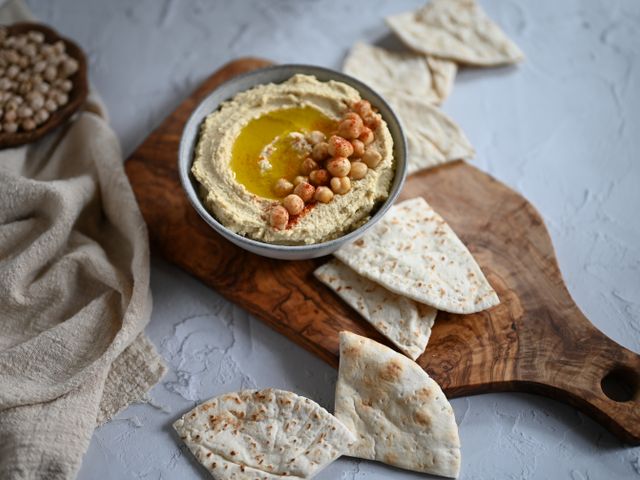
Silky, creamy hummus made from chickpeas blended with tahini, fresh lemon juice, and garlic. A versatile Middle Eastern dip that takes just minutes to make and keeps for days. Perfect served with pita bread, vegetables, or as a spread.
Steps
Before you start
- Have all ingredients at room temperature for the smoothest blend
- If using canned chickpeas, drain and rinse thoroughly
- Juice your lemon just before blending for maximum flavor
Combine base ingredients
- Add the drained chickpeas, tahini, lemon juice, minced garlic, and 2 tablespoons (30 ml) of olive oil to a food processor.
- Start with ½ teaspoon of salt.
+ Show details− Hide details
Tip: Keep all ingredients at room temperature—cold chickpeas or tahini make blending harder and the texture less creamy.
Blend until smooth
- Pulse 5 to 6 times, then blend continuously for 3 to 4 minutes.
- Scrape down the sides as needed.
- The hummus will go from chunky to creamy, lightening in color as air incorporates.
+ Show details− Hide details
Ready when: Hummus is light, fluffy, and completely smooth with no visible chunks; it should mound slightly when scooped.
Tip: Don't rush—patience creates the silky texture. If it looks grainy, keep blending; this is normal. A high-powered blender works faster than a standard food processor.
Adjust consistency and seasoning
- If the hummus is too thick, add ice water 1 tablespoon at a time while blending until you reach a spoonable, dip-like consistency.
- Taste and add more salt, lemon juice, or a pinch of cayenne pepper to suit your preference.
+ Show details− Hide details
Ready when: Hummus scoops easily onto a pita or cracker without being stiff or runny.
Tip: Add water gradually—too much makes it thin and watery. Ice water keeps the hummus cool and maintains creaminess.
Transfer and finish
- Spoon the hummus into a serving bowl.
- Make a shallow well in the center with the back of a spoon.
- Drizzle the remaining 1 tablespoon (15 ml) of olive oil into the well, then dust with smoked paprika and a pinch of cayenne if desired.
+ Show details− Hide details
Tip: The oil pool not only looks beautiful but also adds richness and helps keep the surface from drying out.
Good to know
Tips
- For extra creamy hummus, reserve ¼ cup (60 ml) of the chickpea cooking liquid and add it gradually while blending instead of ice water—it's starch helps create a silkier texture.
- If your hummus breaks or looks grainy after extended blending, stop and let it rest for 1 minute. Resume blending; often it comes together. If not, transfer to a bowl and whisk in 1 tablespoon of warm water until smooth.
- Taste as you go—lemon juice and salt are the most important adjustments. Start conservative; you can always add more.
- Make a batch and freeze it in portions for quick weeknight snacks. Thaw and serve with warm pita, fresh vegetables, or use as a sandwich spread.
Make ahead
Hummus is best made 1 to 2 hours ahead to let flavors meld. Make it up to 3 days in advance and store covered in the refrigerator, adding the oil-and-paprika topping just before serving.
Storage & reheating
Room temperature (up to 2 hours, covered): Keep the hummus covered with plastic wrap to prevent it from drying out. Refrigerator (up to 4 days): Transfer to an airtight container with a tight-fitting lid. To reheat, let it sit at room temperature for 15 minutes or warm gently in the microwave (10 to 15 seconds), then drizzle with olive oil. Freezer (up to 3 months): Freeze in an airtight freezer container or ice cube trays. Thaw in the refrigerator overnight and re-blend or stir to restore creaminess before serving.
Substitutions
- tahini (sesame paste) → Natural peanut butter or sunflower seed butter. Use the same amount. This creates a nuttier, less authentic hummus but still delicious. Reduce salt slightly as peanut butter can be salty.
- fresh lemon juice → Fresh lime juice or white wine vinegar. Use the same amount. Lime gives a brighter, more tropical note; vinegar adds tanginess. Adjust to taste.
- cooked chickpeas, drained and rinsed → White beans or cannellini beans. Use the same amount. The result is milder and slightly less thick; add an extra ½ tablespoon of tahini if needed for body.
- garlic cloves → Roasted garlic cloves. Use 2 to 3 roasted cloves for a milder, sweeter flavor. Roasted garlic creates a different character but no raw heat.
More dips & spreads
See all →




Find more like this
- Meal
- Snack
- Cuisine
- Middle Eastern
- Main ingredient
- Chickpeas
- Method
- No-Cook