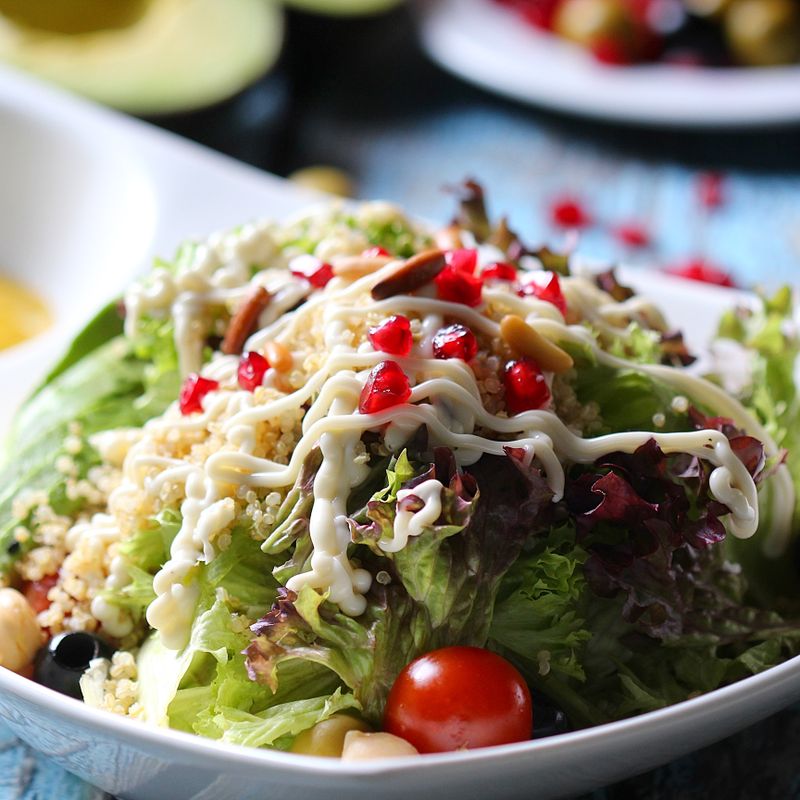
Holiday Spiced Pear Walnut Dressing
A silky, warm-spiced dressing made from fresh pears and toasted walnuts, with champagne vinegar and earthy clove and cinnamon. Perfect for bitter greens or hearty winter salads. The pear purée base makes it naturally sweet and creamy without cream.
- Prep
- 15 min
- Cook
- 8 min
- Wait
- 5 min
- Total
- 28 min
- Makes
- 1 cup (240 ml) dressing
Steps
Before you start
- Choose a ripe pear that yields slightly to pressure—not hard or overripe
- Have all ingredients measured and ready before you start blending
- Toast the walnuts just before making the dressing so they're warm and aromatic
Toast the walnuts
- Place the walnut pieces in a dry 8-inch skillet over medium heat.
- Stir frequently for 3–4 minutes until fragrant and lightly golden.
- Watch carefully—walnuts burn easily.
- Transfer to a plate and let cool for 2 minutes.
+ Show details− Hide details
Ready when: Walnuts are fragrant and light golden brown
Tip: Don't skip toasting—it deepens the walnut flavor and makes the dressing more complex
Prepare the pear
- While the walnuts cool, halve the pear lengthwise and scoop out the core with a spoon or melon baller.
- Peel with a vegetable peeler, then cut the flesh into 1-inch chunks.
- You should have about 1 cup (180 g) of chopped pear.
+ Show details− Hide details
Tip: Prep the pear just before blending to prevent browning. If it does brown slightly, a squeeze of lemon juice won't hurt the flavor
Build the dressing base
- Add the toasted walnuts, pear chunks, champagne vinegar, shallot, cinnamon, and clove to a blender or food processor.
- Start with 3 tablespoons (45 ml) of the oil and blend on medium speed for 30–45 seconds until the mixture becomes a smooth, thick paste.
- Stop to scrape down the sides if needed.
+ Show details− Hide details
Ready when: Mixture is smooth and light tan, with no large walnut or pear chunks visible
Tip: Don't over-blend initially—you want a creamy base, not a separated emulsion yet
Emulsify the dressing
- With the blender running on low speed, slowly drizzle in the remaining oil (about 7 tablespoons / 105 ml) in a thin, steady stream over 30–45 seconds.
- This gradual addition helps the dressing emulsify and thicken.
- Stop pouring when the dressing reaches the consistency of thin ranch dressing.
+ Show details− Hide details
Ready when: Dressing is creamy, pale tan, and coats the back of a spoon
Tip: Add oil slowly—adding it all at once can break the emulsion. If the dressing splits, whisk in 1 tablespoon of water to bring it back together
Season to taste
- Taste a small spoonful of the dressing.
- Season with sea salt and freshly ground black pepper to taste, starting with ¼ teaspoon salt and a few grinds of pepper.
- If you prefer a touch of extra sweetness, stir in the optional ½ teaspoon of honey.
- Blend on low for another 10 seconds to combine.
+ Show details− Hide details
Ready when: Dressing tastes balanced—warm spices and vinegar forward, with subtle pear sweetness and walnut depth
Tip: The spices can mellow slightly as the dressing sits; season a bit on the bold side initially
Optional straining for silk-smooth texture
- For an ultra-refined texture, strain the dressing through a fine-mesh strainer or nut-milk bag into a bowl, pressing gently on the solids with the back of a spoon.
- This removes any walnut bits or fibrous pear strands.
- Skip this step if you prefer a more rustic, textured dressing.
+ Show details− Hide details
Ready when: Dressing flows freely with no visible particles
Tip: Straining is optional but transforms the texture into restaurant-quality smoothness
Good to know
Tips
- This dressing coats bitter greens (endive, radicchio, kale) beautifully and stands up to roasted beets, chicory, and caramelized onions.
- For a creamier dressing, blend in 2 tablespoons (30 ml) of heavy cream or Greek yogurt in the final step; it adds richness without breaking the emulsion.
- Walnut skins can leave slight bitterness if the nuts are over-toasted or old. If the dressing tastes off, blanch the walnuts briefly in boiling water, pat dry, and toast again.
- Make a smaller batch by halving all ingredients, using a food processor instead of a blender for better control with less volume.
Make ahead
Prepare the dressing up to 3 days ahead. Store in a glass jar or sealed container in the refrigerator. The flavors deepen and meld after 1 day. Shake or whisk to recombine before using, as the oil may separate slightly during storage.
Storage & reheating
Room temperature: Up to 2 hours (not ideal for dressing—best served chilled). Refrigerator: Up to 3 days in a sealed glass jar or container. The flavors mellow slightly but remain delicious. If the dressing thickens excessively when cold, let it sit at room temperature for 5 minutes or whisk in a teaspoon of water to loosen. Freezer: Not recommended; the emulsion will break upon thawing.
Substitutions
- ripe Bartlett or Bosc pear → Ripe apple (Honeycrisp, Granny Smith, or Pink Lady). Use a mix of tart and sweet apple for complexity. Adds crispness rather than soft pear texture, but flavors pair beautifully with the spices
- raw walnuts, pieces → Toasted hazelnuts or pecans. Hazelnuts bring earthiness and pecans add sweetness. Both toast in the same 3–4 minutes; watch for color
- champagne vinegar → White wine vinegar or apple cider vinegar. White wine vinegar is delicate; cider vinegar adds apple-y warmth. Reduce either to 2.5 tablespoons (37 ml) to avoid overshooting acidity
- neutral oil (light olive, grapeseed, or canola) → Extra-virgin olive oil. A buttery, fruity EVOO enhances the pear and walnut notes. Use all EVOO or blend half with a milder oil to prevent the flavor from overpowering