Holiday Herb Crusted Potato Wedges with Garlic Aioli
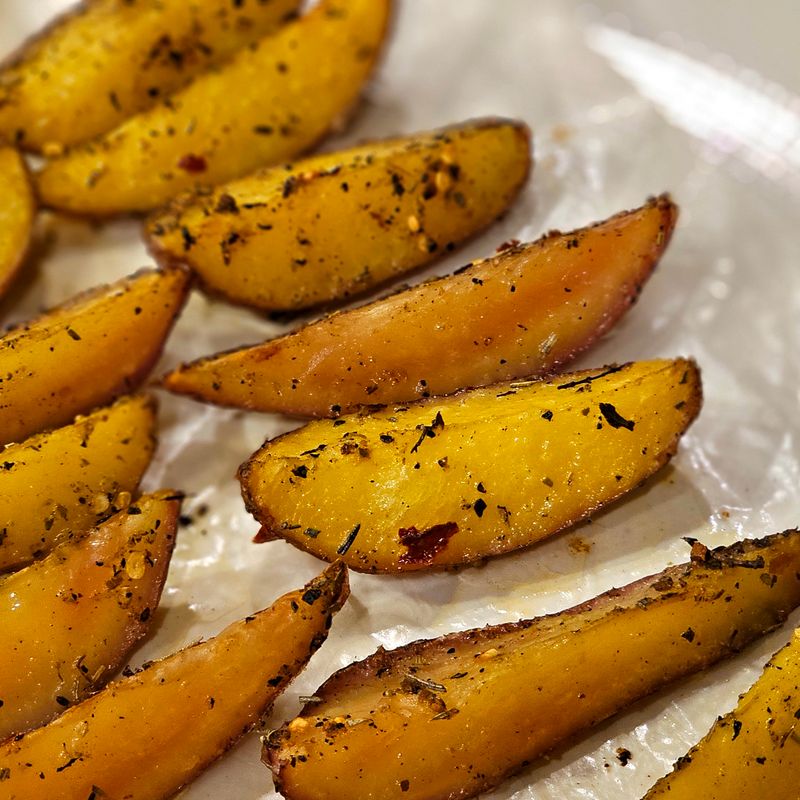
Crispy oven-baked potato wedges coated in a golden herb-panko crust, served with silky garlic aioli. Fresh rosemary, thyme, and parsley create a festive flavor that's baked rather than deep-fried for a lighter yet satisfying side dish.
- Prep
- 20 min
- Cook
- 35 min
- Wait
- 10 min
- Total
- 1 hr 5 min
- Makes
- 4 servings (about 24 wedges)
Steps
Before you start
- Preheat oven to 425°F (220°C)
- Line two large rimmed baking sheets with parchment paper or aluminum foil
- Pat potatoes completely dry before breading—moisture prevents crispiness
- Have all herbs chopped and measured before you start coating
Cut potatoes into wedges
- Slice each potato lengthwise into quarters, then cut each quarter in half lengthwise to create wedges roughly ¾ inch (2 cm) thick.
- Pat all wedges thoroughly dry with paper towels—any remaining moisture will make the coating soggy.
+ Show details− Hide details
Ready when: Wedges are ¾ inch (2 cm) thick and completely dry
Tip: Don't skip the drying step—wet potatoes won't crisp up and the herb coating may fall off.
Prepare dredging station
- Set up three shallow bowls in a row.
- In the first bowl, whisk together the beaten egg and 1 tablespoon (15 ml) of the olive oil.
- In the second bowl, combine panko, fresh rosemary, fresh thyme, fresh parsley, garlic powder, sea salt, and black pepper.
- The third bowl remains empty for now.
+ Show details− Hide details
Ready when: Herb-panko mixture is evenly combined with no clumps
Tip: Keep your left hand dry for picking up plain potatoes, and your right hand wet for dipping—this prevents breading from clumping on your fingers.
Coat wedges with egg and herbs
- Working with 3–4 wedges at a time, dip each into the egg mixture, coating both flat sides and edges.
- Transfer to the herb-panko mixture and gently press and roll to coat completely on all sides, using your fingers to pack the coating lightly onto the potato.
- Place coated wedges on the prepared baking sheets in a single layer without crowding.
- Lightly drizzle the remaining 2 tablespoons (30 ml) olive oil over all wedges.
+ Show details− Hide details
Ready when: All wedges are evenly coated with herb-panko and arranged in a single layer
Tip: Don't overcrowd the baking sheets—wedges need space to crisp. If needed, use a third sheet.
Bake until golden and crispyOven 425°F / 220°C
- Place both baking sheets in the preheated 425°F (220°C) oven, positioning one on the upper-middle rack and one on the lower-middle rack.
- Bake for 30–35 minutes, rotating the sheets halfway through (about 17 minutes in), until the coating is deep golden brown and the potatoes are fork-tender inside.
+ Show details− Hide details
Ready when: Coating is deep golden brown; fork pierces potato easily
Tip: Swap rack positions halfway through for even browning. If edges brown too fast, lower oven to 400°F (200°C) for the second half.
Make garlic aioli
- While wedges bake, prepare the aioli.
- In a medium bowl, whisk together the minced garlic clove, egg yolk, and Dijon mustard until combined.
- Add the lemon juice and whisk again.
- Very slowly, while whisking constantly, add the neutral oil in drops (literally drop by drop for the first ¼ cup / 60 ml).
- Once the mixture begins to thicken and emulsify, you can add the oil in a thin steady stream while whisking continuously until all is incorporated.
- Season to taste with sea salt.
+ Show details− Hide details
Ready when: Aioli is thick, creamy, and pale—resembles mayonnaise
Tip: Don't rush the oil; adding it too quickly will break the emulsion. If it breaks, start with a fresh egg yolk in a clean bowl and slowly whisk in the broken mixture.
Rest and serve
- Remove baked wedges from the oven and let rest on the baking sheets for 5 minutes to firm up slightly.
- Transfer to a serving platter.
- Serve warm with the garlic aioli on the side for dipping.
+ Show details− Hide details
Ready when: Wedges have cooled enough to handle without burning fingers
Tip: The coating stays crispest when served within 15 minutes of coming out of the oven.
Good to know
Tips
- For extra flavor, toast the panko in a dry skillet over medium heat for 2–3 minutes before mixing with herbs—this adds nuttiness and deepens the golden color.
- If the aioli breaks (appears curdled or separates), don't discard it. Start with a fresh egg yolk and slowly whisk in the broken mixture as if adding oil; it will re-emulsify.
- Russet potatoes are ideal here for their starch content, which creates a naturally fluffy interior. Avoid waxy varieties like red potatoes, which won't crisp as well.
- For a vegan version, replace the egg with 3 tablespoons (45 ml) aquafaba (liquid from canned chickpeas) and use vegan mayonnaise instead of neutral oil in the aioli to create the emulsion.
Make ahead
The herb-panko mixture can be prepared up to 1 day ahead and stored in an airtight container at room temperature. Cut and dried potatoes can be coated up to 2 hours ahead, then covered and refrigerated until baking.
Storage & reheating
Baked wedges are best eaten fresh and warm, but leftovers can be stored in an airtight container in the refrigerator for up to 2 days. Reheat on a baking sheet at 375°F (190°C) for 8–10 minutes until warmed through and crispy. Garlic aioli keeps refrigerated for up to 3 days in a covered container; stir well before serving.
Substitutions
- fresh rosemary, leaves only → 1 teaspoon (1 g) dried rosemary. Use one-third the amount of dried herbs since they are more concentrated. Omit the fresh thyme and parsley and use ½ teaspoon each of dried thyme and dried oregano instead.
- neutral oil (vegetable or canola) → light olive oil or avocado oil. Either works equally well for the aioli. Avoid extra-virgin olive oil, which has a strong flavor that may overpower the garlic.
- panko breadcrumbs → Fine breadcrumbs or crushed saltine crackers (70 g if using regular breadcrumbs). Regular breadcrumbs will create a less airy crust. Crush saltines by hand or food processor until resembling sand.
- garlic cloves → ½ teaspoon garlic powder mixed with 1 tablespoon (15 ml) water for the aioli. This is a convenience substitution; fresh garlic yields superior flavor and smoother emulsion.