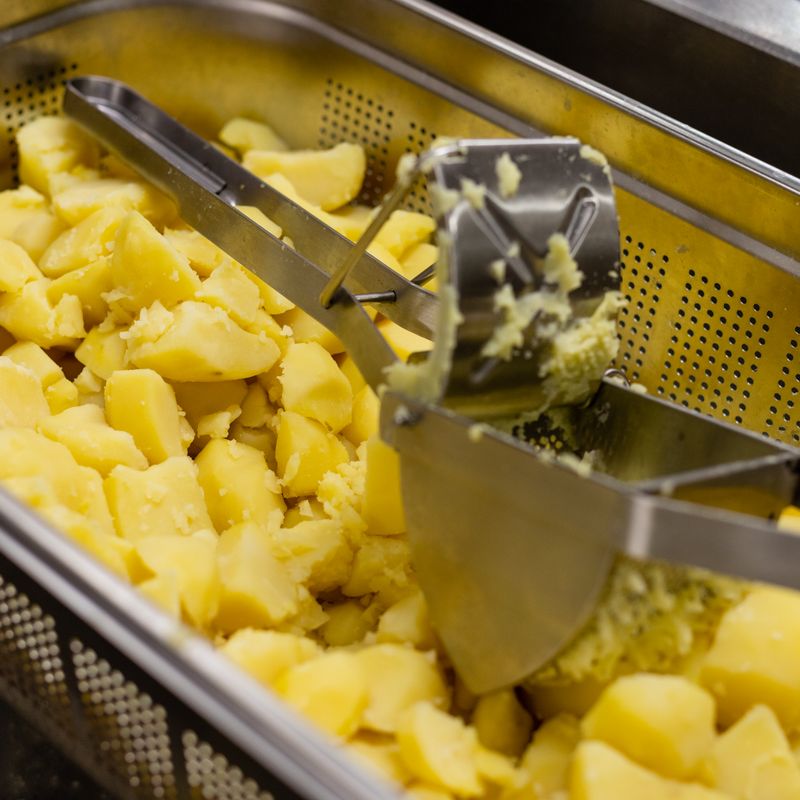
Holiday Beet and Horseradish Potato Purée
A striking Eastern European-inspired purée that combines creamy mashed potatoes with roasted beets, sharp horseradish, and fresh dill. The beets lend a beautiful pink hue and earthy sweetness, while horseradish adds a distinctive peppery bite that pairs beautifully with holiday roasts and other festive mains. Simple to prepare yet restaurant-worthy in presentation.
- Prep
- 20 min
- Cook
- 35 min
- Total
- 55 min
- Makes
- About 4 cups (950 ml), serving 6
Steps
Before you start
- Peel and cut potatoes and beets before cooking so they cook at the same rate
- Use a ricer or food mill if you have one for the smoothest texture; a masher works well too
- Prep the horseradish (grate or use prepared) and fresh dill while potatoes cook
Boil potatoes and beets
- In a large pot, combine the prepared potato and beet chunks.
- Cover with cold water (about 2 inches / 5 cm above the vegetables) and add a pinch of salt.
- Bring to a boil over high heat, then reduce to a medium simmer.
- Cook for 20–25 minutes, until both the potatoes and beets are fork-tender and easily pierced.
- The beets may take slightly longer, so cut them to match the potato chunk size to ensure even cooking.
+ Show details− Hide details
Ready when: Vegetables are easily pierced with a fork and break apart with little resistance
Tip: Cut beets and potatoes to the same size so they finish cooking at the same time.
Drain and return to pot
- Drain the potatoes and beets thoroughly in a colander, shaking off excess water.
- Return them to the warm pot off the heat.
+ Show details− Hide details
Ready when: Vegetables are fully drained and back in the pot
Tip: Dry vegetables lead to a creamier purée; excess water makes it watery.
Mash or rice the vegetables
- Working in batches if necessary, pass the warm potatoes and beets through a potato ricer into a large bowl, or mash them directly in the pot using a potato masher until smooth or your preferred texture.
- A ricer yields a silkier, fluffier result; a masher gives a more rustic texture.
- Do not use a food processor, which can overwork the potatoes and make them gluey.
+ Show details− Hide details
Ready when: Vegetables are broken down to a smooth or chunky purée, as preferred
Tip: Never use a food processor—it releases too much starch and creates a gluey, unpleasant texture.
Add butter and milk
- Stir in the cold butter pieces and warm milk into the mashed potato mixture.
- Fold gently with a wooden spoon until the butter is melted and the purée is creamy and smooth.
- Do not overmix.
+ Show details− Hide details
Ready when: Butter is fully incorporated, purée is creamy and light
Tip: Cold butter creates a silkier, creamier texture than warm butter stirred in; use room-temperature milk to avoid cooling the purée.
Stir in horseradish and dill
- Fold in the prepared horseradish and fresh chopped dill until evenly distributed.
- Taste and adjust seasoning with kosher salt, black pepper, and a pinch of white pepper if desired.
- The horseradish should provide a pleasant peppery bite without overpowering the beet and potato flavors.
+ Show details− Hide details
Ready when: Horseradish and dill are evenly mixed throughout; seasoning is balanced
Tip: Add horseradish gradually—you can always add more, but you can't remove it. Start with 2 tablespoons (30 ml) and increase to taste.
Transfer and serve
- Transfer the purée to a warm serving dish and serve immediately while hot.
- A light swirl of additional fresh dill on top adds a festive touch.
+ Show details− Hide details
Ready when: Purée is in the serving dish and ready to plate
Tip: Keep the serving dish warm in a low oven (250°F / 120°C) if not serving immediately.
Good to know
Tips
- Beet juice can stain hands and cutting boards. Wear gloves or wash your hands immediately after handling raw beets to avoid pink stains.
- For the brightest pink color, use smaller, younger beets, which have less earthiness and more natural sweetness.
- This dish pairs beautifully with roasted pork, duck, beef brisket, or smoked ham. The horseradish complements rich, savory meats.
- If you prefer a looser, more pourable purée, increase the milk to 3/4 cup (180 ml) or add a little of the cooking liquid.
Make ahead
The purée can be made up to 1 day ahead. Prepare through the end of step 5, then refrigerate in an airtight container. Reheat gently in a saucepan over low heat, stirring occasionally and adding a splash of warm milk if it becomes too thick. Do not reheat in the microwave, as it can create uneven hot spots.
Storage & reheating
Store leftovers in an airtight container in the refrigerator for up to 3 days. Freeze for up to 2 months in a freezer-safe container. Thaw in the refrigerator overnight and reheat gently over low heat on the stovetop, stirring often and adding milk as needed to restore a creamy consistency.
Substitutions
- prepared horseradish → 1–2 tablespoons (15–30 ml) freshly grated horseradish root (adjust to taste). Fresh horseradish is much sharper; start with less and taste as you go. It will be more peppery and intense than prepared horseradish.
- fresh dill, finely chopped → 2 tablespoon (6 g) fresh parsley, chopped, or 1 teaspoon (1 g) dried dill. Parsley is milder and won't compete with the horseradish; dried dill works but has less bright flavor.
- whole milk → Heavy cream, sour cream, or crème fraîche (use 1/4 cup / 60 ml for a richer result). Any of these will create a richer, tangier purée. Adjust quantity based on how creamy you want the final result.
- waxy potatoes (such as Yukon Gold) → All-purpose potatoes (such as Russet) or a mix of waxy and starchy varieties. Starchy potatoes will yield a fluffier, lighter purée but may break apart more during cooking. Waxy potatoes stay intact and give a silkier result.
More potato sides
See all →




Find more like this
- Meal
- Dinner
- Cuisine
- Middle Eastern
- Main ingredient
- Potatoes
- Occasion
- Christmas
- Season
- Winter Comfort Food