
Hearty Chicken and Cashew Biryani
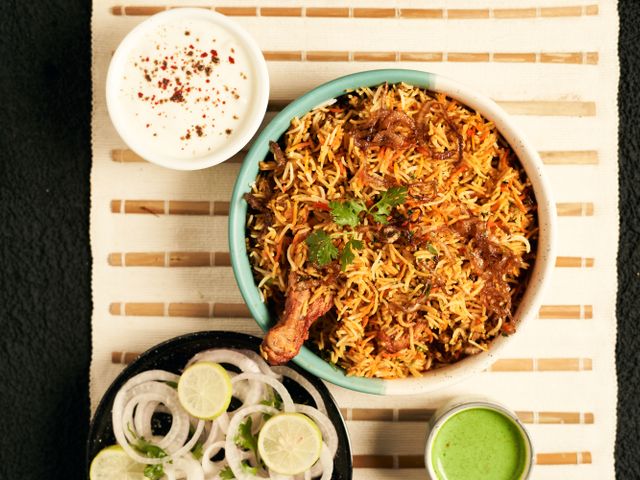
A fragrant one-pot biryani where tender chicken marinated in yogurt and spices layers with partially cooked basmati rice, then slow-steams sealed shut. Toasted cashews, plump raisins, and caramelized onions add richness and texture. The dum pukht method infuses every grain with aromatic spices—cardamom, cinnamon, and bay leaves—creating a restaurant-quality dish at home.
- Prep
- 40 min
- Cook
- 55 min
- Wait
- 1 hr 45 min
- Total
- 3 hr 20 min
- Makes
- 6 servings (about 1½ cups per person)
Steps
Before you start
- Pat chicken dry with paper towels so the yogurt marinade adheres well
- Soak 2 cups (400 g) basmati rice in cold water for 30 minutes, then drain
- Measure out all whole spices before you begin cooking
- Have a 5-quart (4.7 L) heavy-bottomed pot or biryani handi with a tight-fitting lid ready
Marinate the chicken
- In a large mixing bowl, combine yogurt, ginger-garlic paste, minced green chilis, cilantro-mint mixture, turmeric, red chili powder, garam masala, salt, and lemon juice.
- Add the dried chicken pieces and stir well to coat evenly.
- Cover and let marinate at room temperature for 20 minutes (or in the refrigerator for up to 4 hours).
- This allows the spices to penetrate the meat.
+ Show details− Hide details
Ready when: Chicken pieces are evenly coated and smell fragrant
Tip: Use yogurt at room temperature so it absorbs evenly into the meat; if marinating longer, let chicken sit out 20 minutes before cooking
Fry onions until golden
- While the chicken marinates, heat 6 tablespoons (90 ml) of ghee in a 5-quart pot over medium-high heat.
- Add the sliced onions in batches and fry, stirring occasionally, until deeply golden brown and crispy, about 15 minutes total.
- Remove with a slotted spoon and spread on a plate lined with paper towels to drain.
- Once cool, break into rough pieces.
- Reserve 3 tablespoons (45 ml) of the ghee left in the pot.
+ Show details− Hide details
Ready when: Onions are deep golden brown, crispy, and fragrant; darker shades at the edges
Tip: Cook onions in batches so they brown rather than steam; crowding the pan will release moisture and turn them soft instead of crispy
Fry cashews and raisins
- In the same pot with the reserved ghee, reduce heat to medium.
- Add cashew halves and fry for 1–2 minutes, stirring constantly, until light golden.
- Add the raisins and fry for another 30 seconds just to warm them through.
- Transfer to a small plate.
- This takes about 2 minutes total.
+ Show details− Hide details
Ready when: Cashews are light golden; raisins are plump and warm
Tip: Watch carefully—cashews burn quickly. Remove as soon as they turn pale gold
Cook rice partway
- Bring 3½ cups (840 ml) water to a boil in a separate pot.
- Add 1½ teaspoons salt and stir.
- Add the drained basmati rice, stir once, and cook over high heat for 6–7 minutes.
- The rice should be about 60–70% cooked: the outside will be soft but the center of each grain will still be slightly firm when you bite it.
- Drain immediately in a colander.
+ Show details− Hide details
Ready when: Rice grains are soft outside but still slightly firm in the center; a grain cut in half shows a small opaque core
Tip: Partially cooked rice is the key to biryani—fully cooked rice will turn to mush during the dum pukht. Test by tasting a grain
Layer rice and chicken
- Add the remaining ghee (about 3–4 tablespoons/45–60 ml) to the 5-quart pot and place over medium heat.
- Gently tip the marinated chicken pieces with their yogurt marinade into the pot as the first layer.
- Spread evenly across the bottom.
- Top with half the partially cooked rice, spreading it evenly.
- Scatter half the fried cashews, raisins, and crispy onions over the rice.
- Add the remaining rice as the next layer, then top with the remaining cashews, raisins, and onions.
+ Show details− Hide details
Ready when: All ingredients are layered neatly; the rice is the top layer
Tip: Spread each layer gently with a fork to avoid crushing the rice; the layers don't need to be perfectly even—gentle mixing will happen during steaming
Add whole spices
- Sprinkle the crushed green cardamom pods, cinnamon stick, cloves, bay leaves, and black peppercorns evenly over the top layer of rice.
- These will flavor the biryani as steam circulates throughout.
+ Show details− Hide details
Ready when: Spices are distributed across the top
Seal the pot (dum pukht)
- Reduce heat to medium.
- Tear off a piece of aluminum foil slightly larger than the pot's opening and crimp it tightly over the rim, pressing it snugly all around so steam cannot escape.
- Place the tight-fitting lid on top, pressing down firmly.
- The foil-and-lid seal is what makes dum pukht work—it traps steam completely.
- Let the pot sit on medium heat for 4–5 minutes until you hear a faint hiss or see steam beginning to escape from the edges.
- This is the signal that the pot is sealed and steam is building.
+ Show details− Hide details
Ready when: Faint hissing or slight steam visible at the lid edges
Tip: A proper seal is essential—if steam escapes from the center, the biryani will dry out. If using a biryani handi (clay pot), soak it in water for 30 minutes first and it won't need foil
Steam on the stovetop
- Once steam appears, reduce heat to low (the lowest setting your burner allows).
- Continue cooking for 45 minutes without lifting the lid or breaking the seal.
- The biryani needs complete privacy to steam: the chicken will poach in its yogurt marinade, the rice will absorb all the flavors, and the whole spices will infuse everything.
- Do not peek or stir during this time.
- Place a sturdy heat diffuser (or a tawa/griddle) under the pot if your burner runs very hot, to prevent burning the bottom.
+ Show details− Hide details
Ready when: No visual check needed during cooking; you will smell fragrant steam escaping—a sign everything is cooking
Tip: Resist opening the lid—each time you do, you release all the trapped steam and the biryani may dry out or cook unevenly. A heat diffuser prevents the bottom from scorching
Rest and fluff
- Turn off the heat and let the pot rest, still sealed, for 10 minutes.
- This allows the rice to set and the flavors to settle.
- Carefully remove the foil seal (watch for hot steam), then lift the lid away from you.
- Using a fork, gently fluff the rice in the pot, breaking up any lumps and mixing the layers together slightly.
- The biryani should release a wonderful aroma and the rice grains should be separate and fluffy, with the chicken tender and fragrant throughout.
+ Show details− Hide details
Ready when: Steam no longer rises; rice is fluffy and separate; chicken is very tender when poked with a fork
Tip: Fluff gently with a fork rather than stirring with a spoon to keep grains from breaking; the delicate structure is worth preserving
Serve garnished
- Transfer the biryani to a serving platter or serve directly from the pot.
- Scatter fresh cilantro over the top if using.
- Serve hot, allowing each diner to help themselves to a generous portion of rice mixed with chicken, cashews, and raisins.
- A simple cucumber-tomato salad (raita) or pickle on the side complements the rich biryani beautifully.
+ Show details− Hide details
Tip: Scoop straight down into the biryani so each plate includes rice and chicken mixed together for the best flavor in every bite
Good to know
Tips
- The dum pukkt method seals in flavors and moisture—never lift the lid until step 9, or steam will escape and the biryani will dry out
- Basmati rice is essential because its long grains stay separate; other varieties will break down into mush
- Partially cooked rice (60–70% done) is the crucial detail: fully cooked rice becomes mushy, and undercooked rice stays hard. Test by tasting a grain or cutting one in half to see a small opaque core in the center
- Dark, crispy onions (fried to a rich mahogany brown) add flavor and texture that elevate the entire dish—don't rush this step or use pale onions
Make ahead
Marinate the chicken for up to 4 hours in the refrigerator. Fry the onions, cashews, and raisins several hours ahead and store them in separate containers at room temperature. Partially cook the rice (Step 4) up to 2 hours ahead and keep it in a colander uncovered at room temperature. Assemble and cook the biryani the same day you serve it; biryani is best fresh from the pot.
Storage & reheating
Store leftover biryani in an airtight container in the refrigerator for up to 3 days. To reheat, transfer to a pot, sprinkle lightly with water (2–3 tablespoons), cover with a lid, and warm over medium-low heat for 8–10 minutes, stirring gently halfway through, until heated through. Biryani does not freeze well because the rice texture suffers, but you may freeze the marinated chicken separately for up to 2 months.
Substitutions
- boneless, skinless chicken thighs → boneless, skinless chicken breast. Reduces marinating time to 15 minutes and cooking time to 40 minutes (breast dries faster than thigh); use a meat thermometer to check doneness at 165°F (74°C)
- raw cashew halves → sliced or slivered almonds, or pine nuts. Use the same quantity; almonds are slightly less rich, but their delicate flavor complements the biryani equally well
- golden raisins → pitted dried apricots, halved, or dried cranberries. Same amount; apricots add subtle tartness, while cranberries provide brightness
- ghee (clarified butter) → unsalted butter or a neutral oil (such as vegetable or canola oil). Ghee gives the most authentic flavor and higher smoke point; butter will work but lacks the rich, toasted quality; avoid olive oil as it will turn bitter with prolonged heating
More biryani
See all →


Find more like this
- Meal
- Dinner
- Cuisine
- Indian
- Main ingredient
- Chicken ThighsBasmati Rice
- Method
- Stovetop
- Quick & Easy
- Make Ahead