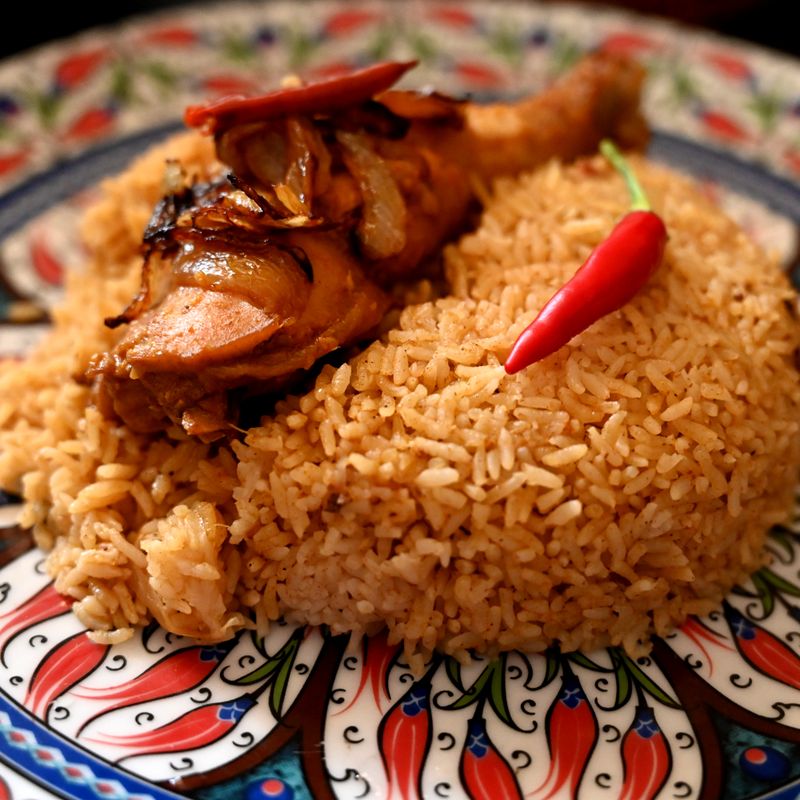
Fragrant Basmati Chicken Biryani
A fragrant, layered rice and chicken dish cooked using the dum pukht (slow steam) method. Tender, yogurt-marinated chicken is layered with partially cooked basmati rice, then sealed and slow-steamed until the rice absorbs all the aromatic flavors. Finished with saffron-infused milk, fried onions, and fresh herbs. Serves 4–5 as a main course.
- Prep
- 40 min
- Cook
- 1 hr 15 min
- Wait
- 1 hr 30 min
- Total
- 3 hr 25 min
- Makes
- 1 biryani (5 servings)
Steps
Before you start
- Marinate the chicken in yogurt and spices at least 2 hours (or up to 8 hours) ahead for best flavor.
- Have all ingredients and equipment ready before you begin; biryani requires coordinated timing.
- Use a heavy-bottomed pot with a tight-fitting lid for proper steam cooking.
- Toast whole spices lightly in a dry pan to release their oils and enhance aroma.
Marinate the chicken
- In a large bowl, combine the yogurt, ginger-garlic paste, red chili powder, turmeric, coriander, cumin, and salt.
- Add the chicken pieces and stir well to coat evenly.
- Cover and refrigerate for at least 2 hours, preferably 4–8 hours.
- This allows the spices to penetrate the meat and tenderize it.
+ Show details− Hide details
Ready when: Chicken is well coated and has absorbed some of the yogurt marinade
Tip: Use boneless, skinless thighs instead of breasts—they stay moister during the long cooking process.
Prepare saffron milk
- Place the saffron threads in a small bowl and pour the warm milk over them.
- Set aside to steep for at least 30 minutes; the milk will turn golden and the saffron will release its flavor and color.
- This will be drizzled over the biryani at the end.
+ Show details− Hide details
Ready when: Milk is golden yellow and saffron threads have softened
Fry the onions
- Heat 3 tablespoons (45 ml) of the ghee in a large pan over medium-high heat.
- Once shimmering, add the sliced onions and cook, stirring frequently, for 8–10 minutes until they turn deep golden brown and crispy.
- Remove with a slotted spoon and drain on paper towels.
- Reserve the ghee in the pan for later use.
+ Show details− Hide details
Ready when: Onions are deep golden brown and crispy, not burnt
Tip: Watch carefully—onions can burn quickly. Medium heat may be safer if your pan heats unevenly.
Boil the rice
- In a large pot, bring 4 cups (1 liter) of water to a rolling boil and add 1½ teaspoons (9 g) of salt.
- Add the rinsed basmati rice and stir gently.
- Boil uncovered for 5–6 minutes until the rice is about 70% cooked—it should still have a slight firmness in the center.
- Drain in a fine-mesh sieve.
- The rice will finish cooking during the dum pukht phase.
+ Show details− Hide details
Ready when: Rice is partially cooked, tender but still firm in the center when tasted
Tip: Do not fully cook the rice—it will finish in the sealed pot. Cooking it only partway prevents mushy biryani.
Toast the whole spices
- In a small dry pan over low heat, lightly toast the cinnamon stick, bay leaves, crushed cardamom pods, cloves, and black peppercorns for 1–2 minutes, stirring gently, until fragrant.
- Transfer to a small bowl.
- Do not allow them to burn; they should become aromatic, not blackened.
+ Show details− Hide details
Ready when: Spices are fragrant and slightly darker but not burnt or smoking
Tip: Toasting releases volatile oils and deepens the aroma; it's a crucial step for authentic flavor.
Layer the biryani
- Choose a heavy-bottomed pot with a tight-fitting lid (5–6 quart / 5–6 L capacity).
- Spread one-third of the partially cooked rice on the bottom.
- Distribute half of the marinated chicken evenly over the rice, then scatter half of the toasted whole spices on top.
- Add another one-third of the rice, the remaining chicken, the remaining whole spices, and finish with the final third of the rice.
- Drizzle the remaining ghee (about 2 tablespoons / 30 ml) over the top, then sprinkle half of the fried onions and all the chopped cilantro and mint.
+ Show details− Hide details
Ready when: All ingredients are layered and the pot is ready to seal
Tip: Layer gently to avoid breaking the partially cooked rice grains. Symmetrical layering ensures even cooking and balanced flavor in each serving.
Seal and steam the biryani
- Drizzle the saffron-infused milk evenly over the top layer.
- Cover the pot tightly with its lid.
- If the lid is not a tight fit, wrap aluminum foil around the rim before placing the lid on top to trap steam.
- Place the sealed pot on a stovetop burner over medium heat.
- Listen for a gentle hissing sound after 2–3 minutes, indicating that steam is building.
- Reduce heat to low and continue cooking without opening the lid for 45–50 minutes.
- The biryani is done when you hear a faint crackle or when no more steam escapes when you tilt the lid slightly.
+ Show details− Hide details
Ready when: Steam no longer audibly escapes; rice is tender and fragrant; liquid is fully absorbed
Tip: Never lift the lid during cooking—this releases precious steam and breaks the seal. Resist the urge to peek; trust the timer and the aromas.
Rest and open
- Remove the pot from heat and let it rest undisturbed for 5 minutes.
- This allows the layers to set and the flavors to meld.
- Carefully remove the lid away from your face (steam will be very hot).
- Using a wooden spoon or fork, gently stir and fluff the biryani by breaking up the rice and chicken, mixing the layers together lightly.
- Sprinkle with the remaining fried onions for garnish.
+ Show details− Hide details
Ready when: Biryani can be gently fluffed without the rice breaking apart
Tip: Fluff gently to preserve the individual rice grains and avoid a mushy texture. Hot steam can cause burns, so be cautious when opening the lid.
Serve
- Transfer the biryani to a serving platter or individual bowls.
- Accompany with raita (yogurt with cucumber and spices), pickle, and/or a simple salad.
- The biryani is best served immediately while the rice is fluffy and warm.
+ Show details− Hide details
Tip: Biryani tastes best when served fresh; reheating can make it dry, though leftovers can be gently warmed with a few drops of water.
Good to know
Tips
- The key to perfect biryani is not lifting the lid during the dum pukht phase. The trapped steam cooks everything evenly and keeps the rice fluffy. Resist temptation and trust the process.
- Brown the onions until deep golden and crispy—they add crucial flavor, sweetness, and texture. Reserve some for garnish before fully cooking the batch.
- Use high-quality saffron and steep it in warm milk at least 30 minutes ahead. It's worth the investment for the color and subtle floral note it brings to the final dish.
- Rinsing the basmati rice before cooking removes excess starch and prevents clumping. Soak it for 20–30 minutes if you have time for even fluffier results.
Make ahead
Marinate the chicken 4–8 hours or overnight for deeper flavor development. Prepare the saffron milk, fry the onions, and toast the whole spices up to 2 hours ahead. Assemble and cook the biryani only shortly before serving to ensure the rice remains fluffy.
Storage & reheating
Biryani is best served fresh, but leftovers can be stored in an airtight container in the refrigerator for up to 3 days. To reheat, place on a plate, sprinkle with a few drops of water, cover loosely, and warm gently in a microwave or on low heat until heated through (3–5 minutes). Freezing is not recommended as the rice becomes hard and loses its texture upon thawing.
Substitutions
- ghee → clarified butter or vegetable oil. Ghee provides authentic flavor and a high smoke point; clarified butter is a close substitute. Oil works but lacks the nutty depth.
- boneless, skinless chicken thighs → boneless, skinless chicken breasts or lamb (cut into 1-inch cubes). Breasts are leaner but can dry out if overcooked; lamb adds a richer, more traditional flavor.
- plain yogurt (full-fat preferred) → Greek yogurt (use 1/2 cup, as it is thicker) or a mix of sour cream and regular yogurt. Greek yogurt is thicker and may coat better; sour cream adds tang but is less traditional.
- basmati rice → jasmine rice or other long-grain white rice. Basmati has the traditional fragrance and slender shape; jasmine is slightly softer but still acceptable.
More biryani
See all →



Find more like this
- Meal
- Dinner
- Cuisine
- Indian
- Main ingredient
- Chicken ThighsBasmati Rice
- Method
- Oven
- Quick & Easy
- Make Ahead