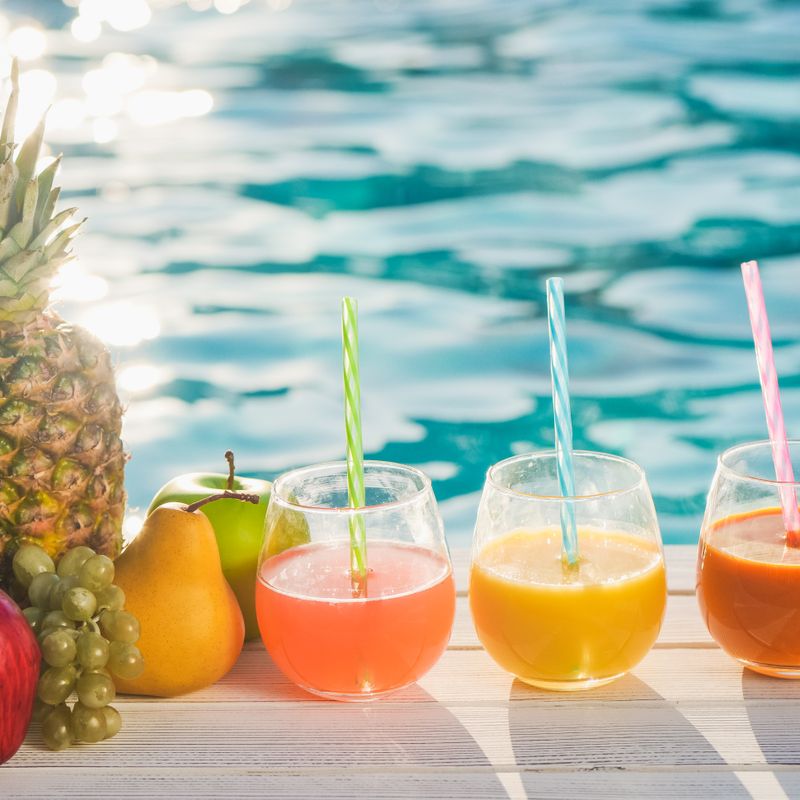
Fresh Grape Juice
Simple, fresh grape juice made from whole grapes with no added sugar or preservatives. This method uses gentle heat to extract the juice while preserving the bright, natural grape flavor. Perfect served chilled as a refreshing drink or used as a base for other beverages.
- Prep
- 10 min
- Cook
- 30 min
- Wait
- 2 hr
- Total
- 2 hr 40 min
- Makes
- 1 quart (4 cups / 960 ml) juice
Steps
Before you start
- Wash grapes thoroughly under cold running water and pat dry
- Place a fine-mesh strainer over a large bowl or pitcher and line it with cheesecloth if you prefer clearer juice
- Have a glass bottle or pitcher ready for storing the finished juice
Combine grapes and water
- Place 6 lb (2700 g) of rinsed grapes in a large heavy-bottomed pot (at least 8-quart / 7.5 L capacity).
- Add 0.5 cup (120 ml) of water.
- The water helps release the juice and prevents scorching on the bottom of the pot.
+ Show details− Hide details
Tip: Remove any green or damaged grapes before cooking, as they can make the juice taste tart or bitter.
Heat and soften grapesOven 375°F / 190°C
- Set the pot over medium-high heat (around 375°F / 190°C equivalent on a stovetop).
- Bring the grapes to a simmer, then reduce the heat to medium.
- Stir occasionally with a wooden spoon and let the grapes cook for 20–25 minutes.
- The grapes will release their liquid, soften, and begin to collapse.
- You should see a bubbling mass of fruit and liquid.
+ Show details− Hide details
Ready when: Grapes are very soft and the pot is full of liquid; skins have split and fruit is collapsing
Tip: Stir a few times to ensure even cooking and prevent sticking, but don't over-stir as this can release seeds and cloud the juice.
Strain juice through cheesecloth
- Remove the pot from heat and let it cool for 10 minutes.
- Line a fine-mesh strainer with cheesecloth (or use a fine-mesh strainer alone) and place it over a large bowl or pitcher.
- Slowly pour the grape mixture through the strainer, letting the liquid drain naturally.
- Do not press the fruit aggressively; gentle pressure only will keep the juice clear.
- This initial straining takes about 15–20 minutes.
+ Show details− Hide details
Ready when: All liquid has dripped through; fruit pulp remains in the cheesecloth
Tip: Save the pulp—it can be used for jam or jelly—but avoid squeezing it hard or you'll cloud the juice with sediment.
Optional: fine strain for clarity
- If you prefer very clear juice, strain the collected juice again through a fresh piece of cheesecloth (or a fine-mesh strainer) into a clean pitcher.
- This removes any remaining pulp or sediment.
- Skip this step if you enjoy a fuller-bodied juice with more natural texture.
+ Show details− Hide details
Ready when: Juice runs clear with minimal sediment
Tip: This second straining is optional but recommended if you dislike sediment or want juice that looks like store-bought.
Cool and bottle
- Let the juice cool to room temperature, about 30 minutes.
- Pour into clean glass bottles or pitchers.
- You should yield approximately 1 quart (4 cups / 960 ml) of juice from 6 lb (2700 g) of grapes.
- Seal bottles and refrigerate immediately.
+ Show details− Hide details
Ready when: Juice is completely cool and poured into bottles
Tip: Chill thoroughly before serving for the best flavor—serve over ice for a refreshing drink.
Good to know
Tips
- Choose ripe, flavorful grapes for the best-tasting juice; seedless varieties are convenient and work just as well as seeded grapes
- The longer you let the mixture sit on the stove after reaching a simmer, the deeper and more concentrated the flavor becomes; 25 minutes yields a balanced juice, but 30–35 minutes produces a more intense grape flavor
- Save the spent grape pulp and skins for homemade jelly, jam, or a natural face mask—they're full of flavor and nutrients
- If your grapes are very juicy, you can reduce the water to 0.25 cup (60 ml); if dry or underripe, increase it to 0.75 cup (180 ml)
Storage & reheating
Refrigerate in sealed glass bottles for up to 7 days. For longer storage, freeze in ice cube trays or freezer-safe containers for up to 3 months; thaw in the refrigerator overnight before serving. Do not use plastic containers long-term as grape juice can stain them.
Substitutions
- fresh grapes (red, green, or a mix) → white grape juice can be made using white/green grapes; reduce water to 0.25 cup (60 ml) as white grapes release less liquid. White grapes produce a lighter, slightly more delicate juice with less tannins than red grapes
- fresh grapes (red, green, or a mix) → frozen grapes (thawed) can substitute for fresh grapes in a 1:1 ratio by weight. Frozen grapes are already partially broken down and may release juice faster, so reduce cooking time by 5–10 minutes
- water → apple juice or cider can replace water for a blended fruit juice. This creates a grape-apple juice blend with added complexity and sweetness
More juices
See all →

Find more like this
- Meal
- Breakfast
- Method
- Stovetop
- Quick & Easy
- 5 Ingredients or LessEasyBeginner