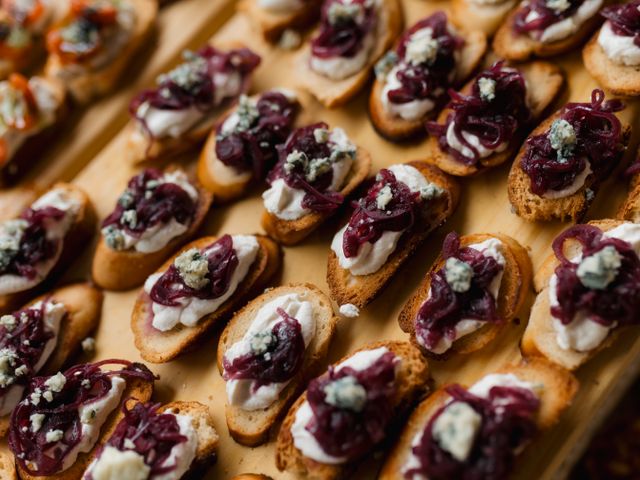
French Lyonnaise Caramelized Onion and Gruyère Dip
A silky, umami-rich dip featuring slowly caramelized yellow onions, aged Gruyère cheese, and white wine, finished with fresh thyme. Inspired by the classic French technique from Lyon, this warm dip is perfect for entertaining—serve it with toasted bread, crackers, or vegetable crudités for an elegant appetizer that tastes far more complicated than it is to make.
- Prep
- 15 min
- Cook
- 45 min
- Wait
- 5 min
- Total
- 1 hr 5 min
- Makes
- About 2 cups (480 ml) dip, serving 8 as an appetizer
Steps
Before you start
- Slice onions into thin, even strips (about ¼ inch thick) so they caramelize uniformly
- Have all ingredients measured and ready before you begin—the caramelizing process requires attention
- If serving warm, preheat your serving dish or a small fondue pot while you finish the dip
Prep the onions
- Trim the root and stem ends from each onion, peel away the dry papery skin, and halve them lengthwise through the root.
- Place cut-side down on a cutting board and slice into thin strips about ¼ inch (6 mm) thick.
- You should have about 4 cups (600 g) of loosely packed sliced onions.
+ Show details− Hide details
Ready when: Onions are evenly sliced and ready for cooking
Tip: Slice them uniformly so they caramelize at the same rate. Don't slice too thin or they'll break apart during the long cooking.
Begin caramelizing
- In a large heavy-bottomed skillet (12-inch or 30 cm), heat the butter and olive oil over medium heat until the butter is foaming and the oil shimmers, about 1 minute.
- Add all the sliced onions and stir to coat evenly with fat.
- Season with ½ teaspoon kosher salt and a pinch of black pepper.
- Spread the onions in an even layer.
+ Show details− Hide details
Ready when: Onions are evenly coated and beginning to soften
Tip: Use a heavy skillet—it distributes heat evenly and prevents hot spots that can burn the onions.
First phase: soften onions
- Reduce heat to medium-low and cook, stirring occasionally, for 15 minutes.
- The onions will release their moisture and begin to wilt.
- Stir every 3–4 minutes, scraping any browned bits from the bottom of the pan.
+ Show details− Hide details
Ready when: Onions have collapsed and are mostly wilted, but pale golden
Tip: Stir frequently to prevent scorching on the bottom, which will create a bitter flavor.
Second phase: deep caramelization
- Continue cooking, stirring every 3–4 minutes, for another 25–30 minutes.
- The onions will gradually turn from pale yellow to golden, then to a rich deep amber.
- As the onions caramelize, they'll stick slightly to the pan; scrape up these flavorful bits and stir them back in.
- Adjust heat to medium if needed to prevent burning.
- The onions are done when they're a uniform deep golden brown, very soft, and smell sweet and nutty.
+ Show details− Hide details
Ready when: Onions are deep golden brown, very soft, and smell intensely sweet and nutty
Tip: Patience is key here—rushing this step by turning up the heat will scorch the onions and make them bitter. The transformation from yellow to deep amber takes about 30 minutes at the right temperature.
Deglaze with wine
- Pour the white wine into the pan, stirring constantly to loosen all the caramelized bits stuck to the bottom (these are liquid gold).
- Add the bay leaf if using.
- Simmer over medium-low heat, stirring occasionally, until the wine reduces by about two-thirds and the liquid is syrupy, about 5 minutes.
+ Show details− Hide details
Ready when: Wine is reduced by about two-thirds and smells sweet and concentrated
Tip: Don't skip the deglazing step—those browned bits are packed with flavor and will add depth to your dip.
Season and cool slightly
- Remove the pan from heat and let cool for 2 minutes.
- Remove and discard the bay leaf if you added one.
- Taste and adjust seasoning with more salt and black pepper as needed.
- The onions should taste deeply savory and sweet with no sharpness.
+ Show details− Hide details
Ready when: Onions are still warm but cool enough to handle and taste
Tip: Season generously—caramelized onions need more salt than you might expect to bring out their sweet umami flavor.
Fold in dairy and cheese
- In a small bowl, whisk together the sour cream (or crème fraîche) and Dijon mustard.
- Pour this mixture into the still-warm onions and fold gently but thoroughly to combine.
- Then fold in the grated Gruyère cheese and fresh thyme leaves in two additions, folding gently after each addition until the cheese is evenly distributed and the dip is creamy.
+ Show details− Hide details
Ready when: Mixture is creamy, evenly colored, and cheese is fully incorporated
Tip: Don't overmix or the cheese will become stringy. Gentle folding keeps the texture light and creamy. The residual heat from the onions will melt the cheese perfectly.
Serve
- Transfer the dip to a warm serving bowl or small fondue pot.
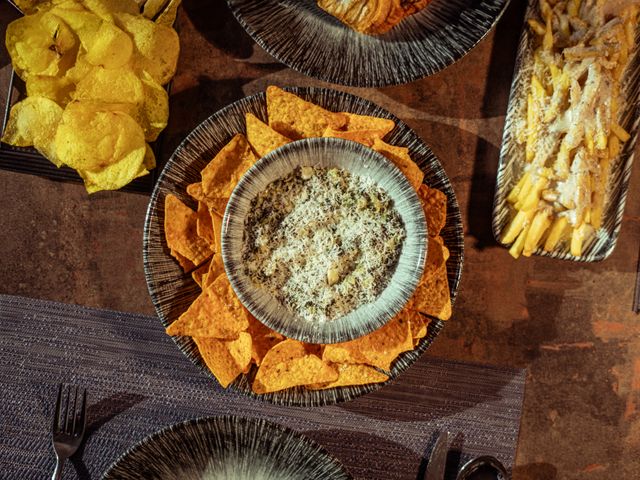
- Serve immediately while still warm, with toasted bread slices, crostini, crackers, or vegetable crudités on the side.
+ Show details− Hide details
Ready when: Dip is warm, creamy, and ready to serve
Tip: If the dip cools while you're eating, you can warm it gently in a 300°F (150°C) oven for 10–15 minutes, covered, to restore its creaminess.
Good to know
Tips
- The transformation from raw to caramelized is magical but requires patience and attention—rush the process and you'll end up with burnt onions instead of sweet, tender ones.
- For the deepest flavor, use a good-quality aged Gruyère (look for one labeled 'Gruyère de Comté' or aged at least 12 months)—the extra cost is worth it.
- This dip is best served warm, so assemble it as close to serving time as possible. If you're making it ahead, reheat gently just before guests arrive.
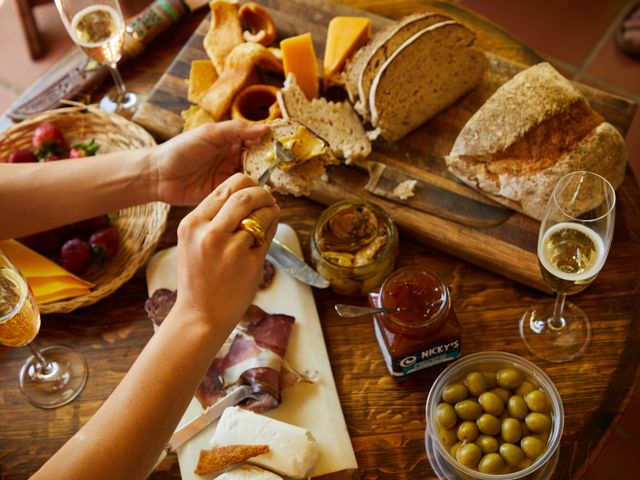
- Pair this dip with crusty bread, thin crackers, or raw vegetables like endive leaves, celery, or bell pepper strips. Avoid very sweet or strongly flavored accompaniments that would compete with the subtle caramelized sweetness.
Make ahead
You can caramelize the onions up to 2 days ahead and store them in an airtight container in the refrigerator. To finish the dip, gently reheat the onions in a small saucepan over medium-low heat, then fold in the sour cream, Dijon mustard, Gruyère, and thyme just before serving.
Storage & reheating
Store leftover dip in an airtight container in the refrigerator for up to 3 days. Reheat gently in a small saucepan over medium-low heat, stirring occasionally, until warmed through (about 5–7 minutes), or in a 300°F (150°C) oven for 10–15 minutes, covered. Do not freeze, as the dairy and cheese will separate upon thawing.
Substitutions
- aged Gruyère cheese, finely grated → Swiss cheese (Emmental or Jarlsberg) or aged cheddar. Use the same amount; choose a cheese with good melting properties and a slightly nutty flavor to match the caramelized onion profile.
- dry white wine (such as Sauvignon Blanc or Pinot Grigio) → dry vermouth or chicken broth. Use the same amount; vermouth adds herbaceous notes, while broth gives a more savory finish. Avoid sweet wine or it will make the dip cloying.
- sour cream or crème fraîche → crème fraîche, mascarpone, or Greek yogurt (full-fat). Use the same amount; all will create a creamy base. Greek yogurt will make the dip slightly tangier and lighter.
- fresh thyme leaves → fresh rosemary or a combination of thyme and sage. Use the same amount of leaves; rosemary has a more assertive piney flavor that pairs beautifully with caramelized onions, while sage adds an earthy depth.