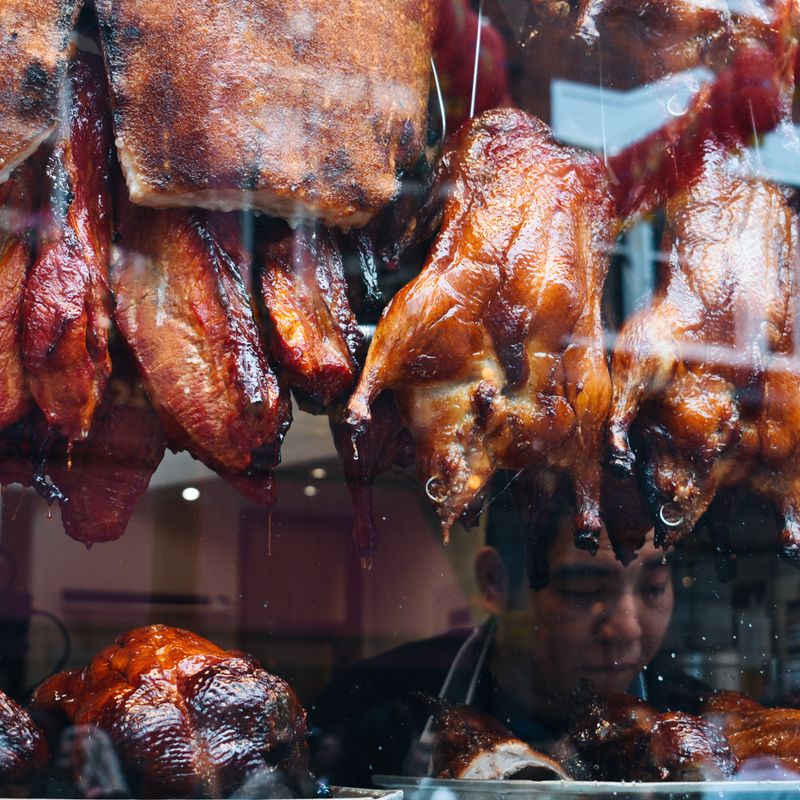
Cuban Mojo Roasted Pork Shoulder
A classic Cuban main dish of slow-roasted pork shoulder rubbed with a vibrant garlic, citrus, and spice marinade. The mojo — a combination of fresh lime and orange juice, garlic, cumin, and oregano — penetrates the meat while it roasts low and slow, creating deeply flavorful, tender pulled pork with crispy, caramelized edges. Serve with black beans, rice, or in sandwiches.
- Prep
- 20 min
- Cook
- 6 hr
- Wait
- 30 min
- Total
- 6 hr 50 min
- Makes
- 1 pork shoulder (about 5 to 6 pounds / 2.3 to 2.7 kg), serves 8
Steps
Before you start
- Remove pork shoulder from the refrigerator 1 hour before cooking so it comes to room temperature
- Preheat oven to 350°F (175°C)
- Pat the pork shoulder very dry with paper towels — this helps the exterior brown better
- Read through the recipe: the pork roasts largely unattended for 5–6 hours
Make the mojo marinade
- In a large mixing bowl, whisk together the fresh lime juice (¾ cup / 180 ml), fresh orange juice (¾ cup / 180 ml), minced garlic (8 cloves / 45 g), ground cumin (2 tbsp / 12 g), dried oregano (2 tbsp / 6 g), olive oil (¼ cup / 60 ml), sea salt (2 tsp / 12 g), and black pepper (1 tsp / 2 g).
- Stir until the spices are fully dissolved and the mixture is well combined.
- Set aside.
+ Show details− Hide details
Ready when: Marinade is homogeneous with no visible dry spices
Tip: Use fresh-squeezed citrus juice if possible — it makes a noticeably brighter, more authentic mojo
Score and season the pork
- With a sharp knife, score the pork shoulder skin in a crosshatch pattern, cutting ¼ inch (6 mm) deep to help the marinade penetrate and encourage crispy edges.
- Place the pork shoulder in a large roasting pan.
- Reserve ½ cup (120 ml) of the mojo marinade in a small bowl and set aside for basting later.
- Pour the remaining mojo over the pork, rubbing it all over the meat, in the scored skin, and into any crevices.
- Let the pork sit at room temperature for 10 minutes so the marinade begins to work.
+ Show details− Hide details
Ready when: Pork is fully coated and marinade pooling in the pan
Tip: Do not skip the scoring step — it dramatically improves crust formation and marinade penetration
Start the roast low and slowOven 350°F / 175°C
- Pour the pork broth (1 cup / 240 ml) into the bottom of the roasting pan around the pork (not over it).
- Place the roasting pan in a preheated 350°F (175°C) oven.
- Roast uncovered for the first 45 minutes to allow the exterior to begin browning.
+ Show details− Hide details
Ready when: Exterior begins to brown deeply and marinade caramelizes in spots
Tip: Don't crowd the oven — ensure the pan has at least 2 inches of clearance on all sides for even air circulation
Tent and continue roastingOven 350°F / 175°C
- After 45 minutes, tent the pork shoulder loosely with aluminum foil (shiny side down, leaving it loose so steam can escape).
- Continue roasting at 350°F (175°C) for another 2 to 2.5 hours, basting the pork with the reserved mojo every 45 minutes.
- The foil prevents the exterior from drying out while the meat continues to cook and become tender.
+ Show details− Hide details
Ready when: Pork is fork-tender and easily pulls apart; internal temperature at the thickest point reaches 190°F (88°C)
Tip: Basting keeps the surface moist and caramelized — set a timer so you don't forget
Uncover and finish crispingOven 425°F / 220°C
- Remove the foil and increase the oven temperature to 425°F (220°C).
- Roast uncovered for another 30 to 45 minutes.
- The pork's exterior will crisp up and darken further.
- The internal temperature should reach 190 to 195°F (88 to 90°C) at the thickest part (away from bone).
- Baste one more time halfway through this final phase with any pan drippings.
+ Show details− Hide details
Ready when: Exterior is deeply browned to almost mahogany, skin is crispy, internal temperature reads 190–195°F (88–90°C)
Tip: Use a meat thermometer inserted into the thickest part without touching bone — this is the most reliable doneness indicator
Rest the porkOven 195°F / 90°C
- Remove the pork from the oven and transfer it to a large cutting board or serving platter.
- Tent it loosely with foil and let it rest at room temperature for 30 minutes.
- During this time, the juices redistribute throughout the meat, making it more tender and juicy.
- The carryover cooking will also bring the temperature up to 195°F (90°C) if needed.
+ Show details− Hide details
Ready when: Pork is warm but not piping hot; juices have mostly redistributed
Tip: This resting period is crucial — skipping it will cause all the juices to run out when you carve or shred
Make the pan sauce
- While the pork rests, set the roasting pan on the stovetop over medium heat.
- Scrape the bottom with a wooden spoon to deglaze, incorporating all the caramelized bits and pan drippings.
- Simmer for 3 to 5 minutes until the sauce reduces slightly and becomes glossy.
- If it looks too thin, continue simmering.
- Taste and add a pinch of salt and pepper if needed.
- Strain through a fine-mesh sieve if you prefer a smoother sauce, or leave as-is for rustic texture.
+ Show details− Hide details
Ready when: Sauce coats the back of a spoon lightly and pan is mostly dry with no pooled liquid
Tip: The caramelized browned bits (fond) are pure flavor — scrape them up and don't let them go to waste
Shred, carve, and serve
- Using two forks or meat shredders, pull the pork into large, tender shreds, working along the grain.
- Some bone-on pieces can be left in larger chunks if you prefer.
- Discard any excess fat and the bone.
- Transfer the shredded pork to a serving platter and pour the warm pan sauce over the top.
- Serve hot with black beans, white rice, avocado, fried plantains, or use in Cuban sandwiches (Cubanos).
+ Show details− Hide details
Ready when: Pork shreds easily and pulls apart into moist, tender pieces
Tip: If the pork seems dry when shredded, drizzle extra pan sauce over it — the meat should be moist and glazed, not stringy
Good to know
Tips
- Fresh citrus juice is non-negotiable for authentic mojo flavor — the acidity and brightness from real lime and orange juice cannot be replicated by bottled juices or concentrate
- Score the skin in a crosshatch pattern to encourage crispy, crackling edges and allow the mojo to penetrate deeper into the meat
- Use a reliable meat thermometer; cooking to 190–195°F (88–90°C) ensures the collagen breaks down fully, creating a silky, shredded texture rather than chunky or stringy meat
- Don't skip the 30-minute rest — it lets carryover cooking finish the job and allows juices to redistribute, resulting in moist, flavorful pork
Make ahead
The mojo marinade can be made up to 2 days ahead and stored covered in the refrigerator. The pork can be rubbed with mojo and refrigerated for up to 12 hours before roasting; bring it to room temperature for 1 hour before placing in the oven.
Storage & reheating
Store leftover shredded pork in an airtight container in the refrigerator for up to 4 days, or freeze for up to 3 months. Reheat gently in a low oven (300°F / 150°C) covered with foil for 15–20 minutes, or on the stovetop over low heat with a splash of broth to restore moisture. Leftover pork is excellent for sandwiches, rice bowls, hash, or tacos.
Substitutions
- fresh lime juice, strained → bottled fresh lime juice (not concentrate). Use the same amount; fresh-squeezed is always best, but good-quality bottled juice works if fresh limes aren't available
- fresh orange juice, strained → bottled fresh orange juice (not from concentrate). Substitute 1:1 by volume; avoid concentrate as it makes the mojo too intense and less balanced
- dried oregano → fresh oregano leaves, minced. Use 2 tbsp (8 g) fresh oregano instead of dried; add it at the end when making the marinade to preserve its bright flavor
- pork shoulder (bone-in or boneless), skin on if possible → pork butt (same cut, different name in some regions). Identical to pork shoulder; both come from the front leg and shoulder area and perform identically in this recipe
More roasts
See all →


Find more like this
- Meal
- Dinner
- Cuisine
- Caribbean
- Main ingredient
- Pork Shoulder
- Method
- Oven
- Quick & Easy
- Easy