
Colombian Ají Criollo Hot Pepper Pickle
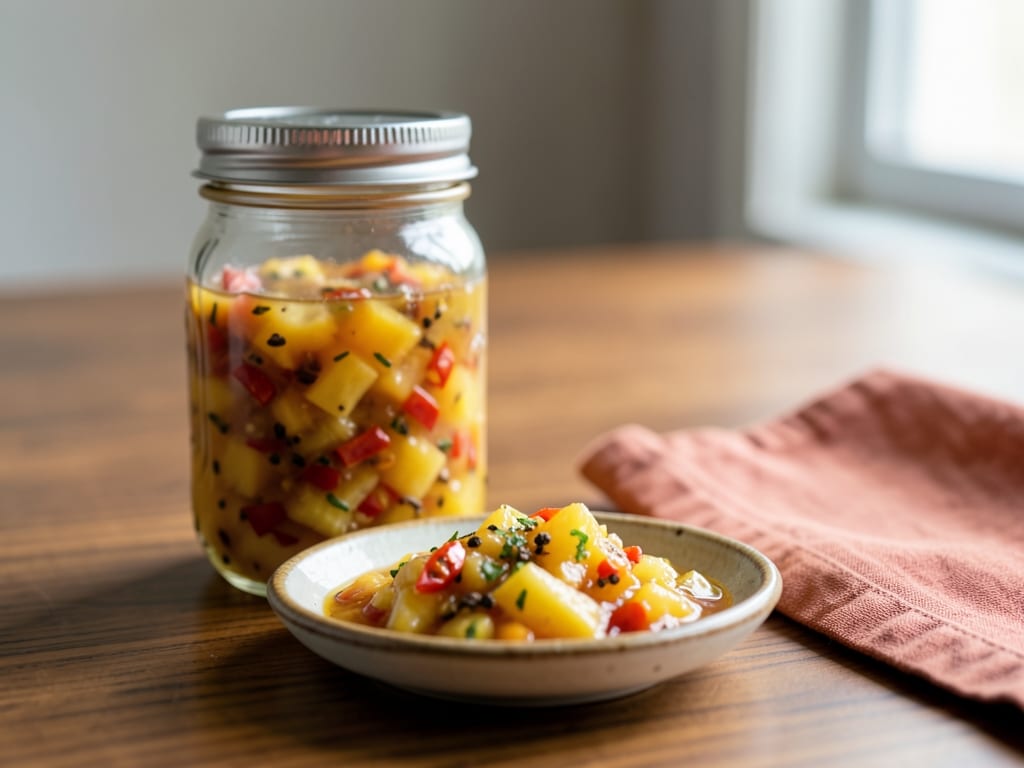
A vibrant fermented hot pepper pickle that captures the essence of Colombian cuisine. Ají criollo peppers—small, fiery, and intensely aromatic—are layered with garlic, cumin, and salt, then aged in vinegar brine. The result is a complex, slightly funky, deeply savory condiment with a lingering heat that pairs brilliantly with grilled meats, rice dishes, arepas, and soups. The fermentation deepens the flavor while the natural probiotics make it a living condiment.
- Prep
- 20 min
- Cook
- 5 min
- Wait
- 1.5 days
- Total
- 1.5 days
- Makes
- 1 quart (1 liter) jar, approximately 32 servings (1 tablespoon each)
Steps
Before you start
- Source fresh, firm ají criollo peppers (or substitute fresh red Thai or Scotch bonnet peppers if necessary)
- Ensure all jars, lids, and utensils are clean and dry before use
- Choose a cool, dark place for fermentation (65–75°F / 18–24°C is ideal)
- Read through the fermentation timeline so you understand the 3-day to 4-week aging process
Toast cumin and prepare
- In a small dry skillet over medium heat, toast the cumin seeds for about 30 seconds, stirring constantly, until they release their aroma.
- Transfer to a plate and let cool completely.
- This step intensifies the cumin's flavor and is characteristic of Colombian pickles.
+ Show details− Hide details
Ready when: Cumin is fragrant and has darkened slightly
Tip: Don't skip toasting—it adds depth that raw cumin lacks
Prepare the brine
- In a small saucepan, combine 1.5 cups (360 ml) white vinegar and 1 cup (240 ml) filtered or boiled water.
- Add 2 tablespoons (36 g) sea salt and stir until dissolved.
- Bring to a gentle simmer over medium heat for 2–3 minutes.
- Do not boil aggressively.
- Remove from heat and let cool to room temperature (about 15 minutes).
- The brine should feel warm but comfortable to touch.
+ Show details− Hide details
Ready when: Brine is clear and salt is fully dissolved; liquid is warm but not hot
Tip: Cool the brine before adding peppers to prevent them from softening too much
Layer peppers in jar
- In a clean, dry quart glass jar, begin layering the ají peppers, crushed garlic cloves, toasted cumin seeds, and peppercorns (if using) and bay leaf (if using).
- Start with a thin layer of peppers on the bottom, then scatter some garlic and cumin, then another layer of peppers, alternating until all ingredients are used.
- The final layer should be peppers on top.
- Pack the jar firmly but don't crush the peppers.
+ Show details− Hide details
Ready when: Jar is tightly layered with all ingredients visible
Tip: Leave about 2 inches (5 cm) of headspace at the top of the jar for the brine
Pour brine and weight down
- Pour the cooled brine slowly into the jar until it covers all peppers by about 1 inch (2.5 cm).
- The peppers must be fully submerged or they will mold.
- If needed, use a fermentation weight, a clean glass object, or a clean cabbage leaf tucked under the jar's rim to keep peppers below the brine surface.
- Close the lid loosely (or cover with cheesecloth and secure with a rubber band) to allow gases to escape during fermentation.
+ Show details− Hide details
Ready when: Peppers are fully submerged and jar is covered
Tip: A tight seal will trap gas and cause pressure buildup; keep the lid slightly loose
Initial fermentation (days 1–3)
- Place the jar in a cool, dark spot away from direct sunlight (ideally 65–75°F / 18–24°C).
- Over the first 3 days, small bubbles will rise, the brine may become slightly cloudy, and you may notice a pleasant fermented aroma (like sauerkraut).
- This is normal and desired.
- Stir gently or tilt the jar once daily to redistribute flavors.
- The brine will darken as the peppers release their color and oils.
+ Show details− Hide details
Ready when: Brine is slightly cloudy; small bubbles are visible; aroma is noticeably fermented and peppery
Tip: If white mold or film appears on the surface, skim it off immediately and ensure peppers stay submerged
Continued fermentation (days 4–14)
- Continue fermenting at room temperature.
- After day 3, the activity will slow.
- Taste after 1 week—the pepper flavor deepens, the vinegar becomes rounder, and the salt mellows.
- At this point, you can move the jar to a cool pantry or refrigerator to slow fermentation, which extends the shelf life.
- The pickle is good to eat after 1 week, but many prefer it after 2–4 weeks of total fermentation for fuller, more complex flavor.
+ Show details− Hide details
Ready when: Peppers are tender but not soft; brine is deep red or orange and clear; flavor is bold and balanced
Tip: Taste at day 7 to decide if you like the current flavor, or wait longer for deeper funk
Serve and store
- Once fermented to your taste, transfer the jar to the refrigerator or a cool place if not already there.
- Spoon the ají criollo—peppers, garlic, and brine—onto grilled meats, rice, arepas, soups, or empanadas.
- The longer it sits, the mellower and more integrated the flavors become.
- The pickle will continue to mature slowly in the fridge.
+ Show details− Hide details
Ready when: Pickle is ready to serve
Tip: Use a clean spoon each time you remove pickle to avoid introducing bacteria
Long-term storage and aging
- At any point after 1 week of fermentation, the jar can be sealed tightly and stored in the refrigerator indefinitely (6+ months).
- The fermentation essentially pauses in the cold, and the flavors continue to mellow and integrate slowly.
- For even longer aging (6–12 months), a cool, dark pantry at 50–60°F (10–15°C) works well; the lower temperature greatly slows changes while the pickle develops deeper complexity.
- If you prefer an even spicier, more mouth-puckering result, skip the refrigeration step and age at room temperature for up to 4 weeks; after that, refrigerate to prevent over-softening.
+ Show details− Hide details
Tip: Long-term storage at cool temperatures preserves the pickle's texture and allows slow, complex aging
Enjoy and use creatively
- Ají criollo is a condiment meant to be used, not hoarded.
- Serve it alongside Colombian classics like bandeja paisa, pollo a la brasa, or sancocho.
- The brine is delicious spooned over avocado, mixed into hot sauce, drizzled over ceviche, or used as a spicy finishing note on any dish.
- Once the jar is half-empty, you can refill it with fresh peppers and a bit of new brine to keep the condiment going for months.
+ Show details− Hide details
Tip: Refilling the jar extends the life of your pickle; the existing brine already has established flavors
Good to know
Tips
- Fermentation success depends on submerged peppers: use a weight if peppers float, and check daily that none are exposed to air.
- The cloudiness and small bubbles during the first few days are signs of healthy fermentation, not spoilage. If pink, orange, or brown mold appears, discard the batch.
- This pickle is alive and will continue to age and change flavor. Taste it at different points—day 3, day 7, day 14, day 30—to understand how it evolves and decide when you prefer it most.
- Ají criollo is intensely hot and flavorful; a small spoonful goes a long way. Use it as a finisher on mild dishes to add complexity without overwhelming other flavors.
Make ahead
The beauty of ají criollo is that it improves with time. Make it up to 4 weeks ahead (or longer, refrigerated). After day 3 of fermentation, it is ready to eat, though 1–2 weeks is the sweet spot for balanced flavor. It will keep refrigerated for 6+ months and actually improves over that time as flavors deepen.
Storage & reheating
Room temperature (initial fermentation): 3 days at 65–75°F (18–24°C), then transfer to fridge or cool pantry. Refrigerator: 6+ months; flavor continues to develop slowly. Cool dark pantry (50–60°F / 10–15°C): 6–12 months for very slow, complex aging. To serve: Always use a clean spoon to avoid introducing bacteria. The pickle does not require reheating; serve cold or at room temperature.
Substitutions
- fresh ají criollo peppers (or red Thai or Scotch bonnet peppers) → red Thai chili peppers or Scotch bonnet peppers. Thai peppers are smaller and more uniformly hot; Scotch bonnets are fruitier. Both will ferment beautifully, though the final flavor profile will shift slightly. Use the same weight (1 lb / 450 g).
- white vinegar (5% acidity) → apple cider vinegar. Apple cider vinegar will add a subtle sweetness and fruity note. Use the same volume (1.5 cups / 360 ml) but reduce salt slightly to 1.5 tablespoons (27 g) to balance the slight sweetness.
- cumin seeds → coriander seeds or a mix of both. Coriander is lighter and more citrusy. Toast and use the same amount (1 tablespoon / 10 g), or split between cumin and coriander for complexity.
- sea salt (non-iodized) → kosher salt (Diamond Crystal). Use the same weight (36 g). If using Morton's kosher or pickling salt, reduce to 1.5 tablespoons (27 g) because they are denser.
More pickles & chutneys
See all →


Find more like this
- Meal
- Snack
- Cuisine
- Caribbean
- Main ingredient
- Bell Peppers
- Method
- Stovetop
- Quick & Easy
- 5 Ingredients or LessEasyMake Ahead