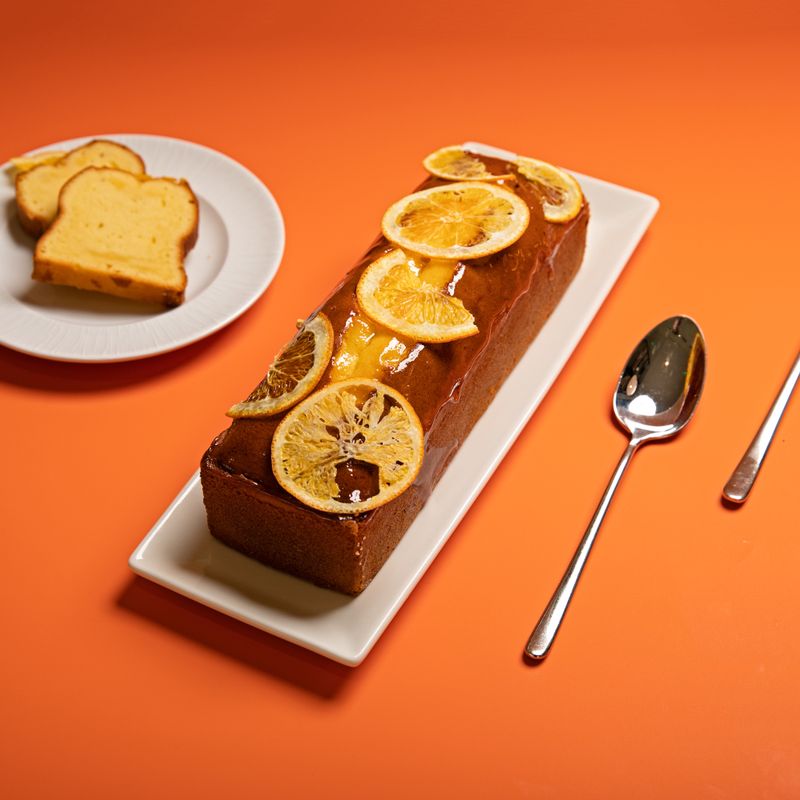
Classic Lemon Pound Cake with Lemon Glaze
A buttery, tight-crumbed loaf with a tender, moist center, perfumed with fresh lemon zest rubbed into the sugar. A warm lemon syrup soaks into the crumb and a tart-sweet glaze finishes the top.
- Prep
- 35 min
- Cook
- 1 hr 10 min
- Wait
- 1 hr 35 min
- Total
- 3 hr 20 min
- Makes
- 1 loaf (10 slices)
Steps
Before you start
- Set out the butter, eggs and sour cream 1 hour ahead so everything is at cool room temperature (about 68°F/20°C). Cold ingredients make a curdled batter and a dense cake.
- You need about 3 large lemons: 2 for the zest (zest them before juicing) and enough for about 7 tablespoons (105 ml) of juice in total.
- Spoon the flour into the measuring cup and level it, or weigh it. Scooping packs in extra flour and makes the cake dry.
- Plan on about 3 hours 20 minutes start to finish, including cooling. The cake must cool completely before glazing.
Heat oven, prepare panOven 325°F / 165°C
- Position a rack in the center of the oven and heat to 325°F (165°C).
- Rub the softened 1 tablespoon butter over the bottom and sides of a 9×5-inch (23×13 cm) loaf pan.
- Line the bottom and the two long sides with a strip of parchment, leaving a 2-inch overhang to use as handles, and press it flat.
+ Show details− Hide details
Ready when: Pan is evenly greased and parchment lies flat against the pan.
Tip: An oven thermometer helps. Ovens that run hot give a dark, cracked crust before the center sets.
Rub zest into sugar
- In the large bowl of a stand mixer, combine the 1½ cups (300 g) sugar and 2 tablespoons lemon zest.
- Rub them together with your fingertips for about 1 minute.
+ Show details− Hide details
Ready when: The sugar looks like damp sand, is pale yellow and smells strongly of lemon.
Tip: This releases the zest's oils into the sugar for much deeper lemon flavor.
Cream butter and sugar
- Add the 1 cup (227 g) room-temperature butter to the lemon sugar.
- With the paddle attachment, beat on medium-high speed for 4 to 5 minutes, stopping once to scrape the bowl and paddle.
+ Show details− Hide details
Ready when: The mixture is very pale yellow, noticeably fluffy and increased in volume, with no gritty sugar feel when rubbed between your fingers.
Tip: Don't cut this short. Thorough creaming traps the air that gives pound cake its lift.
Beat in eggs
- With the mixer on medium speed, add the eggs one at a time, beating for 30 to 45 seconds after each until fully blended before adding the next.
- Scrape down the bowl after the third egg.
+ Show details− Hide details
Ready when: The batter is smooth, glossy and thick, with no streaks of egg.
Tip: If the batter looks slightly curdled, it's likely the eggs were cold. Keep going. The flour will bring it back together.
Whisk dry ingredients
- In a medium bowl, whisk together the 2 cups (250 g) flour, ½ teaspoon baking powder and ½ teaspoon salt for 20 seconds.
+ Show details− Hide details
Ready when: No streaks of baking powder or salt are visible.
Mix wet flavorings
- In a small bowl or measuring cup, stir together the ½ cup (120 g) sour cream, 3 tablespoons (45 ml) lemon juice and 1 teaspoon vanilla until smooth.
+ Show details− Hide details
Ready when: The mixture is smooth and pourable like thick buttermilk.
Tip: It may thicken slightly from the acid. That's normal.
Alternate flour and sour cream
- With the mixer on low speed, add one-third of the flour mixture and mix just until a few streaks remain.
- Add half of the sour cream mixture, then another third of the flour, the remaining sour cream mixture, and finally the last of the flour.
- Stop the mixer as soon as the last streaks disappear.
- Scrape the bowl and fold a few times with a spatula to finish.
+ Show details− Hide details
Ready when: The batter is thick, smooth and uniform, with no dry flour pockets.
Tip: Overmixing after the flour goes in develops gluten and makes the cake tough.
Fill pan and bakeOven 325°F / 165°C
- Scrape the batter into the prepared pan and spread it level, nudging it into the corners.
- Tap the pan firmly on the counter twice to release large air bubbles.
- Bake at 325°F (165°C) for 65 to 75 minutes, rotating the pan once at 45 minutes.
- If the top is browning too fast at the 50-minute mark, tent loosely with foil.
+ Show details− Hide details
Ready when: The top is deep golden with a lengthwise crack, a toothpick inserted into the center comes out with a few dry crumbs (no wet batter), and an instant-read thermometer reads 205–210°F (96–99°C).
Tip: Don't open the oven before 45 minutes, or the cake may sink.
Cool briefly in pan
- Set the pan on a wire rack.
- Let the cake cool in the pan for 15 minutes.
- Meanwhile, you can make the syrup in the next step.
+ Show details− Hide details
Ready when: The cake edges have just pulled away slightly from the pan and the cake is warm, not hot.
Make syrup and soak cake
- In a small saucepan over medium heat, stir the 2 tablespoons (30 ml) lemon juice and 2 tablespoons (25 g) sugar for 1 to 2 minutes.
- Remove from the heat.
- Use the parchment handles to lift the cake out onto the rack set over a baking sheet.
- Poke the top all over with a toothpick, about 30 holes, then brush the warm syrup slowly over the top and sides, letting it soak in.
+ Show details− Hide details
Ready when: The sugar has fully dissolved and the syrup looks clear, and the cake surface looks glossy and damp.
Tip: Brush while the cake is still warm so the crumb absorbs the syrup instead of leaving it sitting on top.
Cool completely
- Leave the cake on the rack until it is completely cool to the touch on the bottom and in the center, about 1 hour.
+ Show details− Hide details
Ready when: The bottom of the loaf feels room temperature, with no warmth.
Tip: Glazing a warm cake makes the glaze run off and turn transparent.
Glaze and set
- In a small bowl, whisk the 1 cup (120 g) sifted powdered sugar with 2 tablespoons (30 ml) lemon juice until smooth.
- If it's too thick to drizzle, whisk in up to 1 teaspoon more juice.
- Spoon over the top of the cake, letting it drip down the sides.
- Let it set for about 20 minutes, then slice with a serrated knife.
+ Show details− Hide details
Ready when: The glaze is opaque white and no longer sticky when lightly touched.
Tip: The glaze should fall from the whisk in a thick ribbon. Add juice a few drops at a time.
Good to know
Tips
- Weigh the ingredients if you can. Pound cake depends on accurate ratios, and a kitchen scale is the most reliable way to get them.
- Use fresh lemons only. Bottled juice tastes flat and sometimes bitter, and it won't give you zest.
- Every oven is different. Start checking for doneness at 60 minutes, and use the thermometer reading of 205–210°F (96–99°C) rather than time alone.
- For clean slices, use a serrated knife with a gentle sawing motion and wipe the blade between cuts.
Make ahead
The unglazed cake can be baked and soaked with syrup up to 2 days ahead. Cool completely, wrap tightly in plastic wrap and keep at room temperature, then glaze on the day you serve it.
Storage & reheating
Room temperature: store glazed cake, covered, up to 3 days. Fridge: up to 7 days wrapped well, though the crumb is best brought back to room temperature for 30 minutes before serving. Freezer: wrap the unglazed cake (or individual slices) in plastic wrap, then foil, and freeze up to 3 months. Thaw overnight in the fridge or for 2 to 3 hours at room temperature, then glaze. To warm slices, heat for 10 seconds in the microwave.
Substitutions
- full-fat sour cream → full-fat plain Greek yogurt. Use the same weight (120 g). The crumb will be slightly tangier and equally moist.
- unsalted butter → salted butter. Use the same amount and reduce the added salt to ¼ teaspoon.
- all-purpose flour → cake flour. Use 2¼ cups (255 g) sifted cake flour for a slightly softer, finer crumb.
- pure vanilla extract → pure almond extract. Use ½ teaspoon for a subtle bakery-style flavor, as it's stronger than vanilla.
More cakes
See all →

Find more like this
- Meal
- Dessert
- Cuisine
- American
- Main ingredient
- Lemons
- Diet
- VegetarianHalal
- Method
- Oven
- Quick & Easy
- EasyMake Ahead