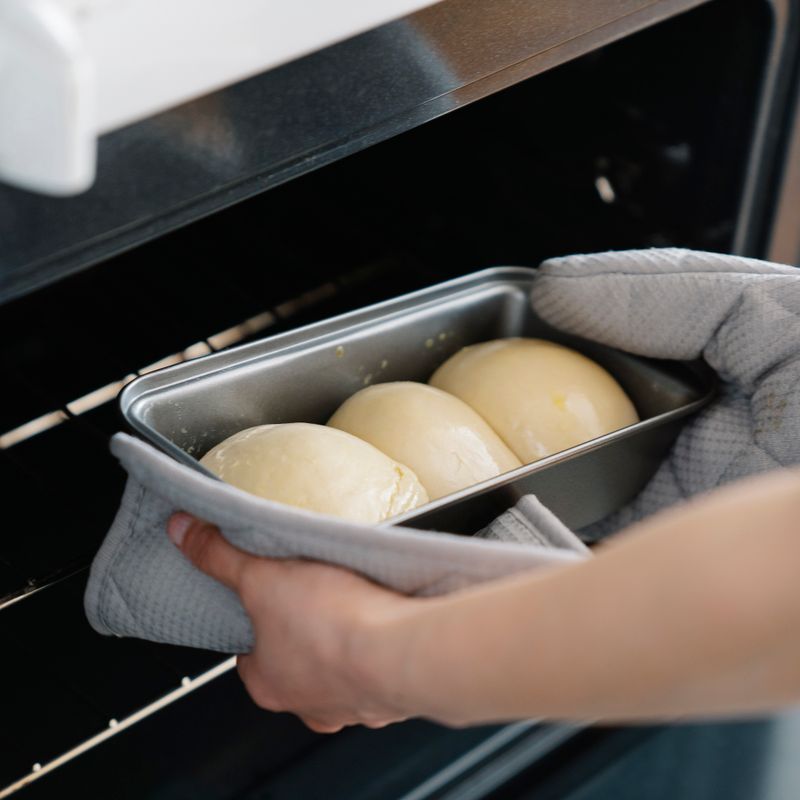
Classic Hot Cross Buns
Soft, springy, enriched buns scented with cinnamon, allspice and fresh orange zest, studded with plump raisins, marked with a flour-paste cross and finished with a shiny apricot glaze.
- Prep
- 57 min
- Cook
- 22 min
- Wait
- 2 hr 15 min
- Total
- 3 hr 34 min
- Makes
- 12 buns
Steps
Before you start
- Take the butter and eggs out of the fridge about 1 hour ahead so they are at room temperature.
- Plan on about 3½ hours from start to finish, most of it hands-off rising time.
- Butter a 9×13-inch (23×33 cm) baking pan before you shape the buns.
- Warm the milk only to about 110°F (43°C), comfortably warm to the touch. Hot milk will kill the yeast.
Soak the raisins
- Warm the orange juice until hot to the touch, pour it over the raisins in a small bowl and let them plump for 15 minutes while you start the dough.
- Zest the orange, warm the milk to about 110°F (43°C), and bring the eggs and butter to room temperature.
- Drain the raisins in a sieve and pat them thoroughly dry with a paper towel.
+ Show details− Hide details
Ready when: Raisins look plump and glossy and feel damp but not dripping.
Tip: Dry raisins stay put in the dough. Wet ones make it slippery and can streak it.
Mix the dough
- In the bowl of a stand mixer, whisk together the bread flour, yeast, sugar, salt, cinnamon, allspice and orange zest.
- Add the warm milk and the 2 beaten eggs.
- With the dough hook on low speed, mix for about 2 minutes until no dry flour remains and a shaggy dough forms.
- Rest the dough 5 minutes to let the flour hydrate.
+ Show details− Hide details
Ready when: A rough, sticky dough with no dry flour in the bottom of the bowl.
Tip: Keep the salt and yeast on opposite sides of the bowl while whisking in the dry ingredients only if adding them separately. Whisking them together first is fine.
Knead in butter
- With the mixer on medium-low, add the softened butter one piece at a time, waiting until each piece mostly disappears before adding the next.
- Knead for 8 to 10 minutes total, scraping down the bowl once or twice.
- The dough will be sticky at first, then come together into a smooth, soft, slightly tacky ball.
- Resist adding extra flour.
+ Show details− Hide details
Ready when: Dough is smooth and elastic and clears the sides of the bowl. A small piece stretches thin enough to see light through without tearing (windowpane test).
Tip: If kneading by hand, use a lightly oiled surface and expect about 15 minutes.
Add the raisins
- Reduce the mixer to its lowest speed, add the drained raisins and mix for about 1 to 2 minutes, just until they are evenly distributed.
- Transfer the dough to a large, lightly buttered bowl, turn it once to coat, and cover tightly with plastic wrap or a damp towel.
+ Show details− Hide details
Ready when: Raisins are evenly scattered with no clumps.
Tip: Do not over-mix at this stage or the raisins will tear and turn the dough gray.
First rise
- Leave the covered bowl in a draft-free spot at about 75°F (24°C) for 60 to 75 minutes.
+ Show details− Hide details
Ready when: Dough has doubled and a floured finger pressed in 1 inch leaves a dent that fills back in slowly.
Tip: In a cold kitchen it can take up to 90 minutes. Judge by the dough, not the clock.
Shape the buns
- Butter a 9×13-inch (23×33 cm) pan.
- Turn the dough onto a very lightly floured surface and gently press out the large bubbles.
- Weigh the dough and divide it into 12 equal pieces, about 90 g (3 oz) each.
- Shape each piece into a tight ball by cupping your hand over it and rolling in small circles against the counter, until the top is smooth and taut.
- Arrange the buns in the pan in 3 rows of 4, seam-side down, about ¼ inch (6 mm) apart.
+ Show details− Hide details
Ready when: Each ball is smooth and tight on top with no visible seams.
Tip: Use as little flour as you can on the counter. A little grip helps the ball tighten.
Second rise and pasteOven 375°F / 190°C
- Cover the pan loosely with greased plastic wrap and let the buns rise for 45 minutes.
- After 25 minutes, position a rack in the center of the oven and preheat to 375°F (190°C).
- While the oven heats, whisk the all-purpose flour and cool water for the crosses until completely smooth and thick like pancake batter, then spoon it into a piping bag and snip a small corner.
- In a small bowl, beat the extra egg with the 1 tablespoon milk for the egg wash.
+ Show details− Hide details
Ready when: Buns are puffy and touching, and a gently poked bun springs back slowly, leaving a faint dent.
Tip: If the paste is too runny the crosses will spread and vanish in the oven. It should hold a ribbon when you lift the whisk.
Wash and pipe crosses
- Gently brush the tops of the risen buns with the egg wash, being careful not to let it pool in the gaps between buns.
- Pipe the flour paste in one straight line across each row of 4 buns, then turn the pan and pipe lines in the other direction across each row of 3, so every bun has a cross.
+ Show details− Hide details
Ready when: Each bun is shiny with a clear, even cross on top.
Tip: Brush lightly so you do not deflate the risen buns.
BakeOven 375°F / 190°C
- Bake in the center of the oven at 375°F (190°C) for 20 to 24 minutes.
- If the tops brown too fast after 15 minutes, tent loosely with foil.
- Rotate the pan front to back once at the 12-minute mark.
+ Show details− Hide details
Ready when: Tops are deep golden brown, the buns sound hollow when tapped on the bottom, and an instant-read thermometer in the center of a bun reads 190°F (88°C).
Tip: Pale sides and bottoms mean the buns need a few more minutes, even if the tops look done.
Glaze while hot
- While the buns bake, heat the apricot jam and 1 tablespoon water in a small saucepan over low heat for about 2 minutes, stirring, until the jam is runny, then press it through a small sieve to remove fruit chunks.
- As soon as the buns come out of the oven, brush the hot glaze generously over the tops and crosses.
+ Show details− Hide details
Ready when: Jam is thin and pourable and bubbles gently at the edges. Buns look glossy after brushing.
Tip: Glaze the buns while they are still hot so it absorbs slightly and sets with a shine.
Cool the buns
- Let the buns cool in the pan for 10 minutes, then lift them out as a slab onto a wire rack and cool for at least 20 minutes more before pulling them apart.
- Serve warm or at room temperature with butter.
+ Show details− Hide details
Ready when: Buns are warm, not hot, and the glaze is tacky but no longer wet.
Good to know
Tips
- Weigh the dough pieces so all 12 buns are the same size and bake evenly.
- Keep the dough slightly tacky. Too much added flour makes dense buns.
- Pipe the cross paste thick enough to stand up, and use it right after mixing, since it thickens as it sits.
- Test doneness with a thermometer, 190°F (88°C) in the center, rather than relying on color alone.
Make ahead
"After shaping the buns into the pan (step 6), cover tightly and refrigerate for 8 to 14 hours. Next day, let them stand at room temperature for 45 to 60 minutes until puffy, then preheat the oven, wash, pipe and bake as directed, adding 1 to 2 minutes if the buns are still cool."
Storage & reheating
"Room temperature: keep in an airtight container or bag for up to 2 days. Fridge: not recommended, as it stales the buns faster. Freezer: wrap individually and freeze up to 2 months; thaw at room temperature for 2 hours. To reheat, warm at 300°F (150°C) for 8 to 10 minutes, or split and toast."
Substitutions
- raisins → currants, sultanas, or a mix with chopped candied orange peel. Use the same total weight and soak and dry them the same way.
- bread flour → all-purpose flour. Buns will be a bit softer and less chewy. Start with 450 g (3½ cups plus 2 tbsp) of flour, and add more only if the dough is too wet to handle.
- whole milk → unsweetened oat milk or other plant milk. Use the same amount, and swap butter for a plant butter. The result will be slightly less rich.
- apricot jam → honey or maple syrup, warmed with the water. Brush on hot. No sieving needed.
More rolls & buns
See all →

Find more like this
- Meal
- Breakfast
- Cuisine
- American
- Diet
- VegetarianHalal
- Method
- Oven
- Quick & Easy
- Make Ahead
- Occasion
- Easter