
Cinco de Mayo Achiote Orange Pork Shoulder Marinade
A vibrant, citrus-forward Mexican marinade featuring achiote's earthy complexity, fresh orange juice and zest, and warm cumin spices. This recipe includes complete roasting instructions for an impressive, fork-tender pork shoulder perfect for Cinco de Mayo celebrations and festive gatherings.
- Prep
- 30 min
- Cook
- 3 hr 52 min
- Wait
- 9 hr 20 min
- Total
- 13 hr 42 min
- Makes
- 1 marinated pork shoulder (serves 8)
Steps
Before you start
- Ensure the pork shoulder is thawed if frozen (necessary for proper marinating)
- Have a large roasting pan or 5–6 quart Dutch oven ready before you begin
- Fresh oranges for juice and zest provide superior flavor compared to bottled juice—plan to use 2 medium oranges
- Plan ahead: marinate for at least 8 hours, preferably overnight before roasting
Toast achiote paste
- Place the achiote paste in a small dry skillet over medium heat.
- Stir constantly for 1–2 minutes until the paste becomes fragrant and slightly darkens.
- You'll notice the aromatics deepen—this blooming step unlocks the complex, warm earthiness of the achiote.
- Do not let it burn; it should smell toasty, not acrid.
- Transfer to a blender immediately.
+ Show details− Hide details
Ready when: Paste is fragrant, slightly darkened, and toasty-smelling
Tip: Blooming achiote in a dry pan intensifies its flavor; skipping this step results in a flat, muted taste.
Blend marinade ingredients
- Add the fresh orange juice, orange zest, minced garlic, ground cumin, white vinegar, olive oil, dried oregano, kosher salt, and black pepper to the blender with the toasted achiote.
- Blend on high speed for 60 seconds until the mixture is completely smooth with no visible lumps.
- The marinade should be pourable and vibrant orange-red in color.
- If too thick, add 2–3 tablespoons of water to reach the right consistency.
+ Show details− Hide details
Ready when: Mixture is smooth, homogeneous, and pourable
Tip: A truly smooth marinade penetrates the meat more evenly; any lumps of achiote or garlic won't break down properly during marinating.
Dry and score pork shoulder
- Pat the pork shoulder completely dry with paper towels, especially on the skin (if present) and in any folds or crevices.
- Using a sharp knife, score the skin (if bone-in and skin-on) in a crosshatch pattern, making cuts about 1/8 inch (3 mm) deep and spaced about 1 inch (2.5 cm) apart.
- This scoring allows the achiote marinade to penetrate deep into the meat rather than just coating the surface, and it also allows the rendered fat to escape during roasting, making the skin crispy.
- Place the pork shoulder in a large roasting pan or storage container.
+ Show details− Hide details
Ready when: Pork is completely dry, with visible crosshatch score marks about 1/8 inch deep
Tip: A dry surface helps the marinade adhere better and allows for better browning later; wet meat will steam rather than sear.
Apply marinade to pork
- Pour the entire blended achiote marinade over the pork shoulder, ensuring it coats every surface, crevice, and the underside.
- Using your hands (or tongs), rub and massage the marinade into the scored skin, under flaps of fat, and into any nooks and crannies.
- Make sure the meat is well coated.
- Reserve 1/4 cup (60 ml) of any leftover marinade in a small bowl for basting during roasting.
+ Show details− Hide details
Ready when: Pork is evenly coated with orange-red marinade in all areas
Tip: Don't rinse the marinade off later; the spices and flavors have begun to penetrate, and every bit adds to the final flavor.
Refrigerate pork to marinate
- Cover the marinated pork loosely with foil or transfer to a sealed container.
- Refrigerate for at least 8 hours, preferably 12–24 hours.
- The longer marinating time allows the bright citrus, earthy achiote, and warm spices to deeply penetrate the meat and begin breaking down the connective tissue, making the final roast more tender and flavorful.
- You can marinate for up to 2 days.
+ Show details− Hide details
Tip: Longer marinating time is always better with achiote—the flavor becomes more integrated and less 'raw' after 12+ hours.
Bring pork to room temperature
- Remove the marinated pork from the refrigerator and let it sit on the counter, loosely covered, for about 1 hour.
- This brings the meat to room temperature so it cooks evenly throughout.
- The marinade will be thick and slightly congealed from the cold; this is normal and will loosen up as the meat warms.
- While the pork comes to room temperature, preheat your oven (see next step).
+ Show details− Hide details
Ready when: Pork feels room-temperature to the touch and is no longer cold
Tip: Cooking pork from a cold start results in an uneven cook—the outside browns before the inside reaches the target temperature.
Preheat oven to 325°FOven 325°F / 165°C
- While the pork comes to room temperature, set your oven to 325°F (163°C) and let it preheat for about 10 minutes.
- If using a Dutch oven or covered roasting vessel, place it in the oven to preheat as well—this ensures even heat distribution around the pork.
- You'll know the oven is ready when the preheat indicator light or sound goes off.
+ Show details− Hide details
Ready when: Oven reaches 325°F (163°C) and preheat indicator activates
Tip: A properly preheated oven ensures consistent, even cooking throughout the long roasting time.
Low roast at 325°F for 3 hoursOven 325°F / 165°C
- Carefully transfer the pork shoulder and all of the remaining marinade to a heavy Dutch oven or large roasting pan, skin-side up if bone-in.
- If desired, add 1 cup (240 ml) of chicken broth to the pan around (not over) the pork; this adds moisture and creates a flavorful cooking liquid.
- Cover the pan tightly with foil or a Dutch oven lid.
- Place in the preheated 325°F (163°C) oven.
- Roast for 3 hours.
- Every 45 minutes, carefully lift the foil and use a spoon to baste the pork with the reserved 1/4 cup (60 ml) achiote marinade and the pan drippings.
- This keeps the surface moist and deepens the flavor.
- After 3 hours, a meat thermometer inserted into the thickest part of the meat (not touching bone) should read 180–185°F (82–85°C), and the meat should shred easily when pierced with a fork.
+ Show details− Hide details
Ready when: Internal temperature reaches 180–185°F (82–85°C); meat shreds easily with a fork
Tip: Don't skip the basting—it keeps the exterior moist and caramelizes the achiote marinade on the surface with each application.
Roast at 425°F until skin crispsOven 425°F / 220°C
- Remove the foil tent and increase the oven temperature to 425°F (220°C).
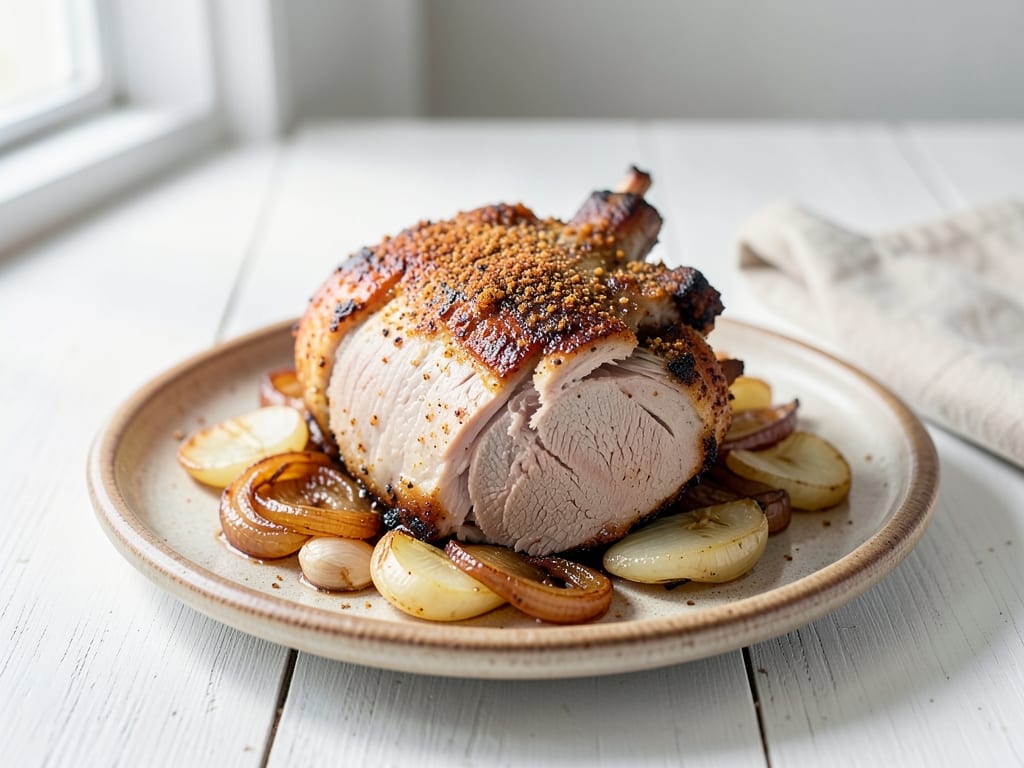
- Roast uncovered for 45–60 minutes until the skin (if present) is deeply browned, blistered, and crispy, and an instant-read meat thermometer inserted into the thickest part reads 190–195°F (88–90°C).
- If there is no skin, the exposed meat should be caramelized and mahogany brown on the surface.
- Check the pork every 15 minutes toward the end of this phase and rotate the pan if browning unevenly.
- If the exterior is browning too quickly and at risk of charring, loosely tent with foil while continuing to roast.
+ Show details− Hide details
Ready when: Internal temperature reaches 190–195°F (88–90°C); skin is deeply browned and crispy
Tip: This high-heat finish creates a flavorful, slightly crispy exterior while keeping the interior tender—do not skip this step.
Rest pork shoulder
- Remove the pork from the oven and let it rest in the pan (loosely tented with foil if desired) for 15–20 minutes.
- This crucial resting period allows the meat's juices to reabsorb throughout the tissues, resulting in moister, more tender pulled pork.
- If you skip this step, the juices will run out onto the cutting board when you shred, leaving the meat dry.
+ Show details− Hide details
Ready when: Pork has cooled slightly and juices have settled throughout the meat
Tip: Resting is non-negotiable; it's the difference between dry, stringy pork and succulent, juicy pulled pork.
Shred pork and serve
- Transfer the rested pork to a clean cutting board.
- Using two sturdy forks, a meat shredder, or even just your hands with gloves, shred the meat into bite-sized pieces, discarding any large bones and excess hard fat as you go.
- Return the shredded pork to the roasting pan with the cooking liquid (including any pan drippings and remaining achiote-infused broth) and stir gently to combine.
- Taste a small piece and adjust seasoning if needed with additional salt or a squeeze of fresh lime juice.
- The pork is now ready to serve warm.
+ Show details− Hide details
Ready when: Pork is completely shredded into bite-sized pieces; fat and bones are discarded
Tip: Warm meat shreds more easily than cool meat, so shred while it's still warm (but cool enough to handle). If you wait too long, warm it gently in a 300°F oven for 5 minutes before shredding.
Good to know
Tips
- Blooming the achiote paste in a dry skillet before blending brings out its deep, complex flavors; this step is essential and shouldn't be skipped.
- The score pattern on the pork's skin is not merely decorative—it allows the marinade to penetrate deeper into the meat and helps render fat during roasting, creating a crispy, caramelized exterior.
- Don't skip the 15–20 minute resting period after roasting; it's the difference between dry pulled pork and succulent, juicy meat that holds its moisture when shredded.
- Leftover pulled pork freezes beautifully and can be used in Tacos al Pastor, Ropa Vieja, tortas, rice bowls, or layered into tostadas for future meals.
Make ahead
Yes. The pork can be marinated up to 2 days ahead, covered and refrigerated. You can also cook the pork 1 day ahead, cool, shred, and refrigerate in an airtight container; reheat gently before serving.
Storage & reheating
Room temperature: up to 2 hours (covered). Refrigerator: up to 4 days (covered, in an airtight container). To reheat, place in a 350°F (175°C) oven with a splash of broth for 20–30 minutes until heated through, or warm gently on the stovetop over medium-low heat, stirring occasionally. Freezer: up to 3 months (in freezer bags or containers); thaw overnight in the refrigerator and reheat as directed.
Substitutions
- achiote paste → Achiote seeds (soaked and ground). Use 2 tablespoons of whole achiote seeds. Soak in 1/4 cup warm orange juice for 30 minutes, then grind in a blender or spice grinder until paste-like before using in the recipe.
- fresh orange juice → Grapefruit juice or tangerine juice. Use the same amount of fresh citrus juice. The flavor profile will shift slightly toward grapefruit's tartness or tangerine's sweetness, but both work well with the achiote.
- white vinegar → Apple cider vinegar or champagne vinegar. Use the same amount. Apple cider vinegar adds a slightly fruity note; adjust to taste if using a vinegar with a different acidity level.
- ground cumin → Whole cumin seeds, freshly toasted and ground. Toast 2 teaspoons whole seeds in a dry skillet for 1–2 minutes, then grind in a spice grinder or mortar and pestle. Freshly ground cumin is more aromatic than pre-ground.
More roasts
See all →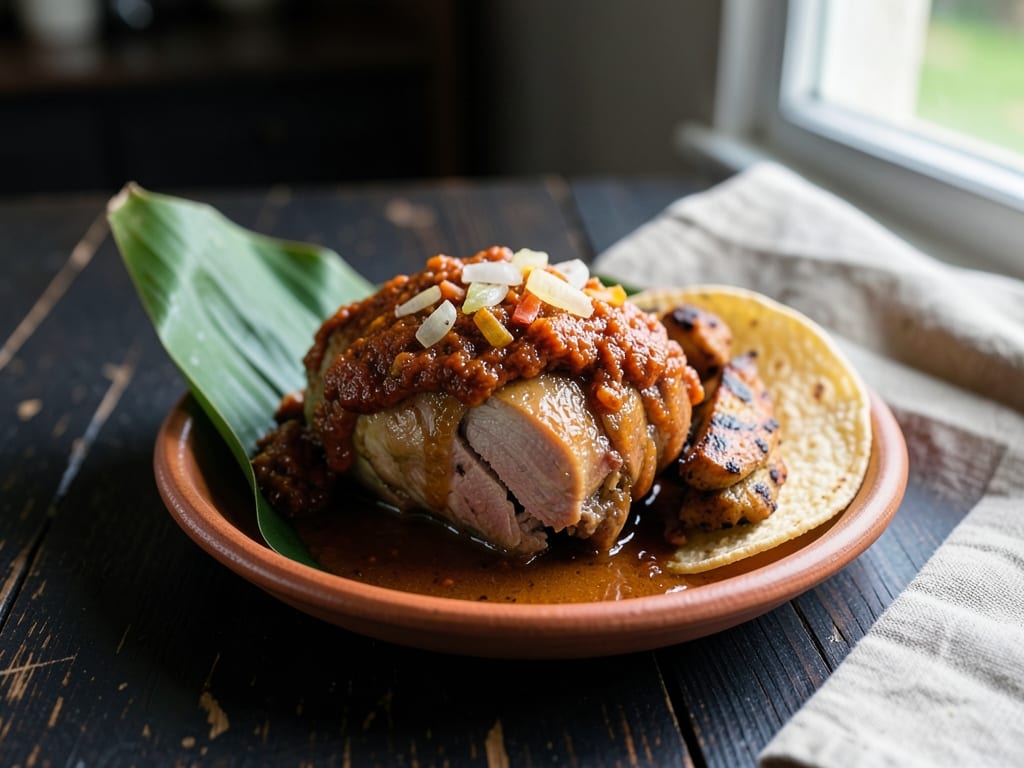
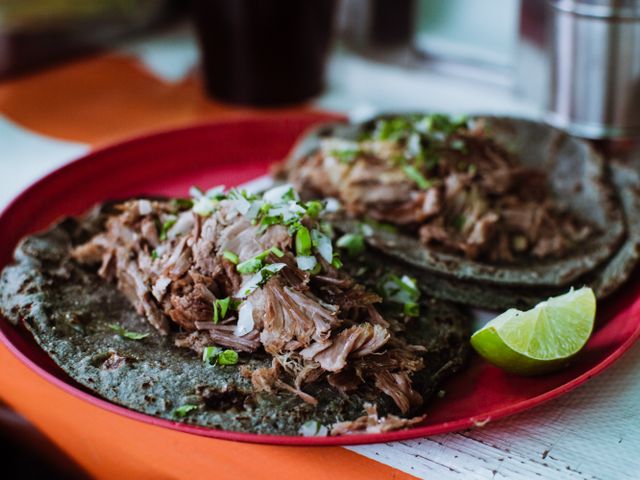
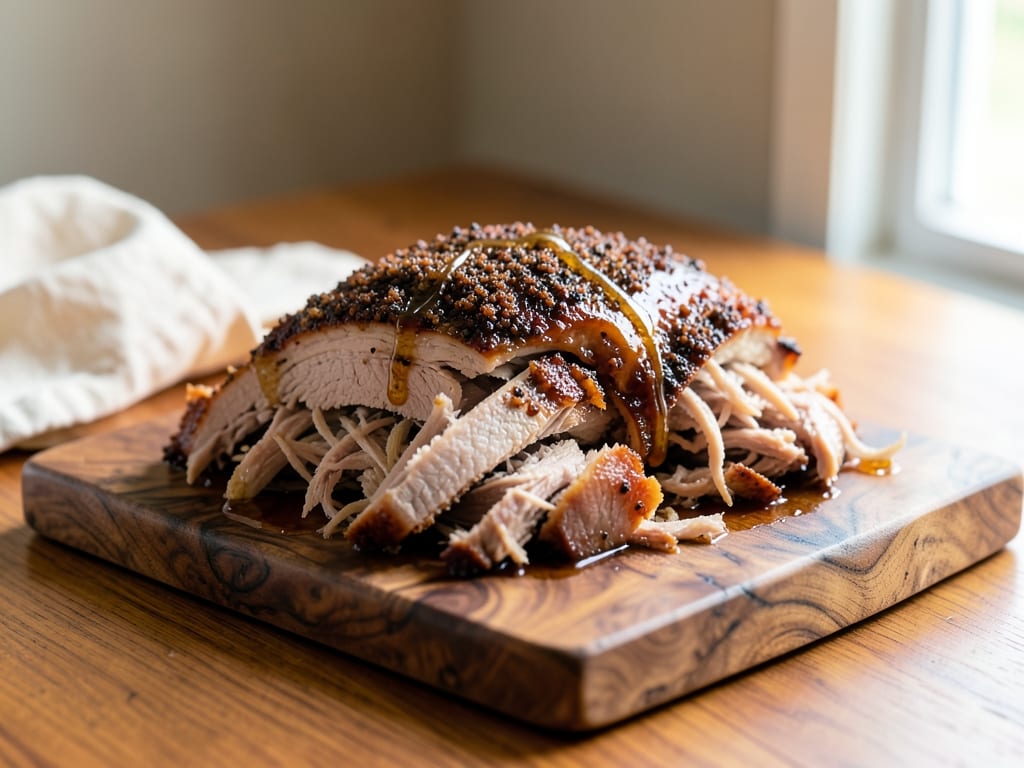
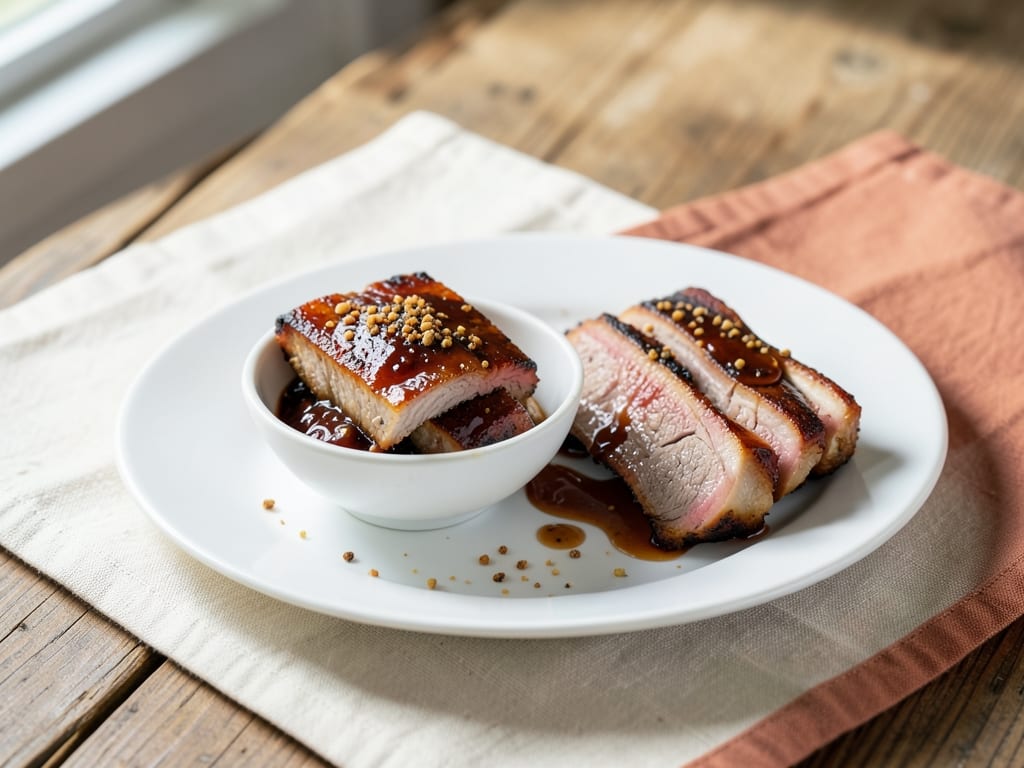
Find more like this
- Meal
- Dinner
- Cuisine
- Mexican
- Main ingredient
- Pork Shoulder
- Method
- Oven
- Quick & Easy
- Make Ahead
- Occasion
- Parties