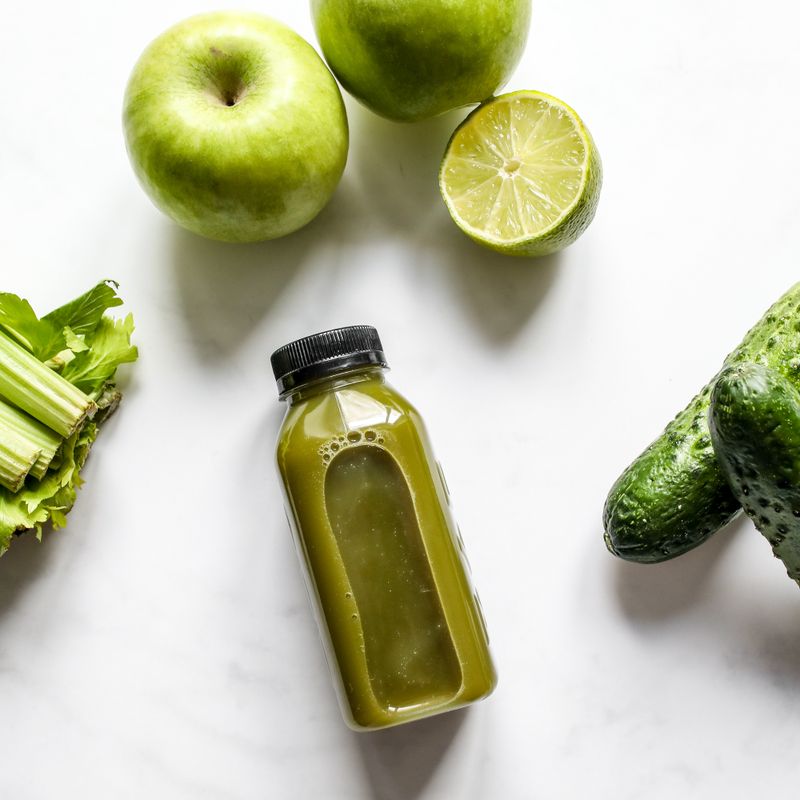
Celery Apple Carrot Juice
A refreshing, nutrient-packed cold-pressed juice combining crisp celery, sweet apple, and earthy carrot. This simple blend requires no cooking—just fresh produce and a juicer. The natural sweetness of the apple balances the minerals in celery and beta-carotene in carrots for a vibrant, energizing drink.
- Prep
- 10 min
- Cook
- —
- Wait
- 5 min
- Total
- 15 min
- Makes
- About 16 oz (475 ml) juice
Steps
Before you start
- Chill your juice glasses in the freezer for at least 5 minutes
- Choose firm, unblemished produce for maximum juice yield
- Have a cutting board and sharp knife ready to prep ingredients
- Read the recipe to understand your juicer's feed tube size and capabilities
Wash all produce
- Rinse the celery, apples, and carrots thoroughly under cool running water, scrubbing them gently with your hands to remove any dirt or debris.
- Pay special attention to the crevices of the celery and the carrot tops.
- Shake off excess water and pat dry with a clean kitchen towel or paper towels.
+ Show details− Hide details
Ready when: All produce is visibly clean and free of dirt or debris
Tip: Drying the produce prevents excess water from diluting your juice or causing the juicer to splash.
Trim and prepare celery
- Cut off and discard the root end of each celery stalk and any yellowed or damaged leaves at the top.
- Cut the stalks into pieces approximately 2–3 inches long, sized to fit comfortably into your juicer's feed tube without forcing.
- Place the cut pieces in a bowl or on the cutting board.
+ Show details− Hide details
Ready when: All celery stalks are cut into uniform, juicer-ready pieces
Tip: Cutting celery into consistent sizes ensures even juicing and prevents jamming.
Prepare apples and remove seeds
- Cut each apple in half from top to bottom.
- Using a small spoon or the tip of a paring knife, carefully scoop out the seeds and core from each half.
- Do not juice apple seeds—they contain trace amounts of cyanogenic compounds.
- Cut each half into 2–3 pieces sized for your juicer's feed tube.
+ Show details− Hide details
Ready when: All apples are halved, seeded, and cut into juicer-ready pieces
Tip: Be thorough in removing seeds; even one seed is best removed to ensure safety and clarity of juice.
Peel and cut carrots
- Using a vegetable peeler, peel away the outer skin of each carrot in downward strokes.
- Trim off the pointed tip end and any remaining leafy green tops.
- Cut the peeled carrots into pieces 2–3 inches long, matching the size of the celery and apple pieces.
- This uniformity helps the juicer process all ingredients at a consistent pace.
+ Show details− Hide details
Ready when: All carrots are peeled, trimmed, and cut into uniform pieces
Tip: Uniform sizes prevent some ingredients from being processed faster than others, which can lead to inconsistent juice texture.
Feed produce into juicer
- Turn on your juicer and begin feeding the prepared produce into the feed tube at a steady, moderate pace.
- Alternate between ingredient types—feed 2 celery stalks, then an apple piece, then 2 carrot pieces, then repeat the pattern.
- This alternation maximizes juice extraction and prevents any single ingredient type from clogging the machine.
- Do not force pieces down; let the juicer's blade or press do the work.
- Continue until all produce is processed, which should take about 3–5 minutes.
+ Show details− Hide details
Ready when: All produce has been fed through the juicer and approximately 16 oz (475 ml) of juice has accumulated
Tip: Alternating produce prevents fiber buildup and clogs, resulting in clearer, faster-flowing juice. Push down gently with the tamper if your juicer has one—forcing can heat the juice and degrade heat-sensitive nutrients.
Optional straining
- If you prefer a smoother, clearer juice with less pulp and fiber, pour the fresh juice through a fine-mesh strainer or nut milk bag into a clean pitcher, pressing gently with the back of a spoon to extract any remaining liquid from the pulp.
- For a more nutrient-dense, fiber-rich juice, skip this step and use the juice as-is.
+ Show details− Hide details
Ready when: Juice has been strained (if desired) into a clean pitcher
Tip: Straining removes beneficial fiber, so only do this if you strongly prefer a smooth texture.
Add brightness and chill
- Stir in the optional fresh lemon juice—it brightens the flavor, adds tartness, and helps preserve the juice's color by preventing oxidation.
- Pour the finished juice into your chilled glasses.
- Add ice cubes if desired, or leave as-is if the glasses are already very cold.
- Stir gently to combine.
+ Show details− Hide details
Ready when: Juice is poured into glasses and ready to drink
Tip: Cold-pressed juices are best consumed within 30 minutes of making for maximum freshness, flavor, and nutrient content. Adding ice to pre-chilled glasses minimizes dilution.
Good to know
Tips
- For maximum juice yield, choose medium to large apples and carrots—small ones have less flesh relative to skin and seeds.
- If your juicer generates heat (centrifugal models), work quickly and chill the juice immediately. Cold-press (masticating) juicers produce less heat and retain more nutrients.
- Save the pulp! Celery-apple-carrot pulp can be frozen and used in soups, stews, baked goods, or composted.
- This juice is naturally sweet from the apple and carrot; if you want it less sweet, replace one apple with an extra celery stalk or add a small piece of ginger for complexity.
Make ahead
Juice can be made ahead and stored in an airtight glass bottle in the refrigerator for up to 24 hours, though flavor and nutrients are best within the first few hours. Shake or stir before drinking if separation occurs.
Storage & reheating
Room temperature: not suitable for storage. Refrigerator: up to 24 hours in an airtight glass bottle; separation is normal. Freezer: freeze in ice cube trays for up to 3 months for later use in smoothies or cocktails (defrost at room temperature for 1–2 hours, or blend directly into drinks). To reheat: juice is served cold; do not heat.
Substitutions
- Granny Smith apples → Honeycrisp or Fuji apple. Sweeter varieties will make the juice less tart; reduce the lemon juice if using a very sweet apple.
- celery stalks → Fennel stalks. Fennel adds a subtle anise flavor and is equally hydrating; use 4–5 fennel stalks for a similar yield.
- carrots → Sweet potato (raw or lightly cooked and cooled). Raw sweet potato is harder to juice; roasting it first then cooling makes juicing easier and adds subtle sweetness.
- fresh lemon juice → Fresh lime juice or apple cider vinegar. Use 1 tablespoon (15 ml) lime juice for a tropical note, or 1 teaspoon (5 ml) vinegar for tanginess without excessive tartness.