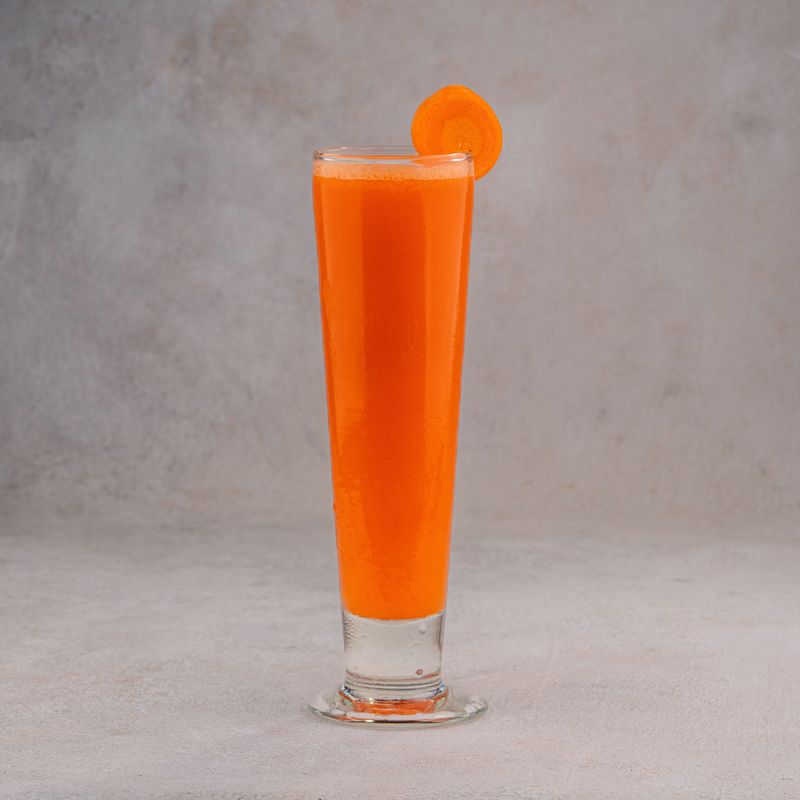
Simple Carrot Apple Juice
A bright, naturally sweet juice made from fresh carrots and crisp apples. This simple blend is quick to prepare with a juicer and delivers vibrant color and refreshing flavor. Perfect for breakfast or a healthy afternoon pick-me-up.
Steps
Before you start
- Wash carrots and apples thoroughly under running water
- Chill juice glasses in the freezer if you like (optional, but it keeps the juice cold longer)
- Have your juicer ready and assembled near a workspace
Wash produce thoroughly
- Wash the carrots and apples under cool running water, rubbing gently with your hands to remove any soil, dirt, or debris from the skin.
- Rinse both thoroughly, making sure to get into any crevices.
- Pat dry with a clean kitchen towel or paper towel.
- This step is crucial because you'll be keeping the nutrient-rich skins on both fruits.
+ Show details− Hide details
Ready when: Produce is visibly clean and dry to the touch
Tip: Don't use a vegetable brush on apples—their delicate skin bruises easily. For carrots, a gentle brush is fine if soil is stubborn.
Trim and cut produce
- Trim the carrot ends with your knife and discard.
- Cut carrots into 2-inch (5 cm) pieces so they feed easily into your juicer without clogging.
- For the apples, cut each one in half from top to bottom, then cut each half in half again to make quarters.
- Core out the seeds and tough central bits, discarding them.
- Keep the skin on—it contains valuable nutrients and flavor.
- Cut pieces should be roughly uniform in size so they process at the same rate.
+ Show details− Hide details
Ready when: Produce is cut into uniform, manageable pieces ready to feed into the juicer
Tip: Cut pieces to a consistent size so they feed smoothly and the juicer runs efficiently. Uniform pieces yield more juice with less strain on the machine.
Feed produce into juicer
- Turn on your juicer and feed the carrot and apple pieces into the chute, alternating between the two to help push each through evenly.
- Start with a few carrot pieces (2–3), then add an apple quarter, then carrot again.
- This rhythm keeps the juicer flowing smoothly.
- Work at a steady pace without forcing pieces down—let the juicer pull them in naturally.
- If your juicer feels sluggish or if the juice yield drops significantly toward the end, pour the optional cold water (about ¼ cup / 60 ml) through the chute in small amounts to help move the last bits of pulp through the machine.
- Fresh juice flows into the collection cup or pitcher as you feed the produce through.
+ Show details− Hide details
Ready when: All produce is fed through and only dry pulp remains in the collection basket; juice flow slows to a trickle
Tip: Alternate carrot and apple pieces—apples' higher water content helps push denser carrot pulp through the juicer and yields more juice overall. Don't force pieces; let the juicer do the work.
Serve and drink immediately
- Immediately pour the fresh juice into your chilled glasses and drink right away for maximum nutrition, flavor, and vibrant color.
- If you must wait a few minutes before drinking, stir the juice well first—it separates quickly as the heavier particles settle to the bottom.
- Enjoy the fresh, bright flavor while the juice is at its peak.
+ Show details− Hide details
Ready when: Juice is poured into glasses and ready to drink
Tip: Fresh juice oxidizes and loses nutrients and flavor within minutes. Drink it as soon as possible for best results.
Good to know
Tips
- Choose firm, fresh produce without soft spots. Older produce yields less juice and may taste flat or bitter.
- A cold-press juicer extracts more juice and retains more nutrients than a centrifugal juicer, but both work well for this recipe.
- If the juice tastes too sweet, add a squeeze of fresh lemon or lime juice for brightness and balance.
- Save the pulp—stir it into smoothies, soups, or vegetable broths for added fiber and flavor.
Storage & reheating
Serve immediately for best flavor and nutrition. If you must store it, pour into an airtight glass jar and refrigerate for up to 24 hours. Juice will separate and darken slightly over time as it oxidizes. Stir well before drinking. Do not freeze—the texture becomes grainy when thawed. Compost or repurpose the leftover pulp as a soup or smoothie base.
Substitutions
- apples, crisp (Granny Smith, Honeycrisp, or Gala) → pears or fresh pineapple. Both add natural sweetness and moisture. Pears are milder; pineapple adds tropical tang and aid digestion with enzymes.
- carrots, medium → beets or sweet potatoes. Beets create a deeper, earthier juice with added sweetness. Sweet potato is creamier and slightly more starchy; use a cold-press juicer if possible.