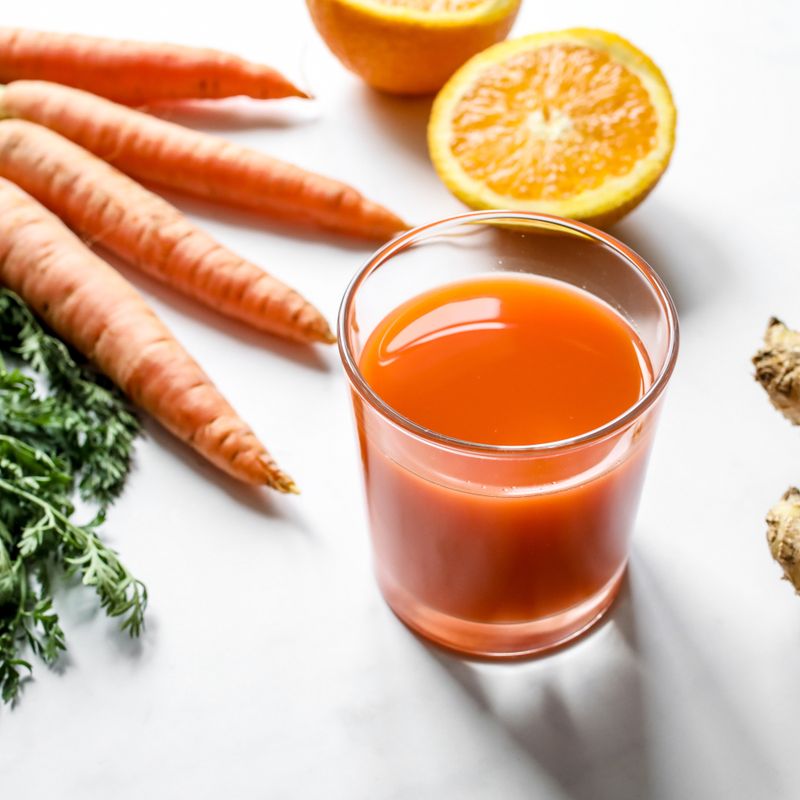
Carrot Orange Ginger Juice
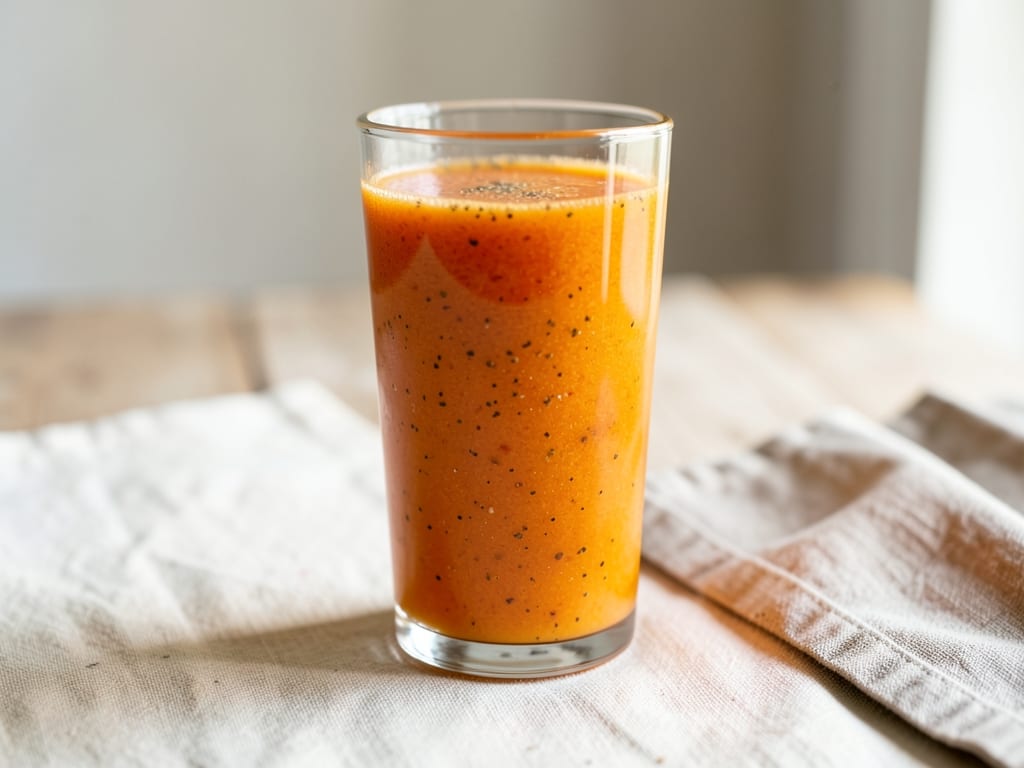
A bright, naturally sweet juice with fresh carrots, citrus brightness, and a gentle warming kick from ginger. This cold-pressed style juice is best enjoyed fresh and takes just minutes to prepare with a quality juicer or blender.
- Prep
- 10 min
- Cook
- —
- Wait
- 5 min
- Total
- 15 min
- Makes
- 2 servings (about 14 oz total)
Steps
Before you start
- Wash all produce thoroughly under running water to remove any dirt or residue
- Have your juicer set up and ready to go, or blender chilled in the freezer for 15 minutes
- Chill two serving glasses in the freezer while you prepare the juice
Press carrots through juicer
- Feed the carrot lengths through your cold-press juicer, a few at a time, allowing the machine to slowly extract the juice.
- Work steadily but do not force the produce.
- Collect the juice in a pitcher.
- This should yield about 8 oz (240 ml) of bright orange carrot juice.
+ Show details− Hide details
Ready when: Carrot pulp is dry and pressed completely
Tip: Cold-press juicers extract more slowly than centrifugal models but preserve more nutrients and enzymes. If using a blender, blend carrots with 2 tbsp water until fully liquefied, then strain through a nut milk bag, pressing gently.
Juice the oranges
- Squeeze the two orange halves using a citrus juicer or hand-held reamer.
- Press firmly, rotating to extract all juice.
- You should get about 6 oz (180 ml) of fresh juice.
- Pour into the pitcher with the carrot juice.
+ Show details− Hide details
Ready when: Oranges are completely squeezed with no liquid remaining
Tip: Room-temperature oranges are easier to squeeze. If yours are cold from the fridge, roll them gently on the counter under your palm before juicing to release their structure and yield more juice.
Press ginger through juicer
- Add the ginger chunks to your cold-press juicer and extract their juice the same way as the carrots.
- Press firmly to get every drop of the spicy, aromatic liquid.
- Add this ginger juice to the pitcher with the carrot and orange juice.
+ Show details− Hide details
Ready when: Ginger pulp is pale and completely pressed
Tip: Ginger can be harder than carrots; don't force it. If your juicer is struggling, you can alternatively grate the ginger finely, wrap it in cheesecloth, and squeeze hard over the pitcher. Taste the juice and adjust ginger strength to your preference.
Stir and strain
- Stir the blended juice well to combine all flavors evenly.
- If desired, pour through a fine-mesh strainer into a clean pitcher to remove any remaining fine pulp and achieve a completely smooth texture.
- This step is optional depending on your preference for pulp.
+ Show details− Hide details
Ready when: Juice is well combined and uniform in color
Tip: If the juice seems too thick or concentrated, you can thin it slightly with 1–2 tbsp of cold filtered water, but avoid overdiluting the delicate flavors.
Chill and serve immediately
- Divide the juice evenly between the two chilled glasses and serve immediately.
- The juice is best consumed right away while the enzymes and nutrients are at their peak.
- If needed, add a few ice cubes to keep it very cold.
+ Show details− Hide details
Ready when: Juice is ice cold and poured into prepared glasses
Tip: Freshly pressed juice begins to oxidize and lose nutritional value within 15 minutes of pressing. For the best health benefits and flavor, drink it immediately. If you must store it, see the storage instructions below.
Good to know
Tips
- For maximum juice yield from carrots, select firm, unblemished carrots and cut them lengthwise into thinner pieces before juicing—this helps the juicer extract more liquid.
- If you don't have a cold-press juicer, a high-speed blender works well: blend all ingredients with the optional water until completely smooth, then strain through a nut milk bag or several layers of cheesecloth by gathering the corners and squeezing firmly.
- Ginger strength varies dramatically between roots. Start with the smaller amount suggested (1.5 oz / 40 g) and taste as you go. You can always add more ginger juice, but you can't remove it.
- Drink this juice slowly and mindfully. The natural sugars and concentrated nutrients can cause a quick energy spike if consumed too fast on an empty stomach.
Storage & reheating
Store leftover juice (if any) in an airtight glass jar in the refrigerator for up to 24 hours. Separation is normal—stir or shake before serving. Freshly pressed juice is best consumed within 15 minutes of juicing for maximum nutrient retention. You can freeze juice in ice cube trays for up to 3 months and thaw individual cubes to add to smoothies or water.
Substitutions
- medium navel oranges → 2 medium grapefruit. Use pink or red grapefruit for a more tart, slightly bitter note. Yellow grapefruit will be more acidic. Adjust quantities based on juice yield.
- fresh ginger root → ½ tsp ground ginger or fresh turmeric root (1 oz / 25 g). Ground ginger is less fresh-tasting but convenient. Fresh turmeric adds earthy warmth and anti-inflammatory compounds. Start with ¼ tsp turmeric as it has a stronger flavor.
- medium carrots, preferably orange → sweet potatoes or parsnips. Both yield a sweeter, more dessert-like juice. Use equal weights and peel before juicing. Sweet potato juice may require straining to remove stringy fibers.
- medium navel oranges → 1 lemon and 1 lime plus 3 tbsp honey. Creates a more citrus-forward, tangy juice. Add honey to balance the acidity; stir in after juicing.