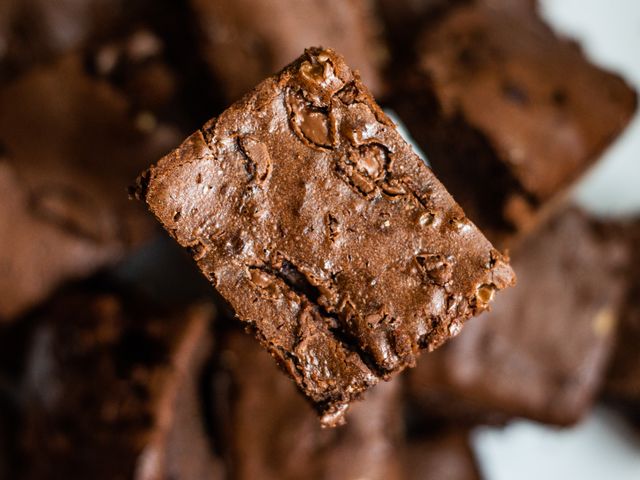
Cajeta Pecan Blondies
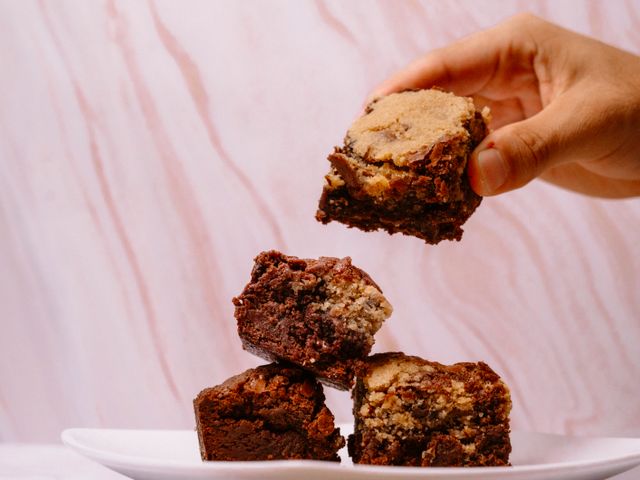
Buttery, gooey blondies swirled with cajeta (Mexican goat's milk caramel) and studded with toasted pecans. The result is a rich dessert bar with layers of toffee flavor and caramel fudginess that stays moist for days. These are easier to make than they look—no fancy techniques required, just butter, sugar, eggs, and layers of Mexican caramel goodness.
- Prep
- 15 min
- Cook
- 33 min
- Wait
- 30 min
- Total
- 1 hr 18 min
- Makes
- 16 bars (one 9×13-inch pan)
Steps
Before you start
- Preheat your oven to 350°F (175°C)
- Line a 9×13-inch (23×33 cm) baking pan with parchment paper, leaving a 2-inch overhang on two sides for easy removal
- Bring all butter and eggs to room temperature (about 1 hour)
- Toast pecans in a dry skillet over medium heat for 4–5 minutes until fragrant, then chop roughly
Cream butter and sugars
- In a large bowl, beat together the room-temperature butter, brown sugar, and granulated sugar with an electric mixer on medium speed for 3–4 minutes until pale, fluffy, and increased in volume.
- Scrape down the bowl halfway through.
+ Show details− Hide details
Ready when: Mixture is pale, fluffy, and doubled in volume
Tip: This creaming step incorporates air, which helps the blondies rise and stay tender.
Beat in eggs and vanilla
- Add the eggs one at a time, beating well after each addition until fully incorporated.
- Pour in the vanilla extract and beat for another 30 seconds until everything is well combined.
+ Show details− Hide details
Ready when: Mixture is smooth and pale
Tip: Room-temperature eggs emulsify better and create a smoother batter—cold eggs can cause the mixture to look curdled.
Mix dry ingredients
- In a medium bowl, whisk together the all-purpose flour, baking powder, and kosher salt until evenly distributed with no lumps.
+ Show details− Hide details
Ready when: No visible lumps, uniform pale color
Fold in dry mixture
- Add the dry mixture to the butter-egg mixture and fold with a rubber spatula until just combined—no flour streaks should remain, but do not overmix or the bars will be tough.
+ Show details− Hide details
Ready when: No dry flour visible, batter is smooth but slightly thick
Tip: Overmixing develops gluten and makes the bars dense. Stop as soon as you see no dry streaks.
Spread base layer and swirl cajeta
- Spread half of the batter (about 1.5 cups or 320 g) evenly into the prepared 9×13-inch baking pan.
- Drizzle the room-temperature cajeta over the batter in a thin, even layer.
- Use an offset spatula or the back of a spoon to gently swirl the cajeta into the base layer, creating a marbled effect.
- Dollop the remaining batter in spoonfuls over the cajeta and gently spread it to cover, leaving some swirls visible.
+ Show details− Hide details
Ready when: Batter evenly distributed with visible cajeta swirls
Tip: If cajeta is too cold, it won't swirl easily. Let it sit at room temperature for 30 minutes before using. Do not over-swirl or the layers will blend into uniform color.
Top with pecans and bakeOven 350°F / 175°C
- Scatter the chopped toasted pecans evenly across the top of the batter, pressing them down very gently so they adhere slightly.
- Place the pan in the preheated 350°F (175°C) oven and bake for 30–35 minutes, until the edges are deep golden brown and a toothpick inserted into the center comes out with a few moist crumbs (not dry, not raw batter).
+ Show details− Hide details
Ready when: Edges are deep golden, center is set but still slightly jiggly in the very middle, toothpick has moist crumbs
Tip: Slight underbaking keeps the center gooey and fudgy. They will firm up as they cool—err on the side of slightly underbaked rather than dry.
Cool completely
- Remove the pan from the oven and let the blondies cool in the pan on a wire rack for 30 minutes at room temperature.
- This allows them to set enough to cut cleanly but remain soft and chewy inside.
+ Show details− Hide details
Ready when: Pan is no longer hot to the touch, blondies are set but still yielding
Tip: Do not skip this step or the blondies will fall apart when cut.
Cut and serve
- Lift the blondies out of the pan using the parchment overhang.
- Place on a cutting board and cut into 16 equal squares (4 rows × 4 columns) using a sharp, dry knife, wiping the blade between cuts if needed for clean edges.
- Serve at room temperature or slightly warm.
+ Show details− Hide details
Ready when: Squares are even and cleanly cut
Tip: For the cleanest cuts, dip your knife in hot water and wipe it dry between each slice.
Good to know
Tips
- Toast the pecans lightly (5 minutes in a 350°F oven or 4–5 minutes in a dry skillet) to deepen their flavor before chopping and topping. This is optional but highly recommended.
- Cajeta should be at room temperature and pourable but not liquid. If it's too thick, gently warm it in a bowl set over hot water for 1–2 minutes and stir to loosen. If it's too thin, let it cool for 15 minutes.
- The slight underbaking is intentional—these bars continue to cook from residual heat in the pan and firm up as they cool. A slightly jiggly center while in the oven will result in a fudgy, chewy finished bar.
- For extra decadence, drizzle each bar with a small amount of warm cajeta just before serving and top with a pecan half.
Make ahead
The batter (before adding dry ingredients) can be prepared up to 4 hours ahead and refrigerated in an airtight container. Mix the dry ingredients separately and fold together just before spreading into the pan. Baked blondies stay moist and delicious for several days when stored properly, making them ideal for advance baking.
Storage & reheating
Room temperature: Store in an airtight container for up to 3 days. Refrigerator: Up to 5 days in an airtight container. Freezer: Wrap individual bars in plastic wrap, then place in a freezer bag for up to 2 months. Thaw at room temperature for 1–2 hours before serving, or warm in a 300°F (150°C) oven for 8–10 minutes.
Substitutions
- cajeta (Mexican goat's milk caramel) → Dulce de leche (cow's milk caramel). Use the same amount as cajeta. Dulce de leche is slightly runnier and will create a similar sweet, caramel swirl. The flavor will be similar but less tangy than true goat's milk cajeta.
- pecan halves, lightly toasted → Walnuts or almonds, toasted and chopped. Use the same amount. Walnuts have a slightly earthier, more assertive flavor; almonds will be milder and sweeter. Both work beautifully with caramel.
- cajeta (Mexican goat's milk caramel) → Homemade caramel (1 cup heavy cream simmered with 1 cup dulce de leche). If cajeta is unavailable, thin store-bought dulce de leche with heavy cream to create a pourable consistency for swirling.
- all-purpose flour → All-purpose flour mixed with 2 tablespoons cornstarch. Reduces gluten development and yields a more tender, cake-like crumb. Sift the cornstarch with the flour to distribute evenly.