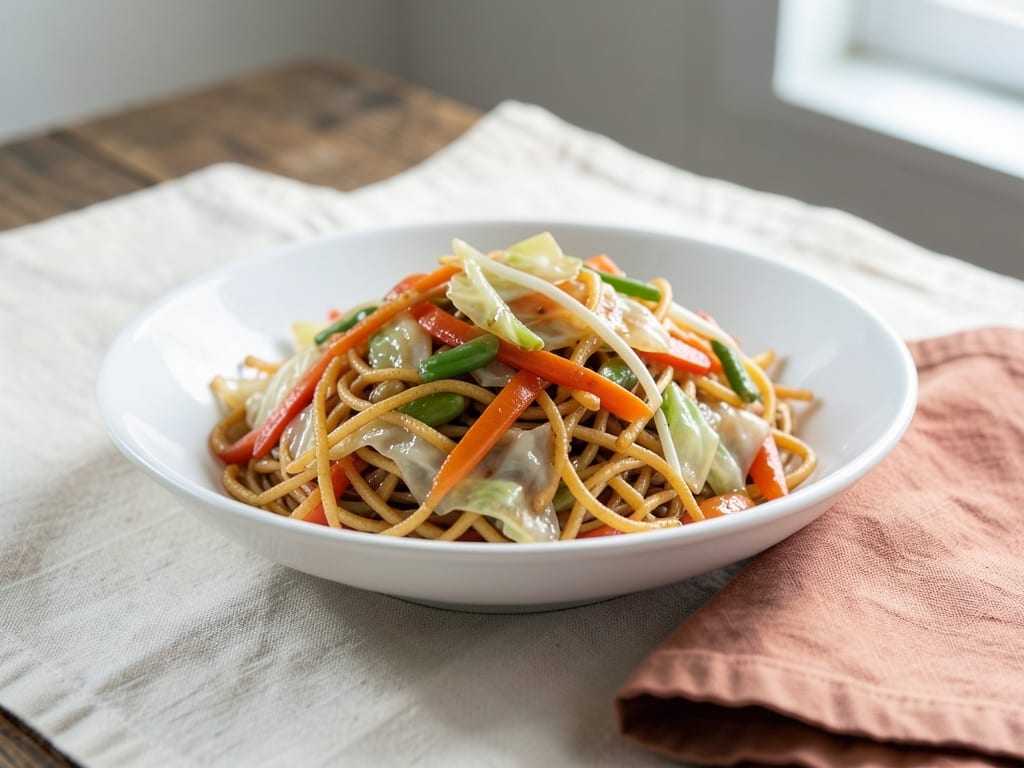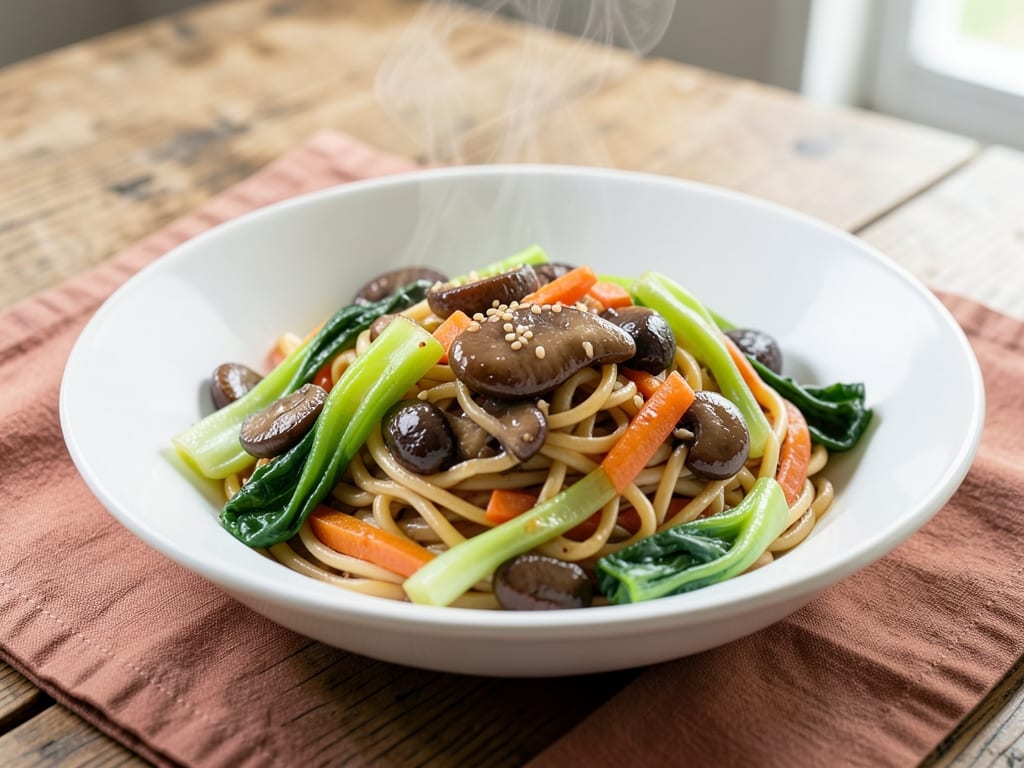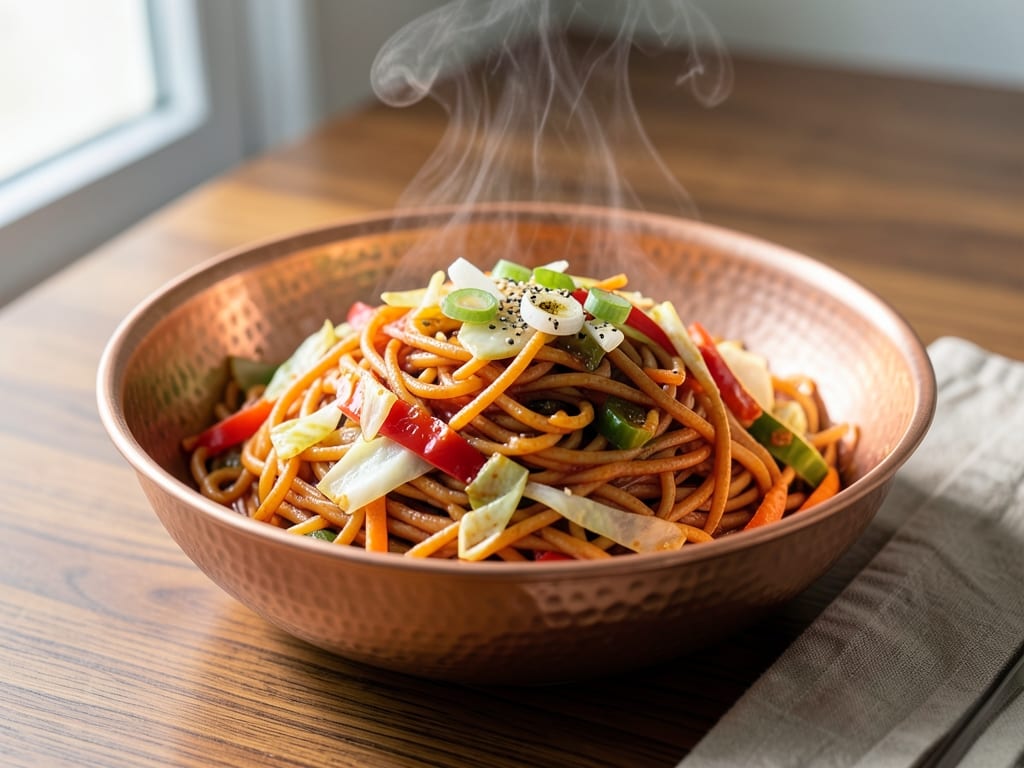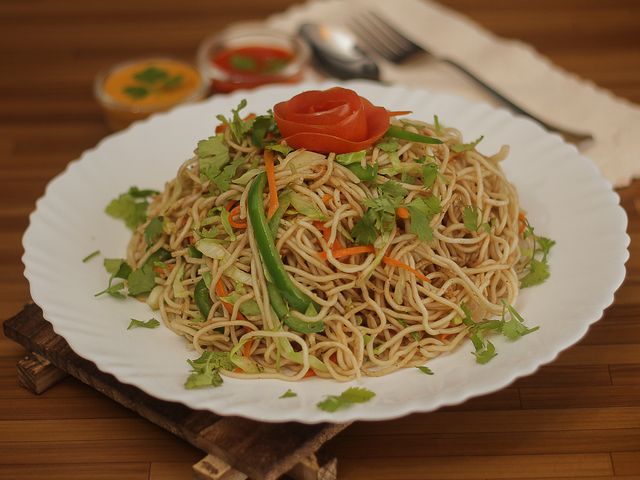
Cabbage and Carrot Stir-Fried Ramen
Quick stir-fried ramen noodles tossed with shredded cabbage and carrots in a savory-sesame sauce. This budget-friendly weeknight dinner comes together in under 20 minutes with crisp vegetables and tender noodles coated in a glossy, umami-rich glaze.
Steps
Before you start
- Have all ingredients prepped and measured before you begin cooking—stir-frying is fast and you won't have time to chop mid-cook
- Bring a pot of water to a boil to cook the noodles while you prep vegetables
Boil the noodles
- Bring a large pot of water to a rolling boil.
- Add the ramen noodles and cook according to package directions, usually 3–4 minutes, stirring occasionally to separate them.
- The noodles should be tender but still have a slight chew.
- Drain in a colander and set aside.
- Do not rinse unless the noodles are very starchy or clumping.
+ Show details− Hide details
Ready when: Noodles are soft but still have slight bite, not mushy
Tip: Stir noodles as they cook to prevent clumping. Save a splash of noodle cooking water in case you need to loosen the sauce later.
Mix the sauce
- While noodles cook, whisk together the soy sauce, sesame oil, rice vinegar, and brown sugar in a small bowl.
- Stir until the sugar dissolves.
- Taste and adjust—add more soy sauce for saltiness, more vinegar for tang, or a touch more oil for richness.
- Set aside.
+ Show details− Hide details
Ready when: Sauce is smooth and sugar is fully dissolved
Tip: Make the sauce before you start cooking vegetables so you're not scrambling mid-stir-fry.
Heat the wok
- Set a large skillet or wok over high heat.
- Let it heat for 1 minute until very hot—it should shimmer and feel hot when you hold your hand 6 inches above it.
- Add the vegetable oil and swirl to coat the pan.
+ Show details− Hide details
Ready when: Oil shimmers and moves freely in the hot pan
Tip: A very hot pan is essential for stir-frying—it seals the vegetables and keeps them crisp rather than steaming them.
Cook aromatics
- Add the minced garlic and ginger (if using) to the hot oil.
- Stir constantly for about 30 seconds until fragrant.
- Do not let the garlic brown or it will taste bitter.
+ Show details− Hide details
Ready when: Garlic is fragrant and just beginning to turn golden at the edges
Tip: Keep stirring—aromatics burn quickly over high heat. This step should take less than a minute.
Stir-fry carrots
- Add the julienned carrots to the pan, spreading them in an even layer.
- Let them cook undisturbed for 1 minute to get some color, then stir and toss for another 1–2 minutes.
- The carrots should begin to soften slightly but still have a slight crunch.
+ Show details− Hide details
Ready when: Carrots are just beginning to soften and have light browning on edges
Tip: Don't skip the initial undisturbed minute—this develops a light caramelization and better flavor.
Add cabbage
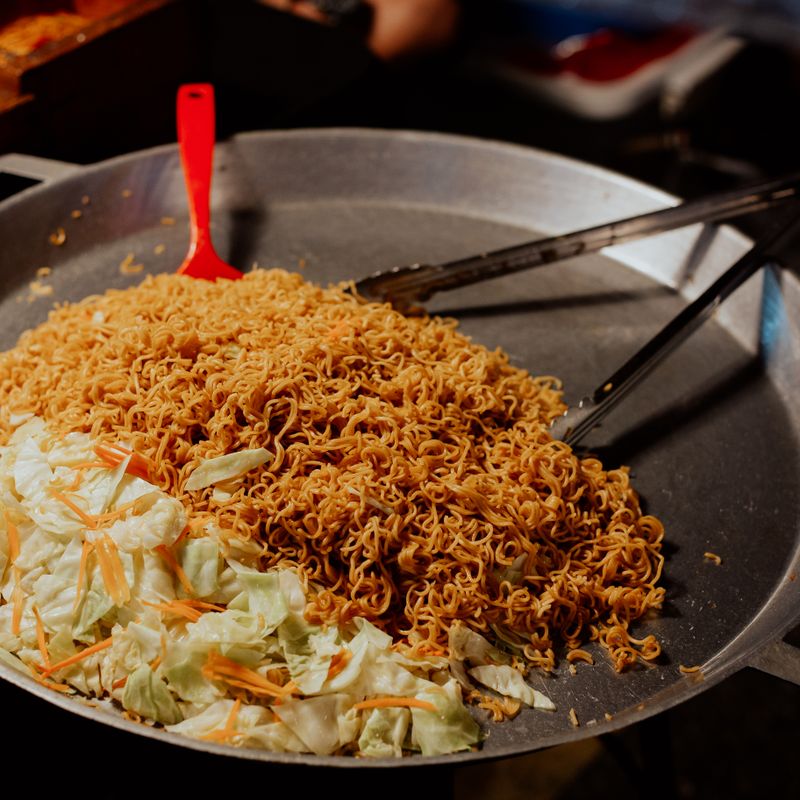
- Add the sliced cabbage to the pan.
- Toss and stir constantly for 2–3 minutes, breaking up any clumps as you go.
- The cabbage will wilt and become translucent, but should still have a slight crunch to it.
+ Show details− Hide details
Ready when: Cabbage is wilted and tender-crisp, with some lightly browned edges
Tip: Keep the heat high and stir constantly to avoid steaming the vegetables. They should sound crispy when you toss them.
Toss in noodles
- Add the cooked ramen noodles to the pan with the vegetables.
- Toss everything together with a wooden spoon or spatula, breaking up any clumps of noodles.
- Keep the heat high and stir for about 30 seconds.
+ Show details− Hide details
Ready when: Noodles are broken up and distributed throughout the vegetables
Tip: If the pan feels dry or crowded, work in two batches rather than overcrowding, which causes steaming instead of stir-frying.
Pour and coat with sauce
- Pour the sauce over the noodle-and-vegetable mixture.
- Toss everything together constantly for 1–2 minutes, ensuring the sauce coats all the noodles and vegetables evenly.
- If the mixture feels too dry, add 1–2 tablespoons of reserved noodle cooking water to loosen it.
+ Show details− Hide details
Ready when: All ingredients are coated with glossy sauce with no dry spots
Tip: Keep the noodles moving—this ensures even seasoning and prevents sticking to the pan.
Finish and serve
- Remove the pan from heat.
- Taste and season with a pinch more salt, soy sauce, or sesame oil as needed.
- Top with sliced scallions and sesame seeds if using.
- Serve immediately while hot and the noodles are still tender.
+ Show details− Hide details
Ready when: Noodles are hot, glossy, and evenly coated; vegetables are tender-crisp
Tip: Add scallions at the very end so they stay bright and crisp rather than wilting into the hot noodles.
Good to know
Tips
- Mise en place is crucial for stir-frying: have everything prepped, measured, and within arm's reach before you heat the wok. Once you start cooking, you won't have time to chop.
- Keep your heat high throughout—this is what gives stir-fried noodles their characteristic texture and prevents vegetables from becoming soggy and steamed.
- If the noodles stick after coating, a splash of reserved noodle cooking water loosens them without making the dish watery. Add it slowly and taste as you go.
- For extra flavor and texture, top with crushed peanuts, crispy fried onions, or a drizzle of chili oil before serving.
Make ahead
Vegetables can be prepped up to 4 hours ahead and stored in separate containers in the fridge. The sauce can be mixed 1 day ahead and stored in an airtight container. Do not cook the noodles until you are ready to stir-fry.
Storage & reheating
Leftovers keep in an airtight container in the refrigerator for up to 3 days. To reheat, warm in a skillet over medium-high heat with a splash of water or extra noodle cooking water to prevent sticking, tossing frequently for 2–3 minutes until hot. The noodles will firm up as they cool; reheat gently to restore tender texture. Do not freeze, as the noodle texture will suffer.
Substitutions
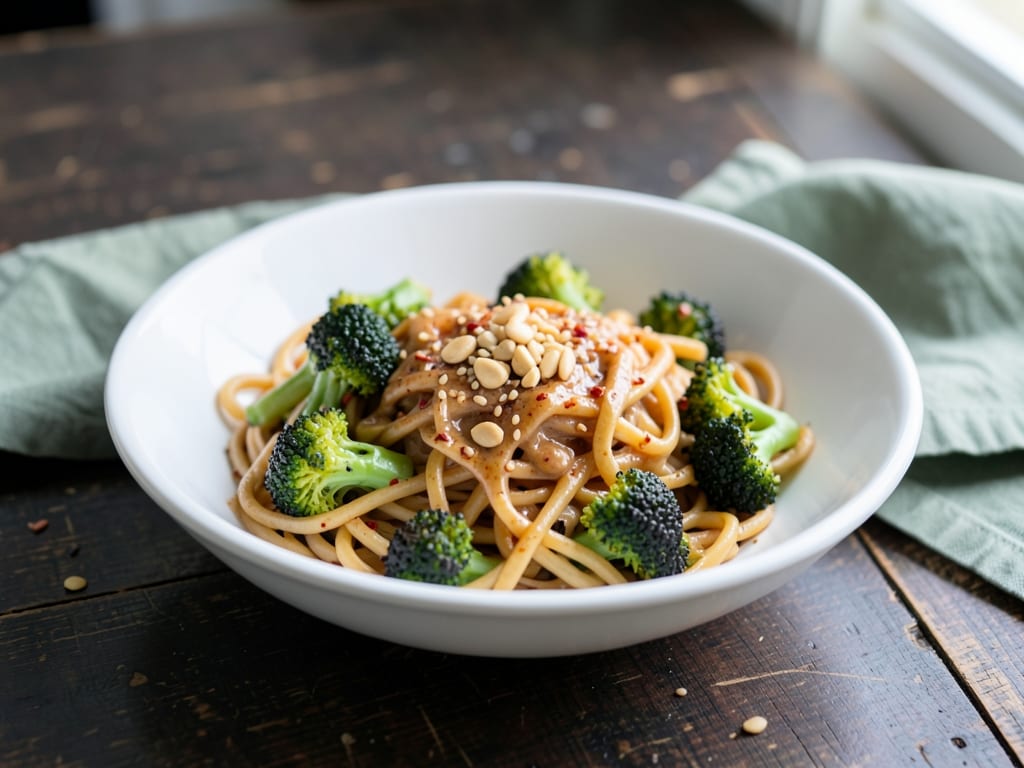
- green cabbage, medium head → bok choy, broccoli, snap peas, or bell peppers. Cut into similar-sized pieces. Adjust cooking time slightly depending on the vegetable's natural tenderness.
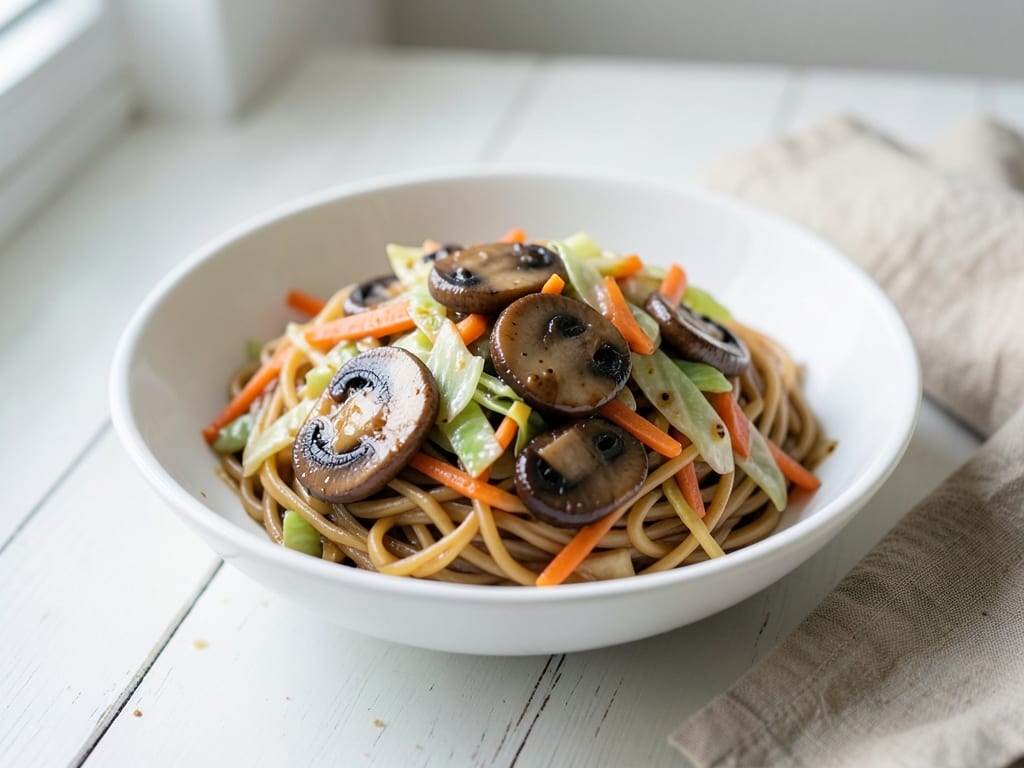
- medium carrots → bell peppers, zucchini, or mushrooms. Mushrooms will release moisture; slice thinner and cook a bit longer. Bell peppers can go in with the cabbage since they soften faster.
- toasted sesame oil → a small drizzle of peanut oil or skip entirely for a lighter taste. Sesame oil is key to the flavor; if omitted, increase soy sauce by ½ tablespoon and add a touch of ginger for depth.
- ramen noodles (3.5 oz / 100 g packages, seasoning packet discarded) → lo mein, chow mein, or thin egg noodles. Adjust cooking time to package directions. The stir-fry method remains the same.