Beet Juice
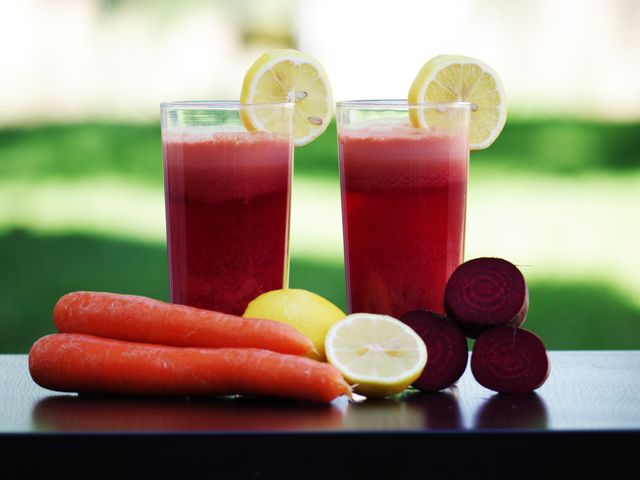
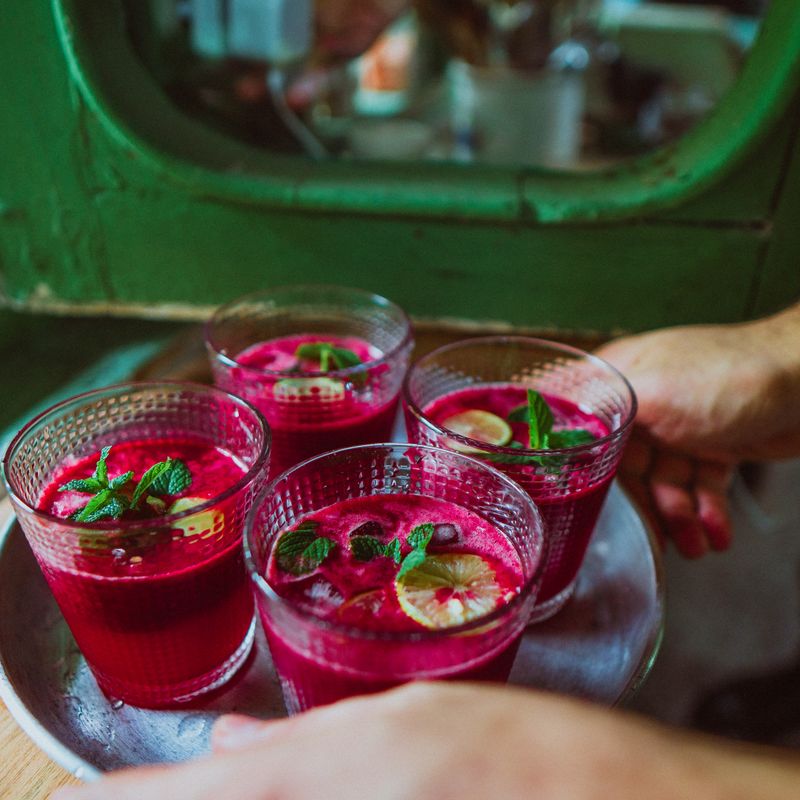
Fresh, vibrant beet juice made by juicing raw beets with a touch of citrus and ginger. This naturally sweet juice delivers earthy beet flavor and is rich in nutrients. Serve immediately over ice or store in the refrigerator for up to 3 days.
Steps
Before you start
- Chill juice glasses in the freezer for 10 minutes if desired
- Have your juicer clean and ready to use
- Wash beets thoroughly under cold running water to remove any soil
Prepare beets
- Scrub beets thoroughly under cold running water to remove all soil.
- Using a sharp knife on a cutting board, trim off the root ends and any leaves.
- Cut beets into pieces small enough to fit through your juicer's feed chute (typically 2–3 inch chunks).
- Leave the skin on—it contains nutrients and helps the juice pass through the juicer more efficiently.
+ Show details− Hide details
Ready when: Beets are cut into even pieces ready for juicing
Tip: Wearing gloves or rinsing your hands frequently prevents beet stains on your skin and countertops.
Prepare citrus and ginger
- Wash the lemon under cold water.
- You may peel it first if your juicer struggles with citrus peel, or cut it into sections that fit your chute.
- If using ginger, cut the unpeeled piece into chunks that fit your juicer's opening.
- Ginger adds a subtle warmth and aids digestion, but it is optional.
+ Show details− Hide details
Ready when: Lemon and ginger are cut and ready to juice
Tip: If using a centrifugal juicer, juice the harder ginger before soft beets to help push pulp through.
Juice the ingredients
- Turn on your juicer and begin feeding beet pieces through the chute, pushing gently with the plunger.
- Do not force; let the juicer pull the vegetables through.
- Halfway through the beets, add the lemon pieces.
- If using ginger, add it toward the end.
- Juice all ingredients until only dry pulp remains in the catch basin.
- You should yield about 2 cups (480 ml) of juice.
+ Show details− Hide details
Ready when: All beets, lemon, and ginger have passed through the juicer and only dry pulp remains
Tip: Work slowly to extract maximum juice and nutrients. Fast juicing can generate heat that damages some enzymes in raw vegetables.
Serve immediately or chill
- Pour the fresh juice directly into chilled glasses filled with ice.
- If the juice is very thick or concentrated, stir in a splash of filtered water (2–4 tablespoons per glass) to reach your preferred consistency.
- Serve right away while the juice is fresh and at its peak nutrition and flavor.
+ Show details− Hide details
Ready when: Juice is poured and ready to drink
Tip: Fresh raw juice oxidizes quickly; drink within 15 minutes of juicing for the best taste and nutrient content.
Good to know
Tips
- Beet juice is potent and best consumed in moderation or diluted; some people experience a harmless condition called beeturia (red urine) within hours of drinking concentrated beet juice.
- If you don't have a juicer, blend beets with ½ cup water until smooth, then strain through a fine-mesh sieve or cheesecloth, pressing to extract all liquid.
- Beet juice's bright color and natural sweetness make it a great base for smoothie bowls, cocktails, or mixed with other vegetable juices like carrot or celery.
- Always use fresh, firm beets; soft or sprouted beets indicate age and loss of nutrients.
Storage & reheating
Refrigerator: Store in an airtight glass jar or bottle for up to 3 days. Shake well before each pour, as pulp and juice naturally separate. Freezer: Pour into ice cube trays and freeze for up to 3 months; thaw in the refrigerator before drinking. Do not store at room temperature—fresh raw juice spoils quickly.
Substitutions
- fresh lemon → Fresh lime or orange. Lime adds a more tropical tang; orange mellows the earthiness and adds sweetness.
- fresh ginger → Turmeric (1 teaspoon ground, added after juicing) or fresh turmeric root. Turmeric adds anti-inflammatory benefits and a warm, slightly bitter note; mix in after juicing if using ground.
- medium beets, unpeeled → Golden beets or Chioggia beets. Golden beets are milder and sweeter with less earthy flavor; Chioggia have a candy-striped interior and slightly different texture.