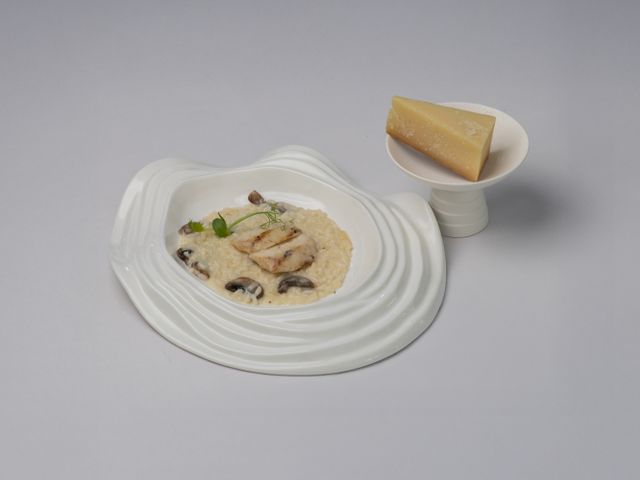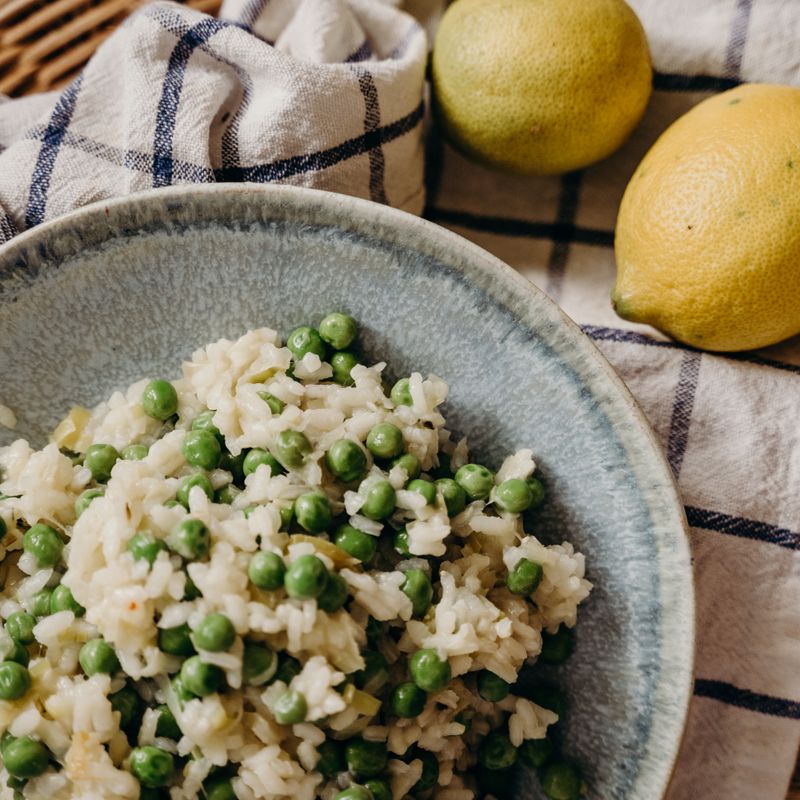
Asparagus and Pea Risotto
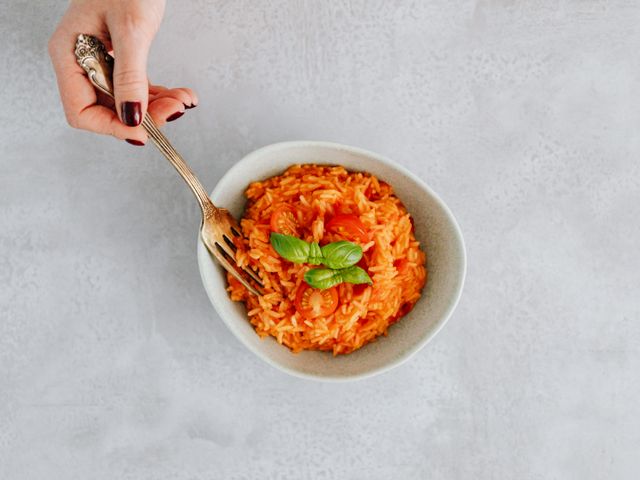
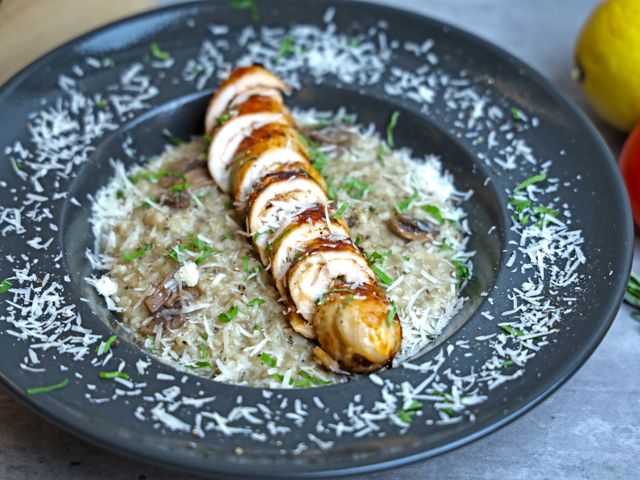
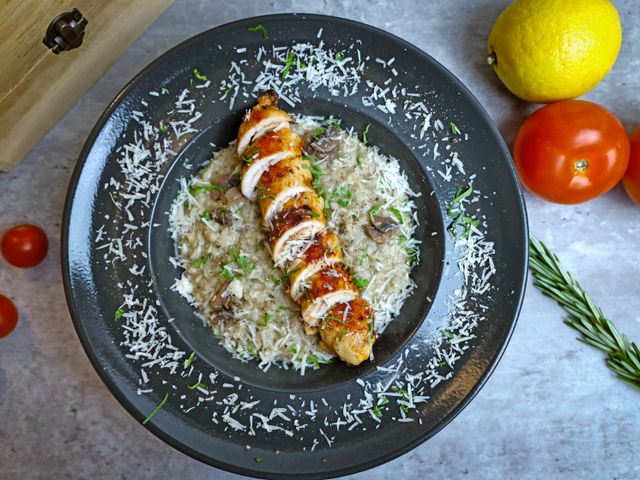
A creamy, spring-green risotto with tender asparagus tips, sweet peas, and a finish of butter and Parmesan. Simple technique, bright flavor, and a lemony lift at the end.
- Prep
- 20 min
- Cook
- 35 min
- Wait
- 2 min
- Total
- 57 min
- Makes
- 4 main-course servings (about 5 cups / 1.2 liters)
Steps
Before you start
- Have everything chopped and measured before you start; risotto needs near-constant attention once the rice goes in.
- Keep the broth hot in a saucepan at a bare simmer the whole time. Cold broth slows cooking and makes the rice uneven.
- Grate the Parmesan fresh from a wedge; pre-grated cheese melts less smoothly.
- Use a wide, heavy-bottomed pan so the rice cooks in a shallow, even layer.
Heat the broth
- Pour the broth into a 3-quart saucepan and bring to a gentle simmer over medium heat.
- Reduce the heat to low and keep it hot throughout cooking.
+ Show details− Hide details
Ready when: Small bubbles at the edges, steam rising
Tip: If your broth is not low-sodium, hold back on salt until the end.
Blanch asparagus
- Add the asparagus stalk pieces (not the tips) to the simmering broth and cook 2 minutes, then add the tips and cook 1 more minute.
- Lift them out with a slotted spoon onto a plate, keeping the broth in the pot.
+ Show details− Hide details
Ready when: Bright green and just tender when pierced with a knife tip, not fully soft
Tip: They finish cooking in the risotto later, so pull them while still slightly firm.
Soften the shallot
- Set the wide pan over medium heat.
- Add the olive oil and the 2 tablespoons cooking butter.
- When the butter foams, add the shallots and a pinch of salt.
- Cook, stirring often, 4 to 5 minutes.
- Add the garlic and stir 30 seconds.
+ Show details− Hide details
Ready when: Shallots are soft and translucent with no browning; garlic smells fragrant
Tip: Lower the heat if the shallots begin to brown; browned bits make the risotto taste bitter.
Toast the rice
- Add the arborio rice and stir constantly for 2 to 3 minutes so each grain is coated in fat.
+ Show details− Hide details
Ready when: Grain edges turn translucent while the center stays white, and the rice smells nutty
Add the wine
- Pour in the wine and stir until it is almost completely absorbed and the sharp alcohol smell fades, about 1 to 2 minutes.
+ Show details− Hide details
Ready when: Pan bottom is nearly dry when you drag a spoon across it
Add broth gradually
- Add 1 ladleful (about ¾ cup / 180 ml) of hot broth.
- Stir often, keeping the mixture at a lively simmer.
- When the liquid is mostly absorbed, add another ladleful.
- Continue for 18 to 22 minutes, adjusting the heat to keep a steady, gentle bubble.
+ Show details− Hide details
Ready when: A spoon dragged through leaves a trail that slowly closes; rice looks creamy and loose
Tip: You may not need all the broth. Stop adding when the rice is nearly tender.
Taste the rice
- After about 18 minutes, taste a few grains.
- They should be tender with a slight firm bite at the very center (al dente).
- If chalky, add another ladleful and cook 2 to 3 minutes more.
+ Show details− Hide details
Ready when: Tender with a tiny firm bite at the center, no chalky white core
Tip: Season with salt now, once the broth has reduced into the rice.
Fold in vegetables
- Stir in the blanched asparagus pieces and thawed peas, along with one more small ladleful of broth.
- Cook 2 minutes until the vegetables are heated through.
- Keep the asparagus tips aside for topping.
+ Show details− Hide details
Ready when: Peas are bright green and hot; risotto is loose and flows slowly
Finish and rest
- Remove the pan from the heat.
- Vigorously stir in the Parmesan and the cold butter cubes until glossy and creamy.
- Stir in the lemon zest and 1 tablespoon lemon juice.
- Season with salt and pepper.
- Cover and rest 2 minutes.
+ Show details− Hide details
Ready when: Glossy, creamy, and flowing in a soft wave when the pan is tilted
Tip: If too thick, loosen with a splash of hot broth.
Serve right away
- Spoon into warm shallow bowls.
- Top with the reserved asparagus tips, extra Parmesan, and a grind of pepper.
- Serve immediately.
+ Show details− Hide details
Ready when: Risotto spreads gently across the bowl
Tip: Risotto stiffens quickly as it cools, so serve it at once.
Good to know
Tips
- Stir often but not frantically; regular stirring releases starch for creaminess.
- Keep the simmer lively but gentle. Too high and the liquid evaporates before the rice cooks; too low and the rice turns gluey.
- The risotto should be loose and flowing when done, since it thickens on the plate.
- Use fresh peas if available; add them with the asparagus, cooking 1 to 2 minutes longer.
Make ahead
Blanch the asparagus up to 1 day ahead and refrigerate. Chop the shallot and garlic up to 1 day ahead. The risotto itself is best made and served right away.
Storage & reheating
Room temperature: up to 1 hour. Refrigerator: cool quickly and store in an airtight container up to 3 days. Freezer: not recommended, as the texture turns mushy. Reheat in a skillet over medium-low heat with a splash of broth or water, stirring until hot and creamy, or shape cold leftovers into patties and pan-fry as risotto cakes.
Substitutions
- dry white wine → additional broth plus 1 tablespoon lemon juice. Makes it alcohol-free; add the lemon juice with the broth.
- large shallots → ½ small yellow onion, finely diced. Slightly sharper; cook a minute longer until soft.
- Parmigiano-Reggiano → Pecorino Romano. Saltier and sharper; reduce added salt.
- arborio rice → carnaroli rice. Holds its shape slightly better; use the same amount and timing.