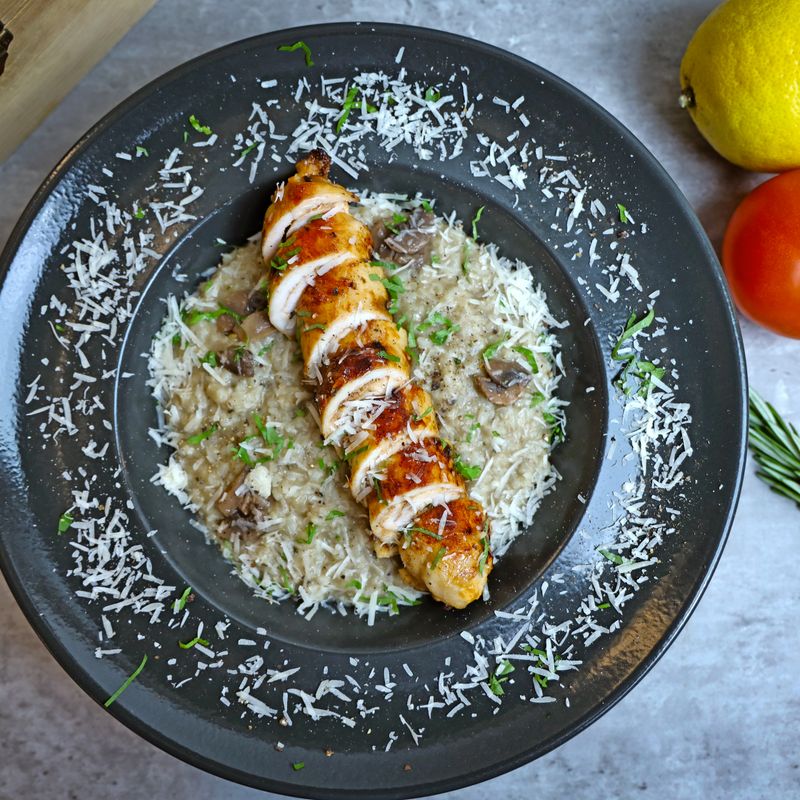
Lemon Parmesan Risotto
Creamy, bright stovetop risotto built on arborio rice, dry white wine and chicken broth, finished off the heat with plenty of Parmesan, fresh lemon zest and juice. It's rich but lively, and it makes a satisfying vegetarian-style main (with vegetable broth) or an elegant side for roast chicken or fish.
- Prep
- 15 min
- Cook
- 33 min
- Wait
- 2 min
- Total
- 50 min
- Makes
- About 5 cups (4 main-course servings or 6 side servings)
Steps
Before you start
- Use low-sodium chicken broth so you can control the salt; the Parmesan adds a lot of its own.
- Grate the Parmesan from a block on the fine side of a box grater or a rasp-style grater. Pre-grated cheese in a tub or bag melts gritty and won't give a creamy finish.
- Do not rinse the arborio rice. The surface starch is what makes the risotto creamy.
- Plan to stay at the stove: you'll stir often for about 20 minutes, and risotto is best served the moment it's done.
- Measure and set out everything before you turn on the heat, since the steps move quickly once the rice is in the pan.
Prep and warm broth
- Finely dice the onion, mince the garlic, and finely grate the Parmesan.
- Zest the lemons with a fine grater, then juice them and strain out the seeds; you need 2 teaspoons zest and 3 tablespoons juice.
- Pour the chicken broth into a medium saucepan and bring it to a gentle simmer over medium-low heat.
- Keep it hot, with the heat turned to low, for the whole recipe.
+ Show details− Hide details
Ready when: Broth is steaming with a few small bubbles at the edges, not boiling hard.
Tip: Hot broth keeps the rice cooking steadily. Cold broth stalls the cooking and makes the texture uneven.
Soften the onion
- Set the large saucepan over medium heat.
- Add the olive oil and 2 tablespoons butter.
- When the butter has melted and stops foaming, add the diced onion and a pinch of salt.
- Cook, stirring often, for about 5 minutes.
+ Show details− Hide details
Ready when: Onion is soft, translucent and glossy, with no browning.
Tip: If the onion starts to brown, lower the heat. Browned onion would add a bitter edge and darken the risotto.
Toast the rice
- Stir in the garlic and cook for 30 seconds until fragrant.
- Add the arborio rice and stir constantly for about 2 minutes so every grain is coated in fat and heated through.
+ Show details− Hide details
Ready when: Grain edges turn translucent while the center of each grain stays chalky white, and the rice smells lightly nutty.
Tip: Don't let the garlic brown. Add the rice right after the 30 seconds.
Add the wine
- Pour in the white wine and stir.
- Let it bubble steadily, stirring, for about 2–3 minutes until it is almost completely absorbed.
+ Show details− Hide details
Ready when: The sharp smell of alcohol fades and the pan looks nearly dry, with only a thin film of liquid when you drag the spoon across the bottom.
Begin adding broth
- Add 1 cup (240 ml) of hot broth, and stir.
- Reduce the heat to medium-low so the risotto bubbles gently, not violently.
- Stir frequently, scraping the bottom and corners, until the liquid is mostly absorbed and a spoon dragged through leaves a trail that slowly closes, about 3–4 minutes.
+ Show details− Hide details
Ready when: A spoon dragged across the bottom of the pan leaves a trail that slowly fills back in.
Tip: A vigorous boil dries the surface and leaves the center of the rice hard. Aim for a lively simmer.
Keep ladling and stirring
- Continue adding broth about ½ to 1 cup (120–240 ml) at a time, waiting until each addition is mostly absorbed before adding the next.
- Stir often.
- Season with ½ teaspoon salt after the third addition.
- Total cooking time after the first broth is about 18–22 minutes, and you will use most or all of the broth.
+ Show details− Hide details
Ready when: The mixture looks creamy and loose, like thick porridge, and the grains swell and look plump.
Tip: Wait to add lemon juice until the end. Acid added early can keep the rice from softening properly.
Test the rice
- After about 18 minutes, taste a few grains.
- The rice is ready when it is tender on the outside with a slight bite at the very center (al dente).
- If it is still chalky, add another ½ cup (120 ml) broth and cook 2–3 minutes more.
- If you run out of broth, use hot water.
- The finished risotto should be loose and flow slowly when you tilt the pan.
+ Show details− Hide details
Ready when: Grains are creamy outside with a tiny firm core when you bite one; no hard white center remains.
Tip: The rice keeps absorbing liquid after you stop cooking, so pull it while it is slightly looser than you want to serve.
Finish with lemon and cheese
- Remove the pan from the heat.
- Stir in the lemon zest, then the cold butter pieces, then the Parmesan, stirring vigorously for about 1 minute to make it creamy.
- Stir in the lemon juice.
- Taste, and season with more salt and plenty of black pepper.
+ Show details− Hide details
Ready when: The butter and cheese are fully melted and the risotto looks glossy and silky, with a bright lemon aroma.
Tip: Adding the cheese off the heat keeps it from turning stringy or greasy.
Rest and serve
- Cover the pan and let the risotto rest for 2 minutes.
- Stir once more; if it has tightened, loosen it with a splash of hot broth.
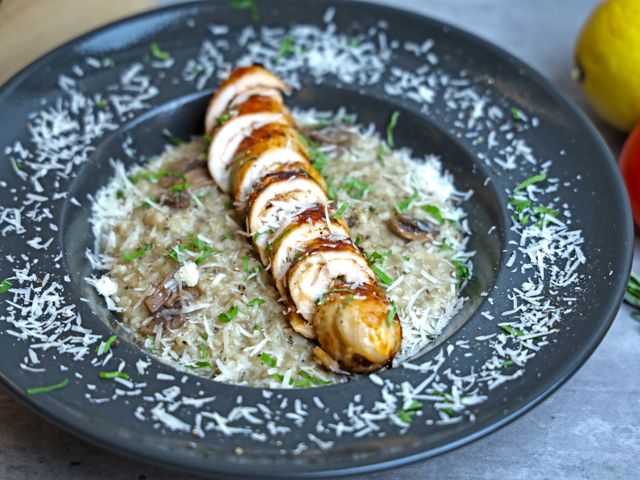
- Spoon into warm shallow bowls, then top with extra Parmesan, a little black pepper and the chopped parsley, if using.
- Serve immediately.
- Within 1 hour of cooking, put any leftovers into shallow containers (see Storage).
+ Show details− Hide details
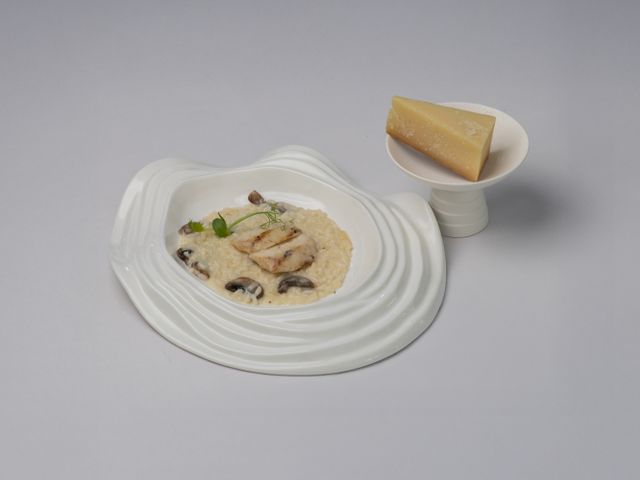
Ready when: Risotto spreads slowly in the bowl, forming a gentle wave rather than a firm mound.
Tip: Serve right away. Risotto thickens and turns gluey as it cools.
Good to know
Tips
- Stir often, but not constantly. Regular stirring releases starch for creaminess, while resting the pan briefly between stirs keeps the heat steady.
- Zest the lemons before juicing them; it is nearly impossible to zest a squeezed lemon.
- Finish with the juice off the heat. Cooking it too long dulls the bright, fresh lemon flavor.
- Serve in warm bowls. Risotto cools and stiffens quickly on cold plates.
- For a heartier meal, top with seared shrimp, roasted asparagus, or sautéed chicken breast.
Make ahead
You can dice the onion, mince the garlic, zest and juice the lemons, and grate the Parmesan up to 1 day ahead; store each in a covered container in the fridge. Risotto itself is best cooked just before serving.
Storage & reheating
Cooling: Cooked rice can grow Bacillus cereus bacteria, so don't leave risotto out. Within 1 hour of cooking, spread leftovers about 1½ inches (4 cm) deep in shallow containers so they cool fast, then cover and refrigerate. Room temperature: up to 1 hour total. Fridge: keep at 40°F (4°C) or below and eat within 1–2 days (3 days at the very most). Freezer: not recommended, as the texture turns mushy. To reheat, warm in a saucepan over low heat with a splash of broth or water per cup of risotto, stirring until steaming hot throughout (165°F / 74°C), about 5 minutes. Reheat only once, and add a squeeze of lemon to brighten it.
Substitutions
- dry white wine, such as pinot grigio or sauvignon blanc → Additional chicken broth plus 1 tablespoon extra lemon juice. Use ¾ cup (180 ml) broth and add the extra lemon juice at the end for acidity.
- low-sodium chicken broth → Low-sodium vegetable broth. Makes the dish vegetarian; the flavor will be slightly sweeter and lighter.
- Parmigiano-Reggiano or Parmesan cheese → Grana Padano or Pecorino Romano. Grana Padano is milder and nuttier; Pecorino is saltier, so use ¾ cup (75 g) and reduce added salt.
- yellow onion → 2 large shallots, finely diced. Gives a milder, slightly sweeter flavor. Use about ½ cup (75 g).