Butternut Squash Risotto with Crispy Sage
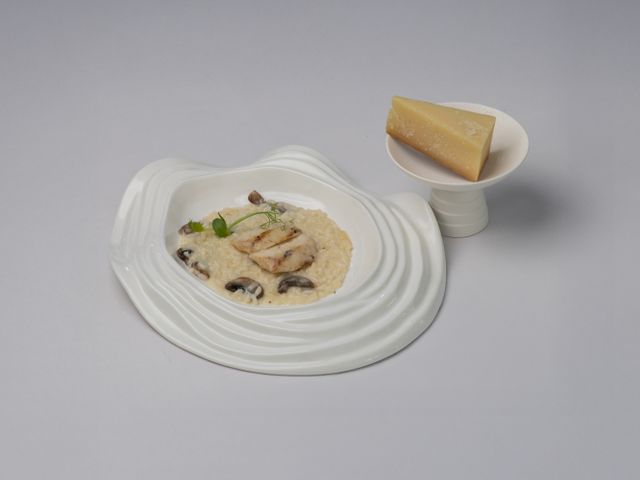
Creamy arborio risotto studded with caramelized butternut squash, finished with Parmesan and butter and topped with crisp fried sage leaves. It's cozy and fully stovetop, and it needs only about 20 minutes of steady stirring.
- Prep
- 22 min
- Cook
- 44 min
- Wait
- 2 min
- Total
- 1 hr 8 min
- Makes
- 4 generous main-course servings (about 6 cups)
Steps
Before you start
- Allow about 20 minutes to peel, seed and cube the squash and to chop the onion and garlic before you turn on the heat. Once the rice goes in, you can't step away.
- Grate the Parmesan on the fine holes of a box grater or with a rasp. Coarse shreds melt less smoothly.
- Use low-sodium broth if you can. The broth reduces and the Parmesan is salty, so you season at the end.
- Take the wine out of the fridge, but keep it a dry white you'd drink, such as Pinot Grigio or Sauvignon Blanc.
Prep the ingredients
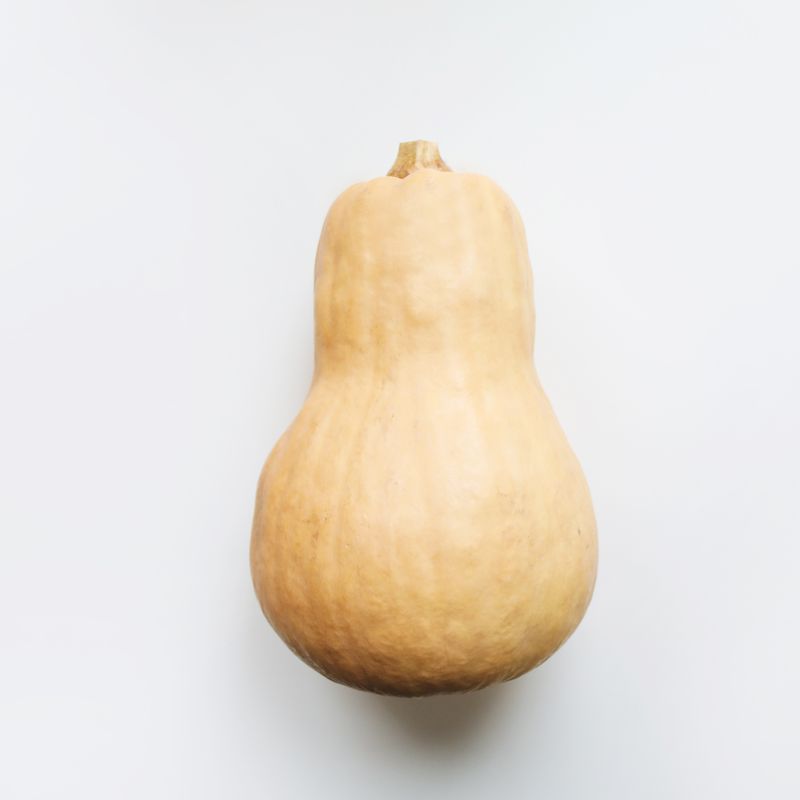
- Peel, seed and cut the squash into ½-inch (1.5 cm) cubes.
- Finely dice the onion, mince the garlic, and finely grate the Parmigiano.
- Pat the sage leaves dry, leave 12 whole, and finely chop 4.
- Measure out everything so it is within reach of the stove.
+ Show details− Hide details
Ready when: Squash cubes are roughly uniform and all ingredients are measured and within reach.
Tip: Dry sage leaves fry crisply; wet leaves spatter in the hot butter.
Warm the broth
- Pour the broth into a medium saucepan and set over medium-low heat.
- Bring it to a bare simmer (small bubbles at the edges), then keep it on the lowest heat that holds that simmer for the whole recipe.
+ Show details− Hide details
Ready when: Steam rising and small bubbles at the edge of the pan.
Tip: Adding cold broth stalls the cooking and can make the rice gummy, so keep it hot.
Brown the squash
- Heat 2 tablespoons (30 ml) of the olive oil in the large pot over medium-high heat until it shimmers.
- Add the squash in a single layer and sprinkle with ¼ teaspoon of the salt.
- Cook, stirring only every minute or so, for 7–8 minutes.
- Scrape the squash into a bowl.
- It will not be cooked through yet.
+ Show details− Hide details
Ready when: Edges are golden brown, and a cube is just starting to give when pierced with a knife tip.
Tip: Leave the squash alone between stirs so it browns instead of steaming.
Crisp the sage
- Reduce the heat to medium.
- Add the 1 tablespoon butter for the sage to the same pot and let it melt and foam.
- Add the 12 whole sage leaves in one layer and fry for 45–60 seconds, flipping once.
- Lift them with a slotted spoon onto a paper towel-lined plate and sprinkle with a pinch of salt.
- Leave the flavored fat in the pot.
+ Show details− Hide details
Ready when: Leaves are dark green, the bubbling has quieted, and they feel crisp once they cool on the towel.
Tip: Sage goes from crisp to bitter in seconds, so take it out as soon as the bubbling slows.
Soften the onion
- Add the remaining 1 tablespoon olive oil and the diced onion to the pot, with ¼ teaspoon salt.
- Cook over medium heat, stirring often, for 4–5 minutes, until soft.
+ Show details− Hide details
Ready when: Onion is soft and translucent with no browning.
Tip: If the browned bits on the bottom start to scorch, add a splash of broth and scrape.
Toast the rice
- Stir in the rice and cook for 2 minutes, stirring constantly, so each grain is coated in fat.
- Add the garlic and the 4 chopped sage leaves and stir for 30 seconds.
+ Show details− Hide details
Ready when: Grain edges look translucent with a small white dot at the center, and the garlic smells fragrant but is not browned.
Deglaze with wine
- Pour in the wine and stir until it is almost completely absorbed and the sharp alcohol smell has faded, 1–2 minutes.
+ Show details− Hide details
Ready when: The pot looks nearly dry on the bottom when you drag the spoon through the rice.
Add broth gradually
- Add 1 cup (240 ml) of hot broth and stir steadily.
- Keep the heat at medium so the risotto bubbles gently.
- When a spoon dragged across the bottom leaves a clear trail (about 3 minutes), add another ½ cup (120 ml) ladleful.
- Keep adding broth this way and stirring for about 10 minutes, using roughly 3 cups (720 ml) in total.
+ Show details− Hide details
Ready when: The rice is plump and loose, like thick porridge, and the grains still have a firm, chalky center.
Tip: Constant stirring is not needed, but stir every 20–30 seconds, especially around the edges and bottom.
Return the squash
- Stir the browned squash and any juices from the bowl into the rice.
- Continue adding broth by the ½ cup (120 ml) ladleful, stirring often, for 8–10 more minutes.
- You will use about 2½ cups (600 ml) more, and may have a little broth left over.
- Press a few squash cubes against the pot with your spoon so they break down and turn the risotto creamy and orange.
+ Show details− Hide details
Ready when: Rice is tender with just a slight bite at the center, and the squash is soft. The risotto flows slowly into the gap when you pull a spoon through it.
Tip: Taste a few grains at 8 minutes. If still crunchy, add another ladleful of broth and cook 2 more minutes.
Finish and rest
- Remove the pot from the heat.
- Add the cold butter pieces, Parmigiano, and lemon juice, if using.
- Stir vigorously for 1 minute to make it glossy and creamy.
- Season with pepper and salt to taste (about ½ teaspoon more).
- If it looks stiff, stir in a splash of hot broth.
- Cover and let it rest 2 minutes.
+ Show details− Hide details
Ready when: The risotto is glossy, loose, and slowly spreads when spooned onto a plate (it should not hold a firm mound).
Tip: Risotto thickens quickly as it cools, so serve right away.
Serve
- Spoon the risotto into warm shallow bowls.
- Top each portion with 3 crispy sage leaves, a pinch of Parmigiano, and a grind of pepper.
+ Show details− Hide details
Tip: Warm the bowls under hot tap water and dry them so the risotto stays hot longer.
Good to know
Tips
- Use a wide pot rather than a tall narrow one. The rice cooks more evenly and the liquid reduces at the right speed.
- Adding the squash after about 10 minutes of broth keeps it in distinct tender cubes while some melts into the rice.
- Add the finishing butter and cheese off the heat. This emulsifies the sauce so it turns creamy instead of oily or grainy.
- Pre-cut squash from the store works. Make sure the cubes are about ½ inch (1.5 cm) so they cook at the same pace.
Make ahead
Cube the squash, dice the onion, and grate the Parmigiano up to 1 day ahead and refrigerate in separate covered containers. Risotto is best made and served right away.
Storage & reheating
Room temperature: up to 1 hour (not longer, for rice safety). Refrigerator: cool quickly and store in an airtight container up to 3 days. Freezer: not recommended for a creamy texture, though it can be frozen up to 2 months for arancini-style use. To reheat, warm in a skillet over medium-low heat with a splash of broth or water, stirring until hot and creamy, 4–5 minutes. Store the crisped sage separately at room temperature and add it fresh.
Substitutions
- dry white wine → Extra vegetable broth plus 1 teaspoon white wine vinegar or lemon juice. Use ½ cup (120 ml) broth. You'll get a bit less depth but the same brightness.
- Parmigiano-Reggiano → Pecorino Romano. Saltier and sharper. Use about ¾ cup (60 g) and taste before adding more salt.
- arborio rice → Carnaroli or Vialone Nano rice. Same quantity and method. Carnaroli is a bit more forgiving and stays firmer.
- unsalted butter, for finishing → Extra-virgin olive oil or plant-based butter (and omit the Parmigiano or use a vegan hard cheese). For a dairy-free version. Use the same amount of oil or plant butter.