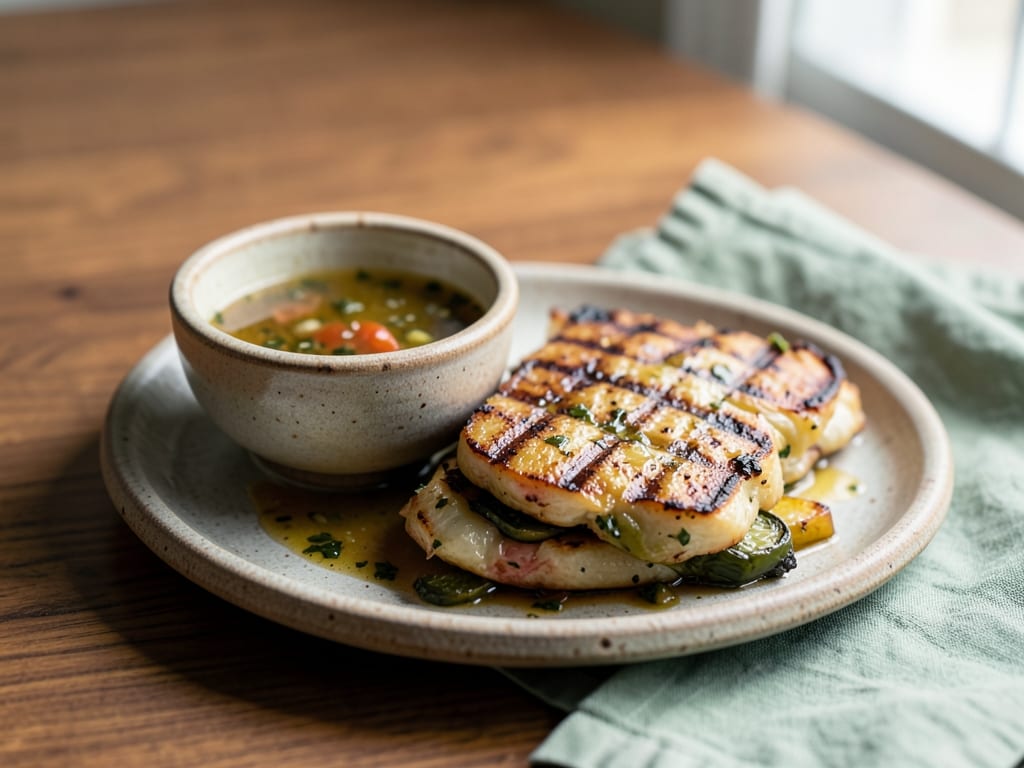
Apple Cider Vinegar & Celery Seed Marinade
A tangy, herb-forward marinade for quick-pickled vegetables. Apple cider vinegar provides brightness and sharp flavor, while warm celery seed and mustard seed add earthy spice notes. Fresh minced garlic and a touch of honey create complexity and balance. Pack this marinade with crisp vegetables—cucumbers, red onion, bell pepper, and carrots—then refrigerate for 24 to 48 hours to develop deep, savory-tangy flavor. The result is a vibrant, crunchy condiment that keeps for weeks and works as a side dish, topping, or palate cleanser.
- Prep
- 20 min
- Cook
- 3 min
- Wait
- 2 days
- Total
- 2 days
- Makes
- About 1 quart of marinated vegetables (4 servings)
Steps
Before you start
- Gather all ingredients and measure them out before starting
- Wash a quart-size glass jar and let it air dry
- Read the marinating time—vegetables taste best after 48 hours, though they're edible after 24 hours
Combine the liquid base
- In a small saucepan (1–2 quart capacity), combine ¾ cup water, 1 cup apple cider vinegar, and 1 teaspoon kosher salt.
- Stir until the salt crystals dissolve completely.
- No salt should be visible in the liquid.
+ Show details− Hide details
Ready when: Salt crystals are completely dissolved
Warm and bloom the spices
- Place the saucepan over medium heat.
- After about 2 minutes, when small wisps of steam just begin to rise from the liquid (do not allow it to boil), add 1 tablespoon celery seeds and 1 tablespoon mustard seeds.
- Stir gently for about 30 seconds, then remove the saucepan from heat.
- Let it sit off the heat for 1 minute to allow the warm liquid to release the spices' flavor.
+ Show details− Hide details
Ready when: You smell warm, toasty spice aroma rising from the pan—earthy and aromatic
Tip: Do not boil the vinegar; high heat will make it sharp and unpleasant. Medium heat is sufficient to bloom the spices.
Add aromatics and cool
- Once the liquid has cooled for about 1 minute (it should still feel warm to the touch), stir in 4 minced garlic cloves, 1 tablespoon honey, and ½ teaspoon freshly ground black pepper.
- Stir until the honey completely dissolves with no visible granules.
- Set the saucepan aside on the counter to cool to room temperature, about 20–30 minutes.
- To speed cooling, place the warm saucepan in a sink or bowl filled with cold water or ice—the liquid should cool in about 10–15 minutes.
+ Show details− Hide details
Ready when: The liquid feels cool to the touch when you carefully touch the outside of the pan
Tip: Cool the marinade completely before adding raw vegetables, or the heat will cause them to soften and break down too quickly.
Prepare the vegetables
- Wash the cucumber, red onion, bell pepper, and carrots under cold running water.
- Pat them completely dry with paper towels—excess moisture will dilute the marinade and weaken flavors.
- Slice the medium English cucumber into ¼-inch thick rounds, keeping the skin on (it adds color and texture).
- Slice the large red onion into thin rings, separating the layers so they don't clump.
- Cut the medium bell pepper into ½-inch wide strips, removing the seeds and white pith.
- Slice the 2 medium carrots into thin coins (about ¼-inch thick) or cut into thin batons.
- Aim for uniform sizes so all vegetables marinate evenly.
+ Show details− Hide details
Ready when: All vegetables are cut into uniform sizes and are completely dry to the touch
Tip: Pat vegetables very dry with paper towels. Any water left on them will dilute the marinade and weaken its tang and flavor.
Pack the jar
- Pour the cooled marinade (including all the spices and liquid) into a clean, dry quart-size glass jar or container with a tight-fitting lid.
- Add all the prepared vegetables to the jar.
- Stir gently and press down lightly to pack the vegetables firmly and evenly.
- The liquid should just barely cover all the vegetables; if not, top off with a 1:1 mixture of additional water and apple cider vinegar (so ½ cup water + ½ cup vinegar, roughly).
- Avoid leaving any vegetables exposed above the liquid, or they will spoil.
+ Show details− Hide details
Ready when: Liquid just covers all the vegetables; the jar is filled nearly to the brim
Tip: Keep vegetable pieces fairly small and uniform so they absorb the marinade evenly and soften at the same rate.
Refrigerate and marinate
- Place the lid on the jar and refrigerate immediately.
- Do not leave the jar at room temperature—always refrigerate.
- The vegetables will begin to soften and absorb the bright, tangy flavor within 12 hours, but they taste best after 24–48 hours of marinating.
- You can serve them after 24 hours if you prefer them more crisp, or wait 48 hours or longer for them to be softer and more deeply flavored.
- The liquid will gradually take on color from the vegetables, and the flavors will meld and deepen.
+ Show details− Hide details
Ready when: Vegetables are tender-crisp, liquid is colored from the vegetables, flavors are bright and savory with balanced tang
Good to know
Tips
- Pat vegetables completely dry before marinating. Excess water on the vegetables dilutes the marinade, weakens the flavors, and can shorten shelf life.
- Don't boil the liquid when warming. Medium heat is sufficient to bloom the spices and prevents the vinegar from becoming harshly acidic.
- Pack vegetables firmly but not crushingly in the jar. They'll soften and settle over time; you need enough liquid to cover them throughout storage.
- Vegetables are edible after 24 hours but taste best at 48 hours. Some people prefer them even softer at 3+ days, while others prefer the crispness at 24 hours. Experiment to find your preference.
Make ahead
The marinade liquid can be made up to 2 days in advance and stored in a jar in the refrigerator. Prepare fresh vegetables and combine when ready to use. Alternatively, prepare the complete recipe 48 hours ahead for entertaining—the flavors will be fully developed and ready to serve.
Storage & reheating
Always refrigerate in a covered glass jar. Marinated vegetables keep for up to 3 weeks. Serve cold straight from the jar as a side dish, condiment, topping, or palate cleanser. The longer they sit (up to 2–3 weeks), the softer and more deeply flavored they become; after 3 weeks, the vinegar flavor may overpower the vegetables. Do not freeze.
Substitutions
- English or pickling cucumber, medium → Radishes (thin-sliced), zucchini (sliced), green beans, cauliflower florets, or pickling cucumbers (cut into spears or halves). Use any firm, crisp vegetables. Avoid soft vegetables like tomatoes or mushrooms, which will become mushy. You can also mix and match vegetable types for variety.
- honey → Granulated sugar or light brown sugar (use 1 tablespoon). Sugar will take longer to dissolve; stir the warm marinade well. The result will taste slightly different—less smooth, more sharp-sweet.
- apple cider vinegar, raw or filtered → Rice vinegar, white wine vinegar, or distilled white vinegar. Rice vinegar will result in a milder, more delicate marinade. White wine vinegar is more acidic and bright. Apple cider vinegar provides unique warm, fruity notes that pair best with these spices.
- celery seeds → Dill seeds (use 1 teaspoon) or pickling spice blend (use 1 tablespoon total). Dill will shift the flavor profile toward a dill-pickle style. Pickling spice blend will introduce cinnamon, allspice, and clove notes. Celery seed's warm, savory notes are most authentic to this recipe.
More pickles & chutneys
See all →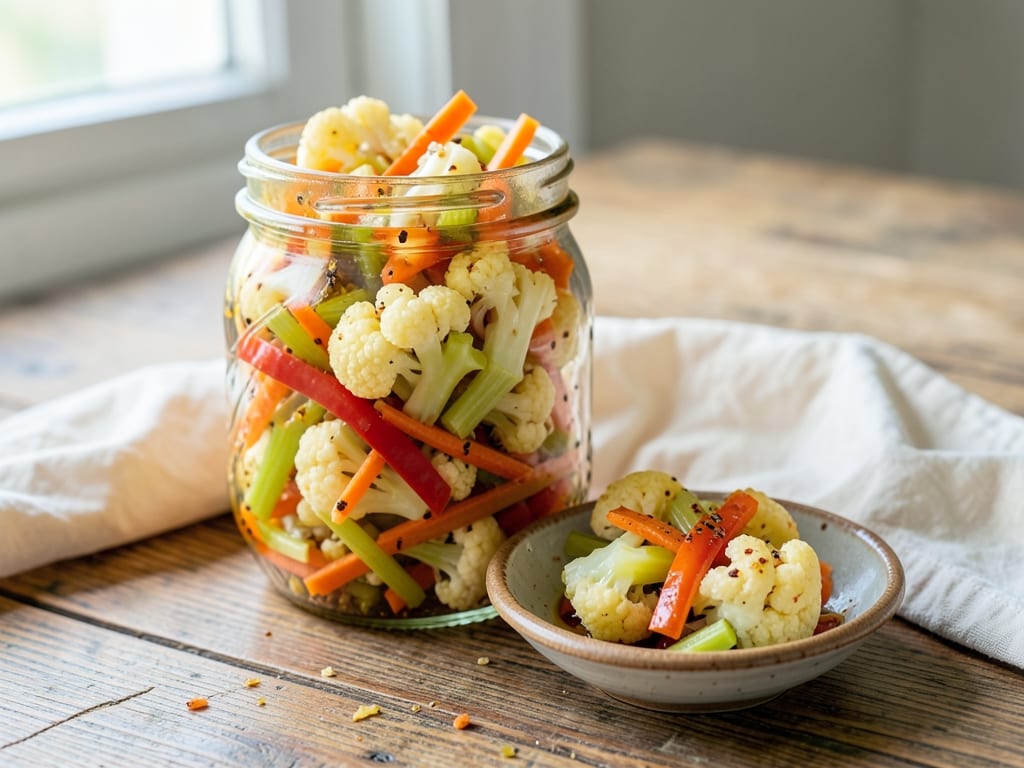
Find more like this
- Meal
- Dinner
- Main ingredient
- CarrotsBell Peppers
- Method
- Stovetop
- Quick & Easy
- EasyBeginnerMake Ahead