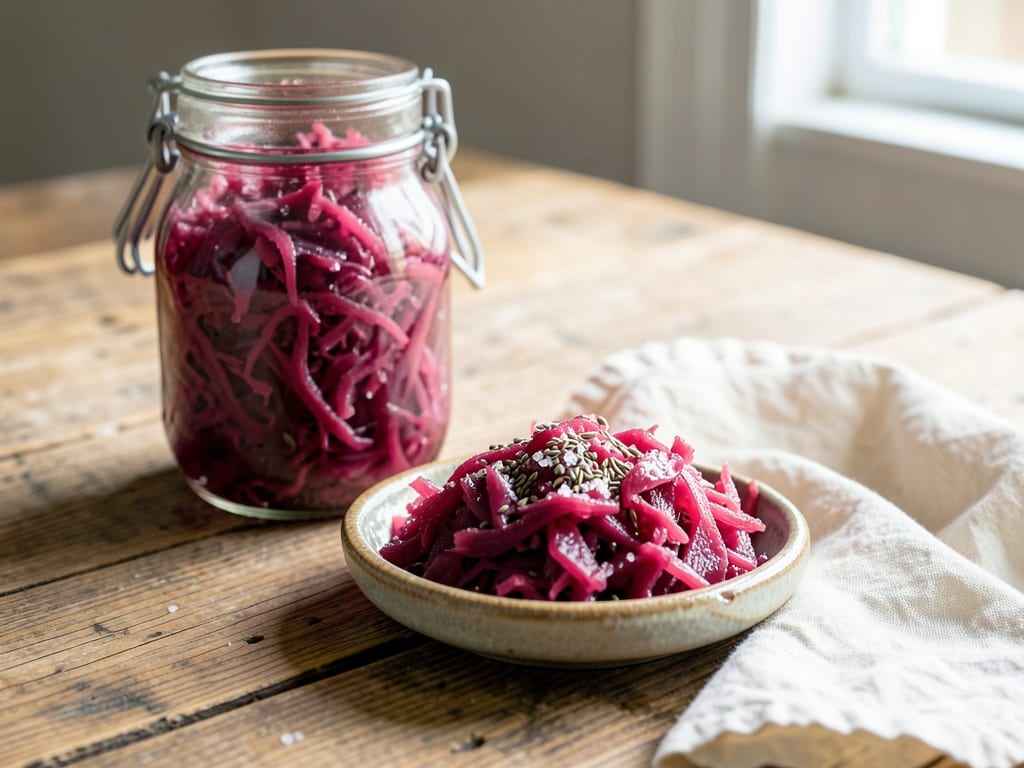
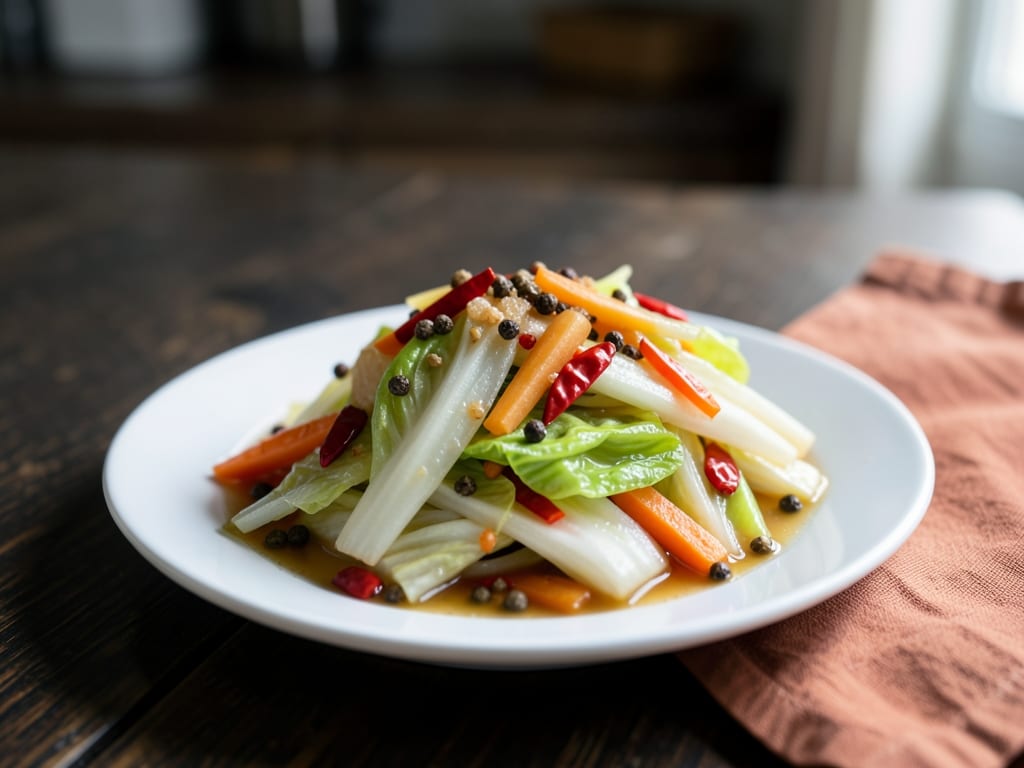
Algerian Caraway Cabbage Slaw Pickle
A tangy, crunchy fermented cabbage slaw with warm caraway seeds and garlic, inspired by North African flavor traditions. This salt-fermented pickle develops complex flavor over 1–3 weeks and makes a zesty condiment for couscous, grilled meats, or flatbreads. No special equipment or starter culture needed—just cabbage, salt, and time.
- Prep
- 20 min
- Cook
- —
- Wait
- 18 hr
- Total
- 18 hr 20 min
- Makes
- 1 quart (1 liter) fermented slaw
Steps
Before you start
- Weigh your cabbage to ensure correct salt ratio (2% by weight)
- Use a clean 1-quart glass jar or similar fermentation vessel
- Have cheesecloth or a clean cloth on hand to cover the jar during fermentation
- Choose a cool, dark spot (65–70°F / 18–21°C is ideal) away from direct sunlight
Toast Caraway Seeds
- Place the caraway seeds in a small dry skillet over medium heat.
- Toast for 1–2 minutes, stirring occasionally, until they become fragrant and slightly darker.
- Do not let them burn.
- Pour onto a plate to cool, then lightly crush with the back of a spoon or in a mortar and pestle.
- If using coriander seeds, toast them separately for the same time and crush together with the caraway.
+ Show details− Hide details
Ready when: Seeds are fragrant and slightly browned
Tip: Toasting blooms the essential oils in caraway; do not skip this step for best flavor
Slice and Weigh Cabbage
- Core and halve the green cabbage, then slice it as thinly and evenly as you can—about ¼ inch thick—using a sharp chef's knife or mandoline.
- As you slice, place the cabbage in a large, clean bowl.
- Once sliced, weigh the cabbage.
- You need exactly 2% of this weight in salt.
- For 900 g (2 lb) cabbage, you need 18 g (about 0.64 oz) salt.
+ Show details− Hide details
Ready when: Cabbage is uniformly sliced and weighed
Tip: Weigh the cabbage after slicing; the 2% salt ratio is critical for proper fermentation and food safety
Salt and Massage Cabbage
- Sprinkle the measured salt evenly over the sliced cabbage.
- Using your hands, massage and squeeze the cabbage firmly for 5–8 minutes.
- You will see liquid (brine) released from the cabbage as the salt breaks down cell walls.
- Continue until the cabbage becomes wilted and sits in a pool of brine at the bottom of the bowl.
+ Show details− Hide details
Ready when: Cabbage is soft and wilted, with visible brine pooled in the bowl
Tip: Do not skip the massaging step; this draws out moisture necessary for fermentation and creates the brine naturally
Pack Jar with Flavoring
- Place your clean 1-quart jar on the counter.
- Starting with a handful of the salted cabbage, pack it firmly into the jar, pressing down with a wooden spoon or your hand.
- Add a layer of the toasted caraway seeds and sliced garlic, then more cabbage.
- Continue layering, ending with a layer of cabbage on top.
- Add the optional dried chili if using.
- Pour any remaining brine from the bowl over the packed cabbage until it is covered by at least ½ inch of liquid.
- The cabbage must remain submerged throughout fermentation.
+ Show details− Hide details
Ready when: All cabbage is submerged in brine by at least ½ inch
Tip: Use a small plate or fermentation weight placed inside the jar to keep cabbage below the brine surface; exposure to air causes mold
Cover and Begin Fermentation
- Lay a piece of cheesecloth or a clean cloth loosely over the mouth of the jar.
- Do not seal it tightly—fermentation produces carbon dioxide that must escape.
- Leave the jar on a cool, dark shelf or in a cupboard, away from direct sunlight, at a temperature between 65–70°F (18–21°C).
- Warmer temperatures will speed fermentation; cooler ones will slow it.
+ Show details− Hide details
Ready when: Bubbles rise through the brine; the slaw develops a pleasantly tangy smell
Tip: Check the jar every 2–3 days; if any white mold forms on the surface, skim it off with a clean spoon (it is harmless, but indicates too much air exposure). If mold returns repeatedly, ensure the cabbage stays submerged
Taste and Ferment to Preference
- After 7 days, remove the cloth and taste a small piece of cabbage.
- The slaw should taste pleasantly sour and tangy, with a tender-crisp texture.
- If you prefer a milder fermentation, bottle it now.
- For deeper, more complex flavor, cover and continue fermenting for up to 3 weeks, tasting every few days.
- You will notice the brine becoming cloudier and the flavor becoming more pronounced—both are signs of successful fermentation.
+ Show details− Hide details
Ready when: Cabbage is pleasantly sour and tender-crisp; flavor suits your taste preference
Tip: The slaw will continue to ferment slowly in cold storage, so do not over-ferment at room temperature or it will become very soft
Good to know
Tips
- The 2% salt ratio by weight is the foundation of safe, successful fermentation. Do not reduce salt significantly or the slaw may spoil. Taste a sample regularly after day 3 to gauge progress.
- Fermentation speed depends on temperature. At 70°F (21°C), you'll see bubbling in 2–3 days and pleasant sourness by day 7. In a cool cellar (55–60°F / 13–16°C), fermentation may take 4–5 weeks.
- Cloudiness in the brine is not contamination; it is harmless yeast and bacteria settling. Strain before serving if you prefer clarity, or serve with the sediment for added probiotic benefit.
- Serve this slaw as a condiment alongside couscous, grilled fish, lamb kebabs, or as a topping for hummus and flatbread. A small spoonful adds bright, tangy contrast to rich dishes.
Storage & reheating
Room temperature (covered loosely): up to 3 days before slowing fermentation. Refrigerator (sealed jar): up to 2–3 months. The cold slows fermentation dramatically; the slaw will remain crisp and tangy. Freezer: not recommended; freezing breaks down the crisp texture. To serve, remove only what you need with a clean spoon and reseal the jar.
Substitutions
- green cabbage, cored and halved → Red cabbage. Red cabbage ferments identically and produces a magenta-hued slaw with slightly earthier flavor. Use the same weight and salt ratio.
- caraway seeds, lightly toasted → Fennel seeds or cumin seeds. Fennel brings licorice notes; cumin adds warmth. Toast and crush the same way. Caraway is more traditional to Algerian cuisine, but these are good alternatives.
- dried red chili pepper (optional) → Fresh red chili pepper, seeded and sliced thin. Adds bright heat and fresh flavor. Use ½–1 whole chili depending on desired spice level. It will soften during fermentation.
- garlic cloves → Shallots, thinly sliced. Shallots add mild sweetness and a subtle onion note. Use the same weight. They mellow during fermentation.