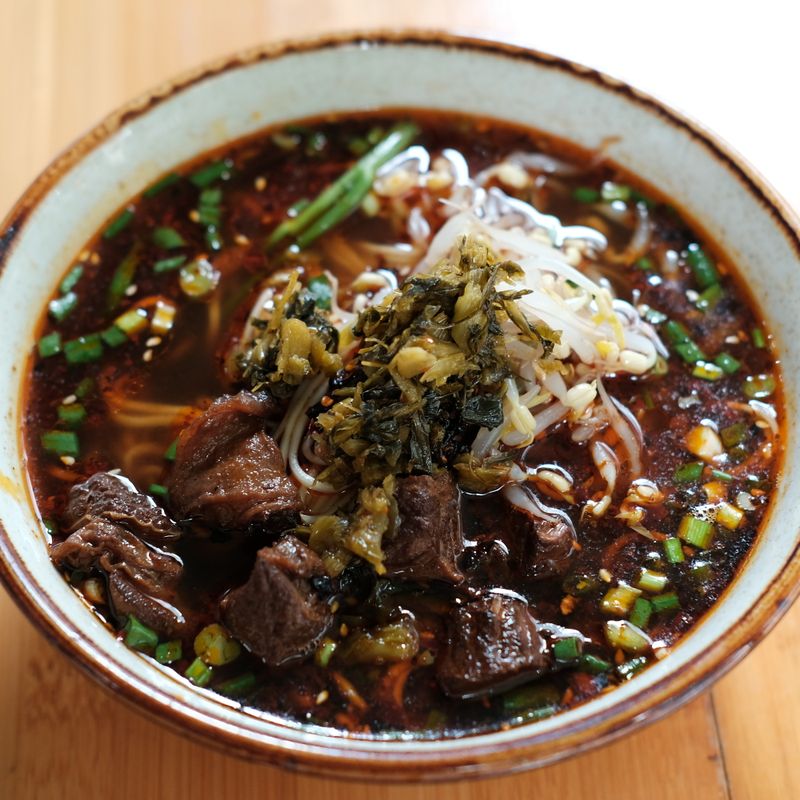
30-Minute Spicy Gochujang Beef Noodle Soup
A vibrant Korean-style beef noodle soup with a rich, spicy gochujang broth that comes together in just 30 minutes. Ground beef is browned with garlic and ginger, then simmered with beef stock and gochujang paste to build deep umami flavor. Egg noodles soften directly in the aromatic broth, while spinach and scallions add brightness and texture. Finish with a drizzle of sesame oil and a sprinkle of sesame seeds for authentic Korean flavor and aroma.
Steps
Before you start
- Have all ingredients prepped and measured before you start cooking so the soup comes together quickly
- Use a large Dutch oven or heavy-bottomed pot (at least 6-quart capacity) to prevent boiling over
- If using homemade stock, ensure it is warm or at room temperature
Brown the beef
- Heat the Dutch oven over medium-high heat for 1 minute.
- Add the ground beef and cook, breaking it up with a wooden spoon as it browns, for 4–5 minutes until no pink remains and the beef is golden.
- The meat should release its juices and begin to caramelize slightly.
- Pour off excess fat if more than 2 tablespoons has rendered.
+ Show details− Hide details
Ready when: Beef is cooked through with no pink; edges are golden brown
Tip: Don't rush this step—browning the meat develops flavor that seasons the entire soup
Bloom garlic, ginger, and gochujang
- Add the minced garlic and ginger to the beef and cook over medium-high heat for 1 minute, stirring constantly, until fragrant.
- Stir in the gochujang paste and cook for another minute, stirring well to distribute it throughout the beef.
- The mixture should smell deeply savory and slightly spicy.
+ Show details− Hide details
Ready when: Gochujang is fully incorporated and oil is fragrant
Tip: Blooming gochujang in fat releases its complex flavors; don't skip this step
Deglaze and build the broth
- Pour the beef stock and soy sauce into the pot, scraping the bottom with the spoon to release any caramelized bits.
- Bring to a boil over medium-high heat, stirring occasionally, for about 2 minutes.
- Once boiling, reduce the heat to medium and allow the broth to simmer gently.
+ Show details− Hide details
Ready when: Broth reaches a rolling boil and any stuck-on bits dissolve
Tip: Scraping the bottom ensures all caramelized beef flavor is incorporated into the soup
Cook the noodles
- Add the egg noodles directly to the simmering broth without draining them if they're uncooked.
- Stir well to separate the noodles and ensure they cook evenly in the broth.
- Simmer over medium heat for 7–8 minutes, stirring every 2 minutes, until the noodles are tender but still have a slight bite.
- The broth should be at a gentle rolling boil the entire time.
+ Show details− Hide details
Ready when: Noodles are fully tender and easily pierce with a fork; broth is rich and flavorful
Tip: Stirring frequently prevents the noodles from clumping and ensures even cooking
Wilt the spinach
- Add the chopped spinach and the white and light green parts of the scallions to the pot.
- Stir gently for about 1 minute over medium heat until the spinach is completely wilted and turns a deeper shade of green.
- The spinach should soften without losing its color entirely.
+ Show details− Hide details
Ready when: Spinach is fully wilted and no raw leaves remain
Tip: Adding spinach at the end preserves its fresh flavor and bright color
Season and finish
- Remove the pot from heat.
- Taste a spoonful of broth and season with kosher salt and freshly ground black pepper to your preference.
- Drizzle the toasted sesame oil over the surface of the soup and stir gently to incorporate.
- The oil should create a fragrant sheen.
- Let the soup rest for 1 minute so the flavors meld.
+ Show details− Hide details
Ready when: Sesame oil is evenly distributed and the broth is aromatic
Tip: Taste before adding salt—gochujang and soy sauce already contribute saltiness
Serve
- Ladle the soup into four large bowls, dividing the noodles, beef, and broth evenly.
- Garnish each bowl with the reserved dark green scallion tops and toasted sesame seeds if desired.
- Serve immediately while piping hot.
+ Show details− Hide details
Tip: Scatter the sesame seeds just before serving so they stay crunchy and don't absorb moisture
Good to know
Tips
- Use beef stock rather than chicken or vegetable broth—the deeper, meatier flavor complements the spicy gochujang and grounds the soup in savory richness
- Gochujang varies in saltiness by brand; taste as you go and season conservatively with added salt
- For a richer soup, brown 2 tbsp sesame seeds in a dry skillet for 2–3 minutes before the meal and use them as garnish for a nuttier flavor
- If the soup is too spicy, add a splash of milk or cream to temper the heat and balance the gochujang's intensity
Storage & reheating
Room temperature: Not recommended; this soup is best served immediately. Refrigerator: Store leftovers in an airtight container for up to 3 days. To reheat, warm gently in a pot over medium heat, stirring occasionally, adding a splash of beef stock if the broth has thickened. Do not microwave, as this can make the noodles mushy. Freezer: The soup freezes well for up to 3 months in an airtight container, though noodles may soften slightly upon thawing. Reheat from frozen by thawing overnight in the refrigerator, then warming gently on the stovetop over medium heat. Add fresh garlic, ginger, or a drizzle of sesame oil when reheating to brighten the flavors.
Substitutions
- ground beef (85/15 blend) → ground pork or ground turkey. Use the same weight. Ground turkey will be leaner; brown it thoroughly and don't drain the fat since it adds body to the broth.
- gochujang (Korean red chili paste) → Korean red chili flakes (gochugaru) mixed with miso paste. Use 2 tbsp gochugaru mixed with 1 tbsp white or red miso and 1 tbsp water to make a paste. The result will be slightly grainier but similarly spicy and umami-forward.
- egg noodles → ramen noodles or thin wheat noodles. Use the same weight. Ramen noodles cook slightly faster (5–6 minutes); watch closely so they don't overcook.
- fresh spinach → bok choy, gai lan, or kale. Rough chop and add the same volume. Bok choy and gai lan will need 2–3 minutes to soften; kale should be added with the noodles for 8–9 minutes total to become tender.
More noodle soups
See all →


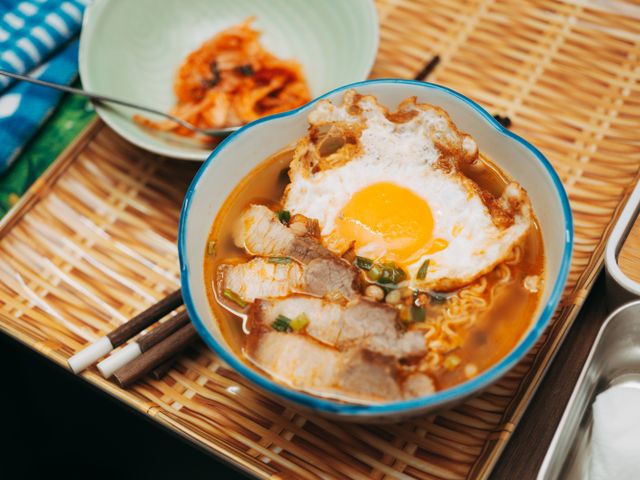


Find more like this
- Meal
- Dinner
- Cuisine
- Korean
- Main ingredient
- Ground Beef
- Method
- Stovetop