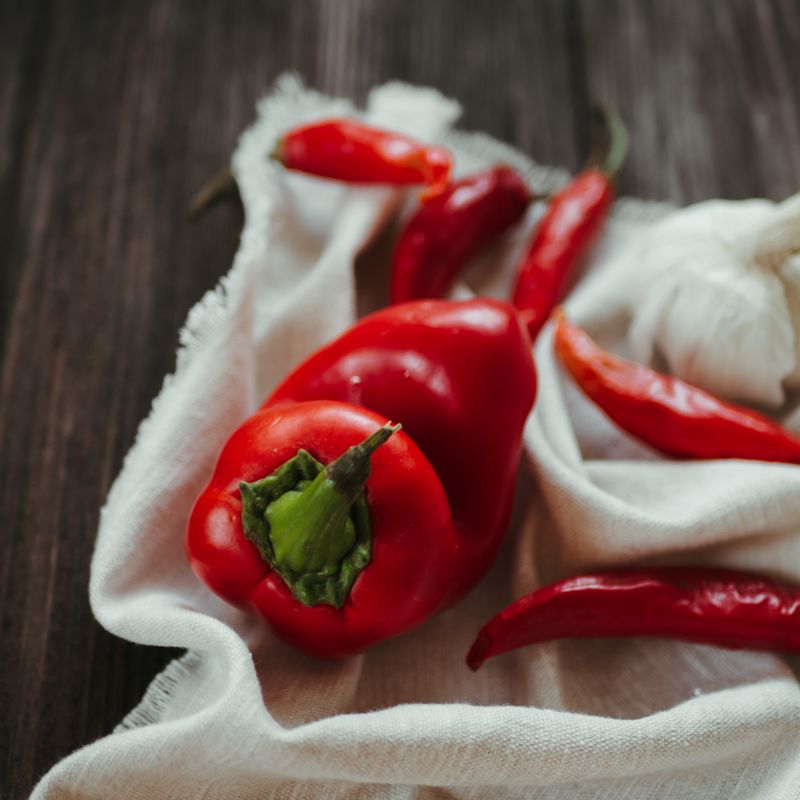
30-Minute Sourdough Discard Smoked Paprika and Roasted Red Pepper Flatbread
A quick Spanish-inspired flatbread made with sourdough discard, infused with smoky paprika and studded with roasted red peppers. Ready in 30 minutes with minimal kneading—perfect for using up discard and impressing with minimal effort. Pan-fried until crispy and golden with a tender, airy interior.
- Prep
- 10 min
- Cook
- 12 min
- Wait
- 8 min
- Total
- 30 min
- Makes
- 4 flatbreads (about 7 inches / 18 cm each)
Steps
Before you start
- Have your sourdough discard at room temperature
- Drain and roughly chop your roasted red peppers
- Set up a small bowl of olive oil for brushing
- Have all ingredients measured and ready before mixing
Mix the dough
- In a large bowl, combine 1 cup (240 ml) room-temperature sourdough discard, 0.25 cup (60 ml) warm water, and 2 tablespoons (30 ml) olive oil.
- Whisk until blended.
- Add 1.25 cups (156 g) all-purpose flour, 0.5 teaspoon (3 g) fine sea salt, 1.5 teaspoons (4 g) smoked paprika, and 2 minced garlic cloves.
- Stir with a wooden spoon or spatula until no dry flour remains and a shaggy, slightly sticky dough forms (about 1 minute).
- The dough should be wetter than a typical bread dough but still hold together.
+ Show details− Hide details
Ready when: shaggy dough forms with no dry flour visible
Tip: Don't overwork the dough—stir just until combined. The texture should be looser than traditional bread dough for tender flatbreads.
Fold in peppers and herbs
- Gently fold in 0.75 cup (150 g) drained and roughly chopped roasted red peppers and 1 teaspoon (1 g) fresh thyme leaves (optional) using a bench scraper or spatula.
- Fold the mixture 6–8 times until the peppers are scattered throughout and the dough is cohesive.
- Don't worry about an perfectly even distribution; rustic is fine.
+ Show details− Hide details
Ready when: peppers evenly distributed through dough, dough holds together
Tip: Rough chopping the peppers (not puréeing) keeps the texture interesting and prevents the flatbread from becoming gummy.
Rest the dough
- Cover the bowl loosely with a damp kitchen towel or plastic wrap.
- Let it rest at room temperature for 5–8 minutes.
- This brief rest develops the gluten and makes the dough easier to shape.
+ Show details− Hide details
Ready when: dough appears slightly puffed and relaxed
Tip: Even 5 minutes helps; if you're in a hurry, 3 minutes is the absolute minimum.
Divide and shape into rounds
- Dust your work surface lightly with flour.
- Divide the dough into 4 equal portions (about 140 g each).
- Working with one portion at a time, gently stretch and shape each into a rough 7-inch (18 cm) round, about 0.5 inch (1.25 cm) thick, using your hands or a light touch with a bench scraper.
- Don't worry about perfection; organic shapes are fine.
- If the dough shrinks, let it rest for 1 minute and gently stretch again.
+ Show details− Hide details
Ready when: 4 rounds roughly 7 inches wide and 0.5 inch thick
Tip: If dough resists stretching, let it rest for 1 minute before continuing—this relaxes the gluten and prevents shrinking.
Heat the pan and oil
- Place a 12-inch (30 cm) nonstick skillet or cast-iron pan over medium-high heat.
- Add 1 tablespoon (15 ml) olive oil and let it heat for 1 minute until it shimmers and just begins to smoke slightly.
- The pan is ready when a small piece of dough sizzles immediately upon contact.
+ Show details− Hide details
Ready when: oil shimmers and moves freely, small wisp of smoke appears
Tip: Too-low heat will yield a chewy, bread-like flatbread; medium-high is essential for a crispy exterior.
Pan-fry the first flatbread
- Carefully slide the first dough round into the hot oil.
- Cook for 2–3 minutes without moving it, allowing the bottom to develop a golden-brown crust with some charred spots.
- The bottom should be crispy and not stick to the pan.
- Flip gently using a spatula and cook the second side for 2–3 minutes until golden.
- Remove to a plate and keep warm.
- If the pan dries out, add a few drops of oil before the next flatbread.
+ Show details− Hide details
Ready when: bottom is golden-brown with light char, exterior is crispy, interior still tender
Tip: Resist the urge to flip early; letting it sit allows the crust to develop. If it's sticking, wait another 30 seconds.
Cook remaining flatbreads
- Repeat Step 6 with the remaining three dough rounds, cooking each for 2–3 minutes per side over medium-high heat.
- Adjust the heat slightly if the bottoms are browning too quickly (drop to medium) or too slowly (increase to medium-high).
- Stack the finished flatbreads on a plate as you finish.
+ Show details− Hide details
Ready when: all 4 flatbreads cooked through, golden and crispy outside, tender inside
Tip: If flatbreads puff dramatically (forming an air pocket), deflate gently with a fork or spatula to ensure even cooking.
Finish and serve
- Transfer the warm flatbreads to a serving plate.
- Optional: brush lightly with a touch more olive oil and sprinkle with fleur de sel or a few fresh thyme leaves.
- Serve immediately while still warm.
- They are best eaten within 15 minutes of cooking but will hold their texture reasonably well for up to 1 hour.
+ Show details− Hide details
Ready when: flatbreads plated and ready to eat
Tip: These flatbreads are best served warm; if they cool and need reheating, a 20-second pass in a hot skillet revives them beautifully.
Good to know
Tips
- Keep sourdough discard unfed and at room temperature for the best dough consistency and tang; overly bubbly or active discard can make the dough too wet.
- For a rustic, charred Spanish look, don't be afraid of medium-dark golden spots on the flatbread; they add flavor and authenticity.
- Pair these with Spanish-style dips: roasted garlic aioli, whipped feta and roasted red pepper, or a simple romesco sauce.
- If your pan is on the smaller side or non-nonstick skillet, work in batches of 2 and allow the pan to reheat between batches.
Make ahead
You can prepare the dough up to 2 hours ahead: mix through Step 2, cover with plastic wrap, and refrigerate. Let it come to room temperature (about 15 minutes) and proceed from Step 3. The flatbreads are best cooked and served fresh but can be made up to 4 hours ahead and gently reheated in a skillet.
Storage & reheating
Room temperature: Store in an airtight container or wrap in foil for up to 4 hours. Refrigerator: Wrap individually in foil and refrigerate for up to 3 days; reheat in a warm skillet (30 seconds per side). Freezer: Cool completely, then wrap individually in plastic wrap and foil. Freeze for up to 1 month. Reheat from frozen in a 350°F (175°C) oven for 8–10 minutes or in a skillet over medium heat for 2–3 minutes per side until warmed through.
Substitutions
- roasted red peppers (jarred or homemade) → Caramelized onions (about 0.75 cup / 150 g) or sun-dried tomatoes (0.5 cup / 60 g, soaked if very dry). Both add deep, savory flavor. Sun-dried tomatoes will make the flatbread denser, so use less. Caramelized onions work beautifully for a Spanish twist.
- smoked paprika (pimentón) → Sweet paprika (1.5 teaspoons / 4 g) or 1 teaspoon (3 g) smoked paprika + 0.5 teaspoon (1 g) cayenne for more heat. Sweet paprika is milder and less smoky; cayenne adds heat without altering the base flavor significantly.
- fresh thyme leaves (or 0.5 tsp dried) → Dried oregano (0.5 teaspoon / 1 g), fresh rosemary (0.5 teaspoon / 1 g, finely chopped), or fresh basil (1 teaspoon / 3 g, added after cooking). Oregano is more Spanish; rosemary adds earthiness. Basil is delicate and should be scattered on top after cooking to avoid darkening.
- sourdough discard, unfed (room temperature) → Replace with 1 cup (240 ml) plain Greek yogurt thinned with 2 tablespoons (30 ml) water, or store-bought active starter. Yogurt gives a tangy flavor but less rise; the result is denser. Active starter (unfed) works identically to discard.
More flatbreads
See all →

Find more like this
- Meal
- Dinner
- Cuisine
- Spanish
- Main ingredient
- Bell Peppers
- Method
- Stovetop