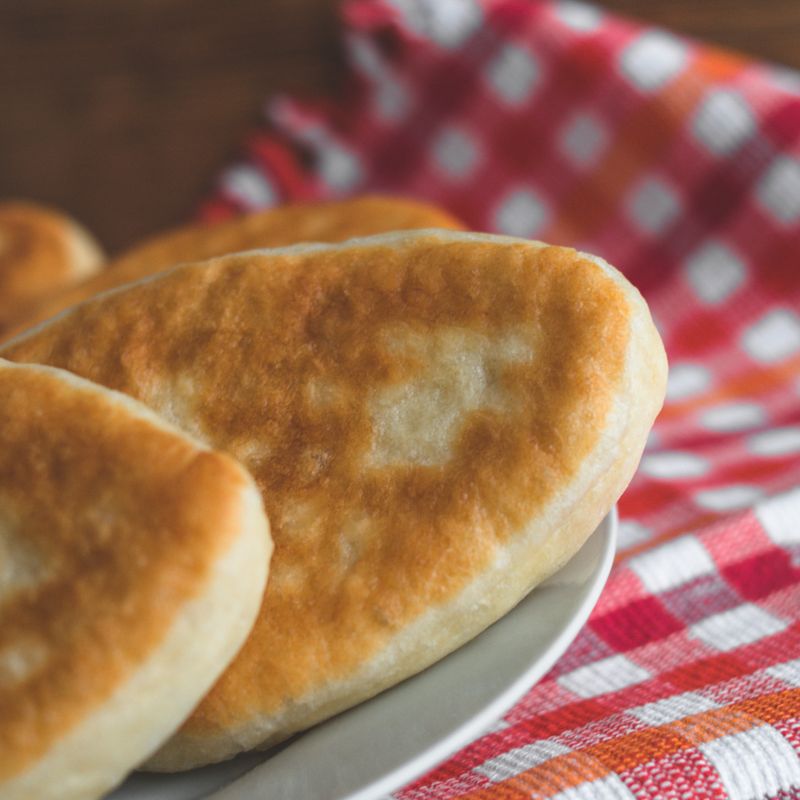
Ramadan Pre-Iftar Roasted Cauliflower and Tahini Flatbread Pockets
Warm, pillowy sourdough pockets filled with roasted cauliflower tossed in a creamy tahini sauce, topped with sumac, pine nuts, and fresh herbs. This Levantine-inspired dish is perfect for breaking the fast—it's satisfying, deeply flavored, and comes together quickly if you have sourdough dough ready. The combination of toasted spices, nutty tahini, and tender cauliflower makes each bite substantial without being heavy.
- Prep
- 20 min
- Cook
- 35 min
- Wait
- 45 min
- Total
- 1 hr 40 min
- Makes
- 4 filled flatbread pockets (serves 4 as a main course)
Steps
Before you start
- Have your sourdough dough cold from the fridge or at room temperature—it should be fed and active if making from scratch, or use a 3–4 day old dough.
- Cut the cauliflower into bite-sized florets (about 1½ inches) so it roasts evenly.
- Measure out all spices and have tahini, lemon juice, and garlic ready so assembly moves quickly.
Roast the cauliflowerOven 425°F / 220°C
- Preheat your oven to 425°F (220°C).
- Toss the cauliflower florets with 2 tablespoons (30 ml) of olive oil, 1 teaspoon sumac, cumin, coriander, salt, and black pepper in a large bowl until evenly coated.
- Spread on a sheet pan in a single layer.
- Roast for 25–30 minutes, stirring halfway through, until the florets are tender, lightly caramelized at the edges, and golden brown.
- They should be soft enough to bite through but still hold their shape.
+ Show details− Hide details
Ready when: Florets are golden brown and tender when pierced with a fork
Tip: Don't overcrowd the pan—if your cauliflower is too tightly packed, steam rather than roast. Use two pans if needed.
Make the tahini sauce
- While the cauliflower roasts, whisk together the tahini, lemon juice, minced garlic, 1 tablespoon (15 ml) olive oil, and 3 tablespoons (45 ml) warm water in a small bowl.
- Whisk until smooth and creamy; the sauce should be thick but pourable (like heavy cream).
- Taste and adjust with more lemon juice or salt if needed.
- Set aside.
+ Show details− Hide details
Ready when: Sauce is smooth, creamy, and pourable
Tip: If the tahini sauce is too thick, add warm water 1 tablespoon at a time. If it breaks or looks grainy, whisk in a tablespoon of warm water vigorously.
Shape the dough
- Divide the sourdough dough into 4 equal pieces.
- Gently shape each piece into a ball, then on a lightly floured surface, use your hands or a rolling pin to flatten each ball into a disk about ⅜ inch (1 cm) thick and roughly 6 inches (15 cm) in diameter.
- The disks don't need to be perfect—rustic is fine.
- Let them rest on a parchment paper-lined counter for 5–10 minutes before cooking.
+ Show details− Hide details
Ready when: Dough disks are slightly puffed and relaxed
Tip: Don't overwork the dough—if it springs back too much, cover it and let it rest for a couple of minutes before rolling.
Toast the pine nuts
- While the dough rests, heat a dry cast iron skillet or nonstick pan over medium heat.
- Add the pine nuts and toast, stirring often, for 3–4 minutes until fragrant and light golden.
- Be careful—they burn quickly.
- Transfer to a small plate and set aside.
+ Show details− Hide details
Ready when: Pine nuts are light golden and fragrant
Tip: Toast the nuts in a dry pan, not with oil, so they stay crispy. Stay close—they go from golden to burned in seconds.
Cook the flatbread pockets
- Heat a 12-inch (30 cm) cast iron skillet or large nonstick skillet over medium-high heat until hot (a drop of water should sizzle).
- Working one at a time, lay a dough disk in the dry skillet.
- Cook for 3–4 minutes without moving it until the bottom is golden brown and spotted.
- Flip and cook the other side for 2–3 minutes until puffed and lightly browned.
- The flatbread should puff slightly as it cooks—this creates the pocket.
- Transfer to a plate and cover with a clean kitchen towel to keep warm.
- Repeat with the remaining three dough disks.
+ Show details− Hide details
Ready when: Both sides are golden brown with light charred spots; flatbread puffs slightly
Tip: Don't move the dough around while it cooks—let it sit so the bottom gets golden and crispy. A well-seasoned cast iron skillet works best because it distributes heat evenly.
Warm the cauliflower
- Once the cauliflower has finished roasting, remove it from the oven and gently toss it with the tahini sauce in a bowl, stirring carefully so the florets don't break apart.
- Taste and adjust seasoning with salt and pepper.
- If the mixture seems dry, add a splash more warm water or tahini sauce.
+ Show details− Hide details
Ready when: Cauliflower is evenly coated in creamy tahini sauce
Tip: Do this gently so the roasted cauliflower stays intact and looks appealing in the finished dish.
Assemble and serve
- Lay one warm flatbread pocket on a plate.
- Carefully open or create an opening if needed, and fill with about ¾ cup (180 ml) of the tahini-coated cauliflower.
- Top the flatbread and filling with a drizzle of tahini sauce, a sprinkle of toasted pine nuts, fresh parsley, torn mint (if using), and the remaining ½ teaspoon sumac.
- If desired, drizzle lightly with pomegranate molasses.
- Repeat with the remaining three flatbreads.
- Serve immediately while the flatbread is still warm.
+ Show details− Hide details
Ready when: Flatbreads are filled and garnished, ready to eat
Tip: Serve right away while the flatbread is warm and the cauliflower is hot. You can keep the cooked flatbreads wrapped in a towel for up to 15 minutes if you're not ready to assemble immediately.
Good to know
Tips
- This dish is perfect for Ramadan iftar because it's warm, comforting, and deeply satisfying without being too heavy. The tahini provides healthy fats that help sustain energy after fasting.
- If your sourdough dough is very cold from the fridge, let it sit at room temperature for 30 minutes before shaping so it's easier to roll out.
- Sumac adds a bright, lemony note without additional acidity—don't skip it. If you don't have sumac, add a tiny pinch of grated lemon zest, but it's not quite the same.
- The flatbreads taste best served immediately, but you can make them up to 30 minutes ahead and keep them wrapped in a clean towel. Rewarm gently in a skillet if needed.
Make ahead
Prepare the sourdough dough 3–4 days ahead and refrigerate it, or use a freshly made dough at room temperature. You can roast the cauliflower and make the tahini sauce up to 4 hours ahead—rewarm the cauliflower gently in a 300°F (150°C) oven for 5 minutes, or serve it at room temperature if you prefer.
Storage & reheating
Store leftover filled flatbreads in an airtight container in the refrigerator for up to 2 days; they taste best eaten fresh and warm, but can be reheated gently in a 300°F (150°C) oven for 5 minutes, or wrapped in foil and warmed in a skillet over medium-low heat. The roasted cauliflower and tahini sauce can be refrigerated separately for up to 4 days. Uncooked flatbread dough can be frozen in an airtight container for up to 3 months and thawed slowly in the fridge overnight before cooking.
Substitutions
- tahini (sesame paste) → almond butter or sunflower seed butter. Will be slightly less authentic but still creamy and delicious. Use the same amount and thin with the same proportion of lemon juice and water.
- pine nuts, toasted → toasted sliced almonds, slivered almonds, or toasted walnuts, chopped. Pine nuts are traditional, but almonds and walnuts offer a similar toasted, nutty flavor. Toast them the same way.
- cauliflower florets, fresh → roasted chickpeas mixed with roasted cauliflower, or roasted eggplant (1 small eggplant, cut into chunks). Chickpeas add protein and are popular in Levantine cooking. Eggplant is equally authentic; roast at the same temperature for 25–30 minutes.
- sourdough dough, cold or room temperature → whole wheat sourdough dough or store-bought naan or pita bread warmed in a skillet. Use the same amount of whole wheat sourdough; cook for the same time. Naan or pita will cook faster (1–2 minutes per side) since they're thinner.
More flatbreads
See all →
Find more like this
- Meal
- Dinner
- Cuisine
- Lebanese
- Main ingredient
- Cauliflower
- Occasion
- Ramadan