White Wine Mustard Fish Fillet Marinade
A classic French-inspired marinade of white wine, Dijon mustard, and fresh tarragon that infuses delicate fish fillets with bright acidity and savory depth. The fillets marinate for 30–45 minutes, then are quickly pan-seared in butter until golden, creating a delicate crust while keeping the interior tender and moist. This elegant yet simple dish comes together in under an hour and is perfect for weeknight dinners or impressing guests.
- Prep
- 13 min
- Cook
- 10 min
- Wait
- 55 min
- Total
- 1 hr 18 min
- Makes
- 4 fillets (4 servings)
Steps
Before you start
- Read through the recipe and note the 45-minute marinating time to plan your meal timing
- Ensure your fish is fresh and refrigerated until you're ready to cook
- Prepare and measure all ingredients before you begin (mise en place)
- Use a good quality dry white wine; it will impact the final flavor significantly
Whisk the marinade
- In a medium mixing bowl, whisk together the dry white wine, Dijon mustard, minced shallots, finely chopped fresh tarragon, fresh lemon juice, extra-virgin olive oil, kosher salt, and freshly ground black pepper until well combined.
- The mixture should be smooth and fragrant.
- Taste and adjust the seasoning to your preference—it should be flavorful and balanced, with a pleasant tang from the lemon.
+ Show details− Hide details
Ready when: Ingredients are well combined, salt is dissolved, and mixture looks smooth and aromatic
Tip: Taste the marinade and adjust the salt or lemon juice to your preference before marinating the fish; this is your chance to dial in the flavor
Marinate the fish fillets
- Pat the fish fillets dry with paper towels.
- Place them in a shallow glass dish or zip-top bag.
- Pour the entire marinade over the fillets, turning them to coat evenly on all sides.
- Cover the dish with plastic wrap or seal the bag.
- Refrigerate for 30–45 minutes.
- (Do not marinate longer than 1 hour, as the acid in the wine and lemon juice can break down the delicate fish flesh and make it mushy.)
+ Show details− Hide details
Tip: Do not exceed 1 hour of marinating time; the acid can deteriorate the delicate texture of the fish if left too long
Remove fish from marinade and dry
- Remove the fish from the refrigerator and let it sit at room temperature for 10 minutes to bring it closer to room temperature for more even cooking.
- Lift the fillets from the marinade and place them on a clean plate lined with fresh paper towels.
- Reserve 2–3 tablespoons of the marinade in a small bowl (you'll use this for an optional pan sauce later).
- Pat the fillets very thoroughly with fresh paper towels, pressing gently to remove as much surface moisture as possible from both the top and bottom.
- This is critical for achieving a golden crust.
- Season both sides lightly with kosher salt and freshly ground black pepper.
+ Show details− Hide details
Tip: Thorough drying is essential for a good golden crust; excess moisture will cause the fish to steam rather than sear
Heat pan and butter
- Place a large stainless steel or cast iron skillet (10–12 inches / 25–30 cm) over medium-high heat and let it heat for about 1 minute.
- Add 2 tablespoons (28 g) unsalted butter and watch it carefully.
- Let the butter melt completely and foam for about 1–2 minutes.
- When the foam subsides and the butter turns a light golden color with a nutty aroma, it's ready for the fish.
+ Show details− Hide details
Ready when: Butter is melted, foaming, and smells nutty and golden
Tip: Use stainless steel or cast iron for the best browning; non-stick pans won't develop as good a golden crust. If using non-stick, reduce the heat slightly to avoid degrading the coating
Sear fish on first side
- Carefully place the dried fish fillets skin-side up (if they have skin) into the hot butter, leaving about 1 inch (2.5 cm) of space between each fillet.
- If your fillets are large or your pan is small, work in batches to avoid crowding.
- Do not move them for 3–4 minutes.
- During this time, a golden-brown crust will form on the bottom side.
- Resist the urge to move, prod, or flip them prematurely, as this disrupts the browning.
+ Show details− Hide details
Ready when: The bottom side of each fillet is golden brown and slightly crispy at the edges
Tip: Don't move the fillets during cooking; undisturbed contact with the hot pan is what creates the golden crust (the Maillard reaction)
Cook on second side until done
- Using a thin-bladed spatula or fish turner, carefully flip each fillet.
- Cook for another 2–3 minutes on the second side, depending on thickness.
- For thin fillets (about 1/2 inch / 1.3 cm thick), the total cooking time will be 5–6 minutes.
- For thicker fillets (3/4 inch / 2 cm thick), allow 7–10 minutes total.
- The fish is done when the flesh is opaque and white throughout and flakes easily with a fork or the gentle pressure of a spoon.
- For food safety, the internal temperature should reach 145°F (63°C) when measured with an instant-read thermometer inserted into the thickest part.
+ Show details− Hide details
Ready when: Flesh is opaque and white throughout, flakes easily with a fork, and internal temperature reaches 145°F (63°C)
Tip: Avoid overcooking; fish continues to cook with residual heat after you remove it from the pan, so pull it when it's just barely opaque throughout
Make pan sauce (optional)
- Once the fish is cooked and transferred to a serving plate, keep the skillet on medium-high heat.
- Carefully pour the reserved 2–3 tablespoons of marinade into the hot pan.
- It will sizzle immediately and begin to reduce and caramelize.
- Whisk the liquid and scrape up any browned bits from the bottom of the pan (a process called deglazing) for about 30 seconds, until the liquid has reduced slightly and looks glossy and concentrated.
- Pour this pan sauce over the seared fillets.
+ Show details− Hide details
Ready when: Sauce has reduced slightly and is glossy with caramelized browned bits incorporated
Tip: Be careful of splattering when the cool marinade hits the hot pan; keep your face and arms back and step to the side
Serve the fillets
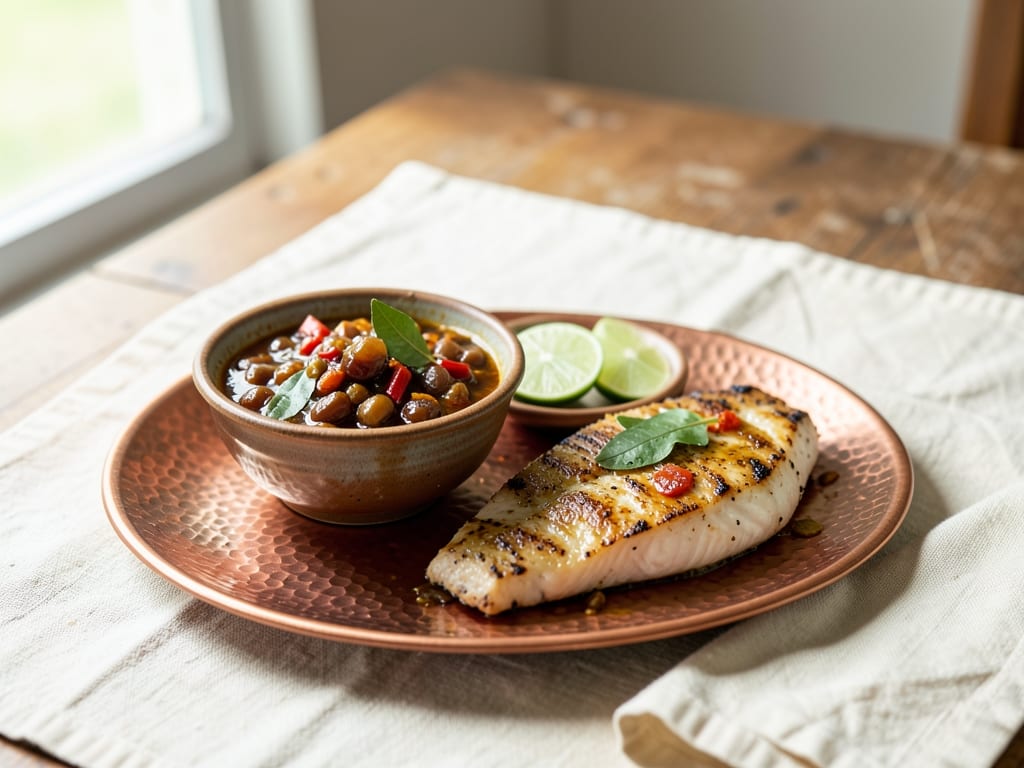
- Plate each warm fish fillet on a serving plate or shallow bowl.
- Spoon any remaining pan sauce over the top.
- Serve immediately with fresh lemon wedges, steamed asparagus, roasted potatoes, or a simple green salad on the side.
- Crusty bread is wonderful for soaking up the flavorful sauce.
+ Show details− Hide details
Tip: Serve immediately while the fish is still hot and at its peak flavor and texture
Good to know
Tips
- Don't over-marinate the fish. The acidity in the lemon juice and wine can 'cook' the surface of delicate fish and turn it opaque or mushy after about 1 hour. Stick to 30–45 minutes for the best results.
- Pat the fish dry before pan-searing for a better golden crust. Excess moisture prevents browning and causes steaming instead.
- Let the fish come to room temperature for 10 minutes before cooking; this promotes even cooking throughout instead of a cold interior with overcooked edges.
- Use a good quality, dry white wine for the marinade. Avoid oaky wines (like Chardonnay) as they can overpower the delicate fish. Light, crisp wines (Sauvignon Blanc, Pinot Grigio, Albariño) are ideal.
Make ahead
The marinade can be prepared up to 1 day ahead and stored in an airtight container in the refrigerator. Fish fillets can be marinated up to 4–6 hours ahead, but ideally no longer than 1 hour to preserve their delicate texture.
Storage & reheating
Leftover cooked fish should be stored in an airtight container in the refrigerator for up to 2 days. Reheat gently in a 300°F (150°C) oven for 5–10 minutes until warmed through. The fish is best enjoyed fresh but can be served at room temperature if needed. The marinade itself can be stored in the refrigerator for up to 3 days.
Substitutions
- dry white wine (such as Sauvignon Blanc or Pinot Grigio) → dry vermouth or dry sherry. Use equal amounts by volume; both will add acidity and complexity. Sherry will be slightly richer and darker.
- Dijon mustard → whole grain mustard or grainy mustard. Provides a slightly coarser texture and different flavor profile. Use the same amount.
- fresh tarragon → fresh dill or fresh chervil. Both are classic French herbs. Dill will be more assertive; chervil is more delicate. Use the same amount.
- firm white fish fillets (cod, halibut, or sole), 5–6 oz each → sea bass, branzino, flounder, or halibut fillets. Any firm white fish with similar thickness will work. Adjust cooking time slightly for very thin fillets (flounder, sole).