Vegan Matcha Pistachio Macarons
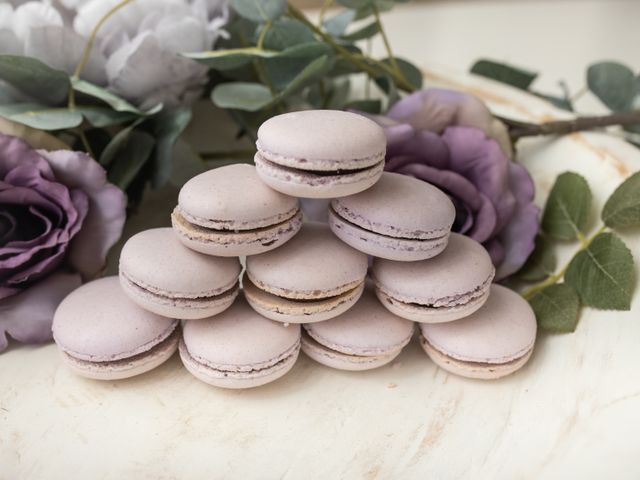
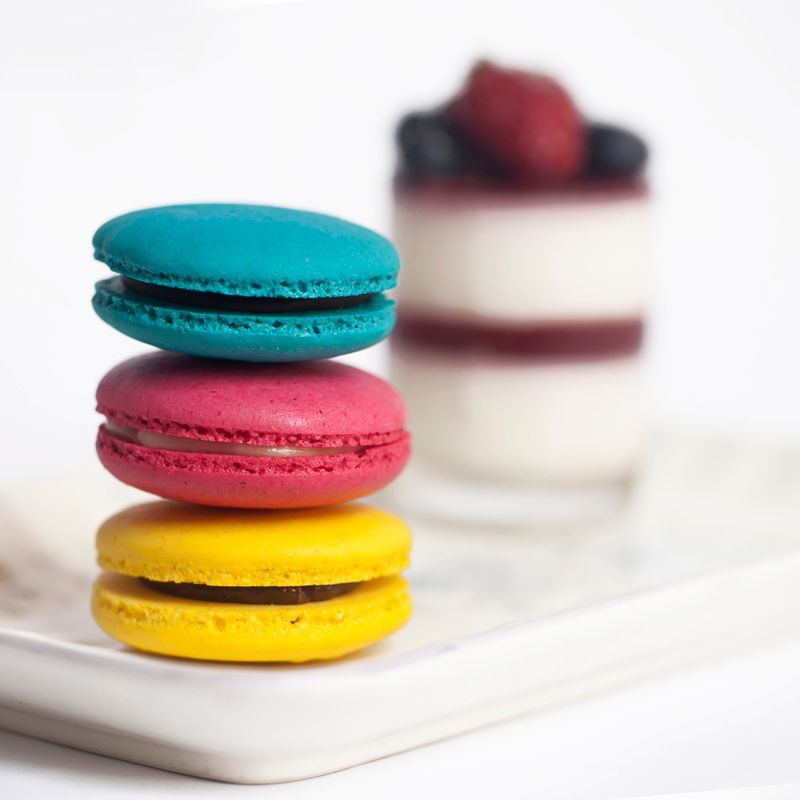
Delicate, crispy-shelled French macarons made entirely plant-based using aquafaba (chickpea liquid) instead of egg whites. The pale green shells are infused with premium matcha powder, while the filling is a luscious pistachio buttercream sweetened with maple syrup. These elegant cookies have the signature glossy feet and smooth domed tops that define a perfect macaron.
- Prep
- 40 min
- Cook
- 18 min
- Wait
- 2 hr 5 min
- Total
- 3 hr 3 min
- Makes
- 24 macarons (12 sandwich pairs)
Steps
Before you start
- Measure aquafaba into a shallow bowl and refrigerate for at least 2 hours (or use aquafaba kept cold in the fridge)
- Preheat oven to 300°F (150°C) 15 minutes before piping
- Weigh all dry ingredients accurately; macaron success depends on precision
- Use room-temperature aquafaba (about 70°F/21°C) when ready to whip
Whip aquafaba to stiff peaks
- Pour the cold aquafaba into the stand mixer bowl with the cream of tartar.
- Whip on high speed for 8–10 minutes until stiff peaks form—the mixture should look like thick meringue and hold its shape completely when the whisk is lifted.
- This step is critical for macaron structure.
+ Show details− Hide details
Ready when: Mixture forms stiff, glossy peaks that don't collapse
Tip: Underwhipped aquafaba will not support the macarons; overwhipped will be grainy. Stop as soon as stiff peaks form.
Combine dry ingredients
- While the aquafaba whips, sift together the almond flour, matcha powder, and powdered sugar into a small bowl, pressing through the sieve with the back of a spoon to remove all lumps.
- Sift again a second time to ensure even color distribution and to incorporate air.
+ Show details− Hide details
Ready when: Mixture is a uniform pale green with no lumps
Tip: Double-sifting is essential for macarons; it prevents the mixture from being too dense and grainy.
Fold in dry mixture
- Remove the whipped aquafaba from the mixer.
- Gently fold the dry matcha-almond mixture into the aquafaba meringue in two additions, using a rubber spatula and a cutting-folding motion.
- After each addition, rotate the bowl a quarter turn and scrape the bottom, folding gently.
- The batter should fall from the spatula in a thick, slow ribbon.
+ Show details− Hide details
Ready when: Batter is smooth, glossy, and falls in a thick ribbon; no dry streaks remain
Tip: Overmixing deflates the meringue and results in flat macarons. Stop as soon as no streaks are visible—the batter will be slightly loose, which is correct.
Pipe shells onto pans
- Line two large baking sheets with parchment paper.
- Transfer the macaron batter into the piping bag fitted with the #11 round tip.
- Pipe 1-inch (2.5 cm) domes onto the prepared pans, spacing them 1.5 inches (4 cm) apart.
- Pipe about 24 shells, aiming for uniform size.
- Tap the bottom of each pan sharply three times against the counter to release air bubbles and help the shells spread slightly into foot formation.
+ Show details− Hide details
Ready when: Piped shells are smooth-domed with no peaks; air bubbles have risen and burst
Tip: If peaks remain after tapping, lightly smooth them with a moistened finger. This step prevents cracked shells and ensures the characteristic feet form.
Rest shells before baking
- Let the piped shells rest at room temperature (68–72°F/20–22°C) for 30–45 minutes.
- The surface will dry slightly and lose its shine, forming a skin.
- This resting period is crucial—it allows the shells to develop feet during baking.
+ Show details− Hide details
Ready when: Surface feels dry to a light touch; shells are no longer sticky
Tip: In humid conditions, resting may take up to 60 minutes. Skip this step and you'll get shells without feet and cracks.
Bake macaronsOven 300°F / 150°C
- Place the prepared baking sheets on the middle rack of the 300°F (150°C) oven.
- Bake for 18 minutes.
- The shells should not color much—they'll remain pale green with smooth, dry-looking surfaces.
- Rotate the pans halfway through (after 9 minutes) for even baking.
+ Show details− Hide details
Ready when: Shells are firm and don't wobble when the pan is shaken; feet are visible and defined
Tip: If shells remain too soft or stick to parchment, bake an additional 2–3 minutes. Temperature accuracy is critical; use an oven thermometer.
Cool macarons completely
- Remove the baking sheets from the oven.
- Let the shells cool on the pans for 5 minutes, then carefully slide the parchment onto a cooling rack.
- Cool the macarons completely—at least 20 minutes—before handling.
- They should release easily from the parchment once cool.
+ Show details− Hide details
Ready when: Shells are cool to the touch and release easily from parchment
Tip: Don't try to remove warm shells; they'll crack or lose their feet. Patience here is essential.
Make pistachio buttercream filling
- While the shells cool, prepare the filling.
- In a small bowl, whisk together the softened vegan butter and pistachio butter until smooth and creamy, about 2 minutes.
- Add the maple syrup, vanilla extract, and sea salt.
- Whisk until the filling is light, fluffy, and spreadable.
- If the filling is too thick, whisk in a small pinch more maple syrup.
+ Show details− Hide details
Ready when: Filling is pale, fluffy, and holds soft peaks
Tip: If vegan butter is too cold or too soft, the filling will be lumpy or greasy. Aim for the consistency of soft butter at room temperature.
Sandwich macarons
- Match cooled shells into pairs of similar size.
- Pipe or spread about ½ teaspoon (2.5 ml) of pistachio buttercream onto the flat side of one shell, then gently press the matching shell on top, flat-side down.
- If garnishing, add a tiny pinch of ground pistachio dust to the filling before closing, or press it onto the freshly filled macaron.
+ Show details− Hide details
Ready when: All macarons are sandwiched; filling is evenly distributed
Tip: Work in a cool room to prevent the filling from melting. If shells are delicate, handle gently—they will strengthen as the filling sets.
Rest macarons before serving
- Place the assembled macarons in a shallow, airtight container lined with parchment paper.
- Refrigerate for at least 24 hours before serving.
- This resting period allows the filling to set and the flavors to marry, creating the ideal texture—the shells will soften slightly and become chewier.
+ Show details− Hide details
Ready when: Macarons are firm and the filling no longer feels soft to the touch
Tip: Macarons can be rested for up to 3 days in the fridge for even better flavor and texture development.
Good to know
Tips
- Aquafaba varies in consistency depending on brand and storage. Start with 4 oz, whip, and if the peaks seem loose after 10 minutes, the aquafaba may be too thin—discard and try a different brand. Success improves with practice.
- Macarons are finicky but learnable. Keep detailed notes on your batter consistency, piping size, and baking time; small adjustments will help you dial in perfection with your specific oven and environment.
- For a less sweet version, reduce maple syrup to 2 tsp and add ½ tsp of matcha powder to the filling for a grassy, earthy depth that complements the pistachio.
- Humidity is the enemy of macarons. On very humid days (>60% relative humidity), increase resting time to 60 minutes and bake at 305°F (152°C) instead of 300°F to ensure proper foot formation and prevent cracks.
Make ahead
Prepare macarons up to 3 days ahead. After sandwiching, refrigerate in an airtight container. You can also freeze unbaked, cooled shells (without filling) for up to 1 month; thaw in the fridge and proceed with making the filling when ready to serve.
Storage & reheating
Room temperature: Store in an airtight container for up to 24 hours (shells will soften). Refrigerator: Up to 4 days in an airtight container; the texture will be softer and creamier. Freezer: Up to 3 months in an airtight container; thaw in the fridge for 1–2 hours before serving. Do not freeze the filling separately; freeze the assembled macarons.
Substitutions
- aquafaba (unsalted chickpea canning liquid) → Non-dairy whipped cream substitute or aquafaba made by simmering chickpeas with water (1 cup dried chickpeas + 3 cups water, simmered 30 minutes, strained). Canned aquafaba is most reliable; homemade may require longer whipping time.
- creamy, unsweetened pistachio butter → Roasted almond butter or tahini mixed with 2 tsp ground roasted pistachios. Use a creamy, unsweetened nut or seed butter; adjust maple syrup to taste if using tahini.
- vegan butter (coconut oil-based), softened → Coconut oil or refined avocado oil. Use equal weight; coconut oil adds subtle flavor, while avocado oil is neutral.
- pure maple syrup → Agave nectar or brown rice syrup (use the same volume). Adjust sweetness to taste; avoid liquid sweeteners with overpowering flavors.