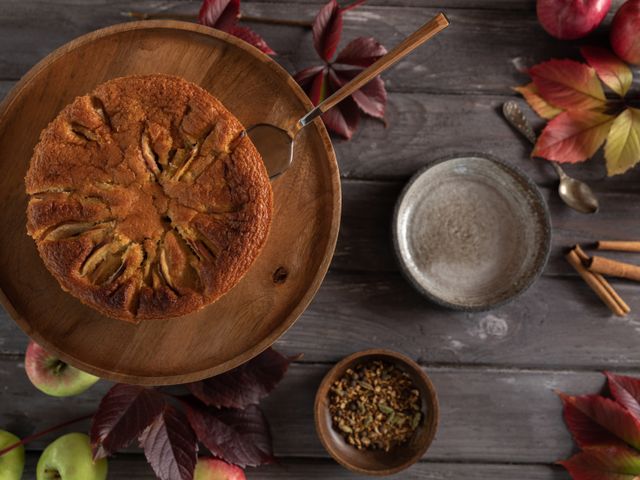
Vanilla Bundt Cake with Glaze
A tender, buttery vanilla bundt cake with a fine, moist crumb from sour cream, finished with a simple vanilla glaze that sets into a soft shell.
- Prep
- 30 min
- Cook
- 1 hr
- Wait
- 1 hr 40 min
- Total
- 3 hr 10 min
- Makes
- 1 bundt cake (12 slices)
Steps
Before you start
- Take the butter, eggs and sour cream out of the fridge 1 hour ahead so they are at room temperature (about 68–70°F / 20–21°C).
- Measure flour by spooning it into the cup and leveling it, or better, weigh it. Packed flour makes a dry cake.
- Grease the pan thoroughly, getting into every ridge, or the cake may stick.
- Allow about 3 hours in total, including cooling before glazing.
Heat oven, prep panOven 325°F / 165°C
- Position a rack in the center and heat the oven to 325°F (165°C).
- Brush the 1 tbsp very soft butter into every ridge and the center tube of the bundt pan, then add the 2 tbsp flour, tilt and tap to coat evenly, and tap out the excess.
+ Show details− Hide details
Ready when: Pan looks evenly coated with no wet butter pools or bare spots.
Tip: Use a pastry brush so butter reaches the tight details.
Whisk dry ingredients
- In a medium bowl, whisk together the 3 cups (375 g) flour, baking powder, baking soda and ¾ tsp salt until evenly combined.
+ Show details− Hide details
Ready when: No streaks or clumps of leavener remain.
Mix milk and sour cream
- In a measuring cup or small bowl, whisk the sour cream and ½ cup (120 ml) milk until smooth and pourable.
- Set aside.
+ Show details− Hide details
Ready when: Mixture is smooth with no lumps.
Cream butter and sugar
- In the bowl of a stand mixer fitted with the paddle, beat the butter and granulated sugar on medium-high speed for 4–5 minutes, stopping once to scrape the bowl, until pale, fluffy and noticeably increased in volume.
+ Show details− Hide details
Ready when: Mixture is pale ivory and light, like thick frosting.
Tip: Don't rush this step; it creates the air that lifts the cake.
Add eggs and vanilla
- With the mixer on medium-low, add the eggs one at a time, beating about 30 seconds after each until fully absorbed.
- Add the 1 tbsp vanilla and beat 15 seconds more, scraping the bowl well.
+ Show details− Hide details
Ready when: Batter looks smooth and glossy with no egg streaks.
Tip: If it looks slightly curdled, it's fine; it will come together when flour is added.
Alternate flour and sour cream
- On low speed, add the flour mixture in 3 additions, alternating with the sour cream mixture in 2 additions, beginning and ending with flour.
- Mix just until each addition disappears.
- Finish by folding a few times with a spatula, scraping the bottom of the bowl.
+ Show details− Hide details
Ready when: Batter is thick, smooth and fluffy with no dry flour pockets.
Tip: Overmixing develops gluten and makes the cake tough.
Fill the pan
- Scrape the batter into the prepared pan, spreading it evenly and pushing it into the grooves.
- Rap the pan firmly on the counter 3–4 times to release large air bubbles.
+ Show details− Hide details
Ready when: Batter surface is level and fills the pan about two-thirds.
Bake the cakeOven 325°F / 165°C
- Bake at 325°F (165°C) for 55–65 minutes.
- Start checking at 55 minutes.
- If the top browns too quickly, tent loosely with foil for the last 15 minutes.
+ Show details− Hide details
Ready when: Top is deep golden and springs back when pressed; a toothpick inserted near the center tube comes out clean or with a few dry crumbs (about 205–210°F / 96–99°C inside).
Tip: Avoid opening the oven in the first 45 minutes.
Cool and unmold
- Cool the cake in its pan on a wire rack for exactly 15 minutes.
- Run a thin spatula around the edges if needed, place the rack over the pan, and invert in one confident motion.
- Lift off the pan and cool the cake completely on the rack, about 1½ hours.
+ Show details− Hide details
Ready when: Cake releases cleanly and feels at room temperature to the touch.
Tip: Waiting longer than 20 minutes in the pan risks sticking; unmolding too early can cause tearing.
Make and apply glaze
- Whisk the powdered sugar, 2½ tbsp milk, 1 tsp vanilla and the pinch of salt in a small bowl until smooth.
- Add more milk, ½ tsp at a time, until the glaze falls from the whisk in a thick ribbon that slowly disappears.
- Set the cake on a serving plate and spoon the glaze over the top, letting it drip down the ridges.
- Let set 20 minutes before slicing.
+ Show details− Hide details
Ready when: Glaze is opaque and no longer wet or tacky to a light touch.
Tip: Glaze a warm cake and it will soak in and vanish; make sure it is fully cool.
Good to know
Tips
- Room-temperature ingredients blend into a smooth emulsion, giving a finer, more even crumb.
- Use a light-colored pan if possible; dark nonstick pans brown faster, so check 5–10 minutes earlier.
- Pour glaze over a cake set on a rack over parchment for easy cleanup, then move to a plate once set.
- Test for doneness near the center tube, which is the last spot to bake through.
Make ahead
"Bake the cake up to 1 day ahead, cool completely, and wrap tightly at room temperature. Glaze on the day of serving. Unglazed cake can be frozen for up to 2 months."
Storage & reheating
"Room temperature: covered, up to 3 days. Fridge: up to 5 days in an airtight container; bring slices to room temperature for 30 minutes before eating. Freezer: wrap unglazed cake or individual slices well, up to 2 months; thaw overnight at room temperature, then glaze."
Substitutions
- full-fat sour cream → full-fat plain Greek yogurt. Use the same amount; the cake will be slightly tangier but equally moist.
- whole milk → buttermilk. Swap 1:1 for a slightly more tender, tangy crumb.
- pure vanilla extract → vanilla bean paste. Use the same amount for visible vanilla specks and deeper flavor.
- whole milk → lemon juice. Replace 1 tbsp of the milk for a bright lemon-vanilla glaze.