Tunisian Brik with Tuna and Egg
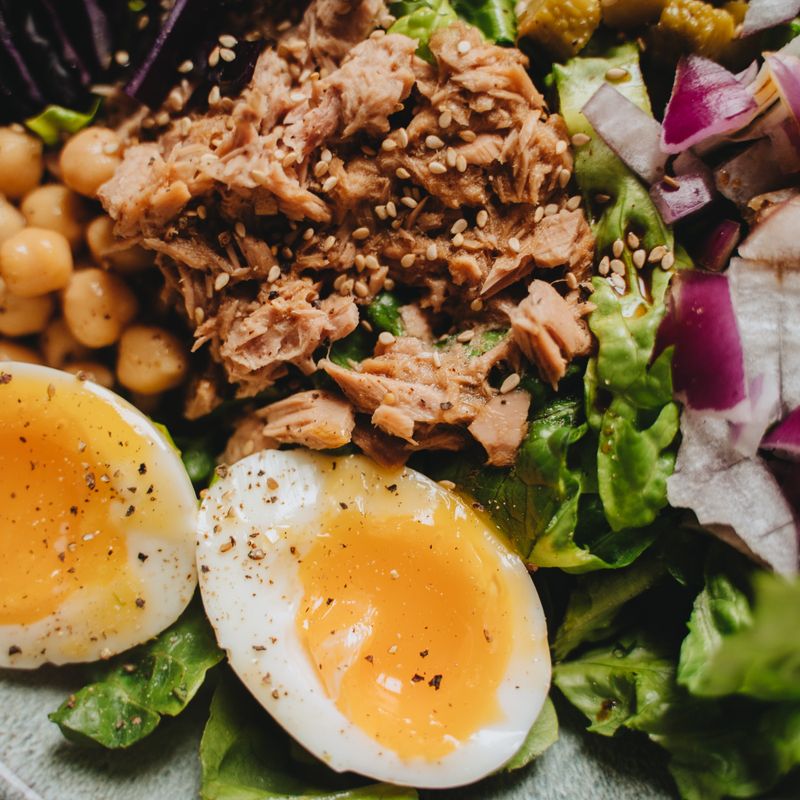
Crisp, golden triangles of thin malsouka pastry wrapped around a savory tuna, caper and parsley filling with a whole egg that stays soft and runny inside. Serve hot with lemon.
- Prep
- 20 min
- Cook
- 12 min
- Total
- 32 min
- Makes
- 4 briks (1 per person as a starter, 2 for a light meal)
Steps
Before you start
- Keep the malsouka (or brik) pastry sheets covered with a slightly damp towel or in their package until needed; they dry out and crack quickly.
- Pat the tuna and capers very dry. Excess moisture makes the pastry soggy and can cause tearing.
- Have everything ready before you start: briks are folded and fried one at a time, and the egg must go into the pastry right before frying.
- Use fresh eggs, ideally small to medium; very large eggs are harder to fit and cook through.
Mix the filling
- In a small bowl, combine the flaked tuna, chopped capers, parsley, sliced scallion, harissa and a few grinds of black pepper.
- Stir with a fork until evenly mixed.
- The mixture should be moist but not wet.
- Tuna and capers are already salty, so skip added salt.
+ Show details− Hide details
Ready when: Filling holds together loosely when pressed with the fork.
Tip: If it looks wet, press it between paper towels; wet filling softens the pastry.
Heat the oil
- Pour the oil into the skillet so it is about ½ inch (1 cm) deep.
- Heat over medium-high until it reaches 350°F (175°C).
- Without a thermometer, drop in a small pastry scrap; it should sizzle and turn golden in about 10 seconds.
- Meanwhile crack each egg into its own small cup, keeping yolks intact.
+ Show details− Hide details
Ready when: Pastry scrap sizzles and turns golden in about 10 seconds.
Tip: Oil that is too cool makes greasy briks; too hot burns the pastry before the egg sets.
Fill the pastry
- Lay one malsouka sheet flat on a clean board with the round edge toward you.
- Spoon one quarter of the tuna mixture (about 2 tablespoons) onto the lower half of the sheet, slightly off center, and shape it into a shallow ring or nest about 3 inches (8 cm) wide, leaving a 1½-inch (4 cm) border.
- Keep the center of the ring hollow.
+ Show details− Hide details
Ready when: A ring of filling with a hollow center to hold the egg.
Tip: Work with one sheet at a time and keep the rest covered.
Add the egg and fold
- Gently slide one egg into the center of the filling ring.
- Quickly fold the top half of the pastry over the filling to make a half-moon, then press the edges together firmly.
- If the edges won't stick, dab a fingertip of water along the border.
- Fold the corners slightly over if needed to seal.
+ Show details− Hide details
Ready when: Edges are sealed all around with no gaps where egg could leak.
Tip: Fry immediately after filling; the egg will soak through the pastry if it waits.
Fry the first side
- Holding the brik with both hands, or sliding it on a wide spatula, lower it into the hot oil away from you.
- Fry 1 to 1½ minutes, spooning hot oil over the top, until the underside is deep golden and crisp.
+ Show details− Hide details
Ready when: Underside is deep golden brown and bubbling has slowed.
Tip: Fry one brik at a time unless your pan is large enough to leave space between them.
Flip and finish
- Carefully flip with the spatula and a second utensil.
- Fry the second side 1 to 1½ minutes, until golden and crisp.
- For a runny yolk, stop here; the total frying time is about 2½ minutes.
- For a firmer yolk, fry about 30 seconds longer per side.
+ Show details− Hide details
Ready when: Both sides are evenly golden and blistered, and the brik feels crisp when tapped.
Tip: Do not pierce the pastry; the egg will leak into the oil and spatter.
Drain and repeat
- Lift the brik out, let the excess oil drip off, and rest it upright against a bowl or on a rack set over paper towels for 30 seconds.
- Check that the oil is back at 350°F (175°C), then repeat with the remaining sheets, filling and eggs, one at a time.
+ Show details− Hide details
Ready when: Briks are crisp and no longer dripping oil.
Tip: Keep finished briks warm in a 200°F (95°C) oven if you like, but serve within 10 minutes for best crunch.
Serve hot
- Serve each brik immediately with a lemon wedge.
- Squeeze the lemon over it and eat with your hands, taking the first bite from a corner so the yolk runs onto the pastry rather than your plate.
+ Show details− Hide details
Ready when: Yolk is jammy and runny when bitten into.
Tip: Briks lose crispness quickly, so eat them right away.
Good to know
Tips
- Make sure the pastry stays dry on the outside and the filling is well drained; any moisture causes tearing and splatter.
- Use a wide, shallow pan so the brik lies flat and the egg cooks evenly as you spoon oil over the top.
- Don't overfill: too much filling pushes the egg out and prevents a good seal.
- Pastry sheets are fragile, so handle them gently and, if one tears, use a spare sheet as a patch.
Make ahead
"The filling can be mixed up to 1 day ahead and refrigerated, covered. Assemble and fry briks only at serving time."
Storage & reheating
"Best eaten immediately. Leftover briks keep at room temperature up to 1 hour; refrigerate in a single layer up to 1 day and reheat in a 400°F (200°C) oven for 6–8 minutes until crisp, though the yolk will be set. Not recommended for freezing once filled. Unused malsouka sheets keep in the fridge for up to 1 week, or frozen up to 2 months."
Substitutions
- malsouka or brik pastry sheets (round) → Spring roll wrappers or double-layered phyllo. Use two layered spring roll or phyllo sheets, brushed lightly with water between layers; the texture will be a bit less delicate and bubbly.
- harissa paste → Pinch of cayenne or red pepper flakes. Use ¼ teaspoon for similar heat, without the smoky depth.
- capers → Chopped green olives. Use 1 tablespoon, patted dry, for a similar briny bite.
- canned tuna in olive oil → Canned tuna in water. Drain thoroughly and press dry; the filling will be a little less rich.