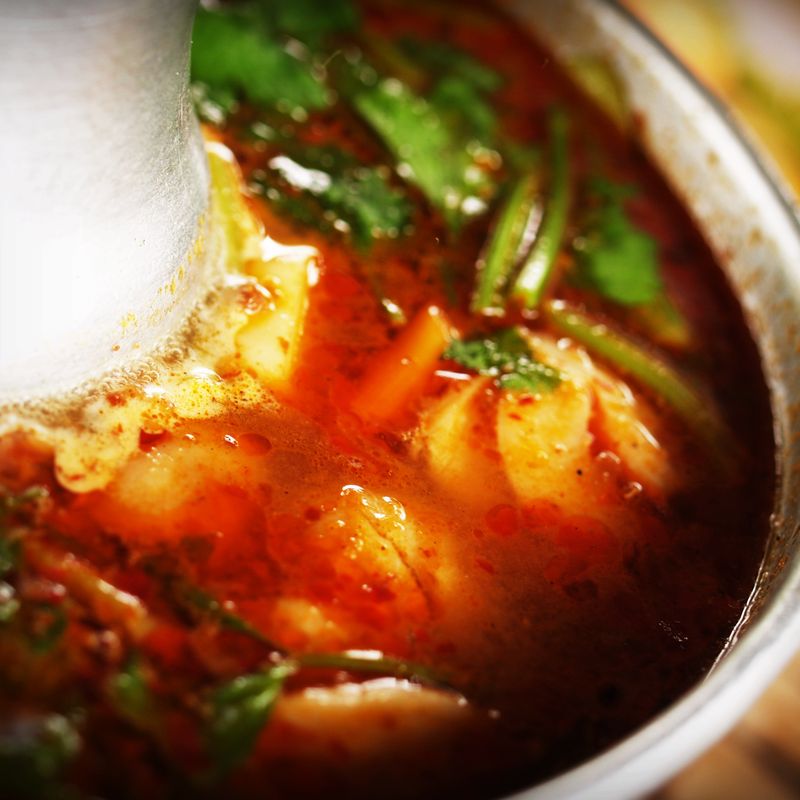
Thai Red Curry Chicken and Sweet Potato Chowder
A creamy, aromatic Thai chowder combining tender chicken breast, golden sweet potato cubes, and fragrant red curry paste in a rich coconut broth. Infused with lemongrass, lime, and fish sauce, this warming one-pot meal balances heat, sweetness, and savory depth. Serve with jasmine rice or crusty bread.
- Prep
- 15 min
- Cook
- 25 min
- Total
- 40 min
- Makes
- 4 servings (about 2 cups each)
Steps
Before you start
- Read through the recipe to understand the timing
- Pat chicken breast dry with paper towels for even cooking
- Have all ingredients prepped and within reach (mise en place)
- If using fresh lemongrass, bruise it lightly to release oils
Bloom the curry paste
- Heat 1.5 tbsp (22 ml) neutral oil in a large heavy-bottomed pot over medium-high heat.
- When the oil is shimmering, add 3 tbsp (45 g) Thai red curry paste and stir constantly for 2–3 minutes.
- The paste will deepen in color and become fragrant; this releases the flavors from the aromatics and chiles in the paste.
- You'll notice the oil separating from the paste.
+ Show details− Hide details
Ready when: Curry paste darkens and becomes fragrant; oil begins to separate
Tip: Do not skip this step—blooming the paste in oil ensures the spices release their full flavor and prevents a raw, bitter taste.
Add coconut milk and broth
- Pour in 13.5 oz (400 ml) unsweetened full-fat coconut milk and 2 cups (480 ml) unsalted chicken broth, stirring well to combine.
- Bring the mixture to a gentle simmer, breaking up any curry paste clumps with your spoon.
- Add the 2 bruised lemongrass stalks, halved lengthwise.
- The liquid should bubble gently at the edges, not vigorously boil.
+ Show details− Hide details
Ready when: Mixture is well combined, lemongrass is submerged, and broth gently simmers
Tip: Stir the curry paste thoroughly to avoid lumps; a few minutes of extra stirring here prevents grittiness in the finished chowder.
Add chicken and sweet potato
- Add 1.25 lb (570 g) cubed chicken breast and 1.25 lb (570 g) peeled, cubed sweet potato to the pot.
- Stir well to coat everything in the curry broth.
- Return the mixture to a gentle simmer.
- The chicken will be partially submerged in liquid.
+ Show details− Hide details
Ready when: Broth returns to a gentle simmer
Tip: Cut chicken and sweet potatoes into consistent ¾-inch cubes so they cook evenly in about the same time.
Simmer until chicken and sweet potato are tender
- Reduce heat to medium-low and simmer uncovered for 12–15 minutes, stirring occasionally.
- The chicken should be cooked through (no pink inside), and the sweet potato cubes should be fork-tender but not falling apart.
- Do not let the broth boil rapidly, which can toughen the chicken.
+ Show details− Hide details
Ready when: Chicken is opaque throughout and cooked to 165°F (74°C) internally; sweet potato yields easily to a fork
Tip: If you test a cube of chicken or sweet potato, it should break apart with minimal pressure. Overcooked sweet potato will become mushy and lose its structure.
Add bell pepper (optional) and finish cooking
- If using 1 medium red bell pepper (150 g), diced into ½-inch pieces, add it to the pot now.
- Continue simmering for another 2–3 minutes until the pepper is just tender-crisp.
- Remove the pot from heat.
+ Show details− Hide details
Ready when: Bell pepper is bright red and tender but still holds its shape
Tip: Add the pepper in the final minutes so it retains color and a slight crunch; overcooking it will fade the color.
Remove lemongrass and season
- Fish out and discard the lemongrass stalks using tongs or a slotted spoon (they should be easy to spot).
- Stir in 1.5 tsp (7 ml) fish sauce and 2 tbsp (30 ml) fresh lime juice.
- Taste the broth and adjust with a pinch more fish sauce or lime juice if needed for balance—you want the flavors to be aromatic and bright without being overwhelmingly funky or sour.
- If the chowder tastes a bit flat or the natural sweetness of the sweet potato is not apparent, stir in the optional ½ tsp (2.5 g) light brown sugar.
+ Show details− Hide details
Ready when: Lemongrass is removed; flavors are balanced and bright
Tip: Add fish sauce and lime juice gradually, tasting after each addition. These ingredients are potent, and a little goes a long way. The goal is depth and brightness, not fishiness or sourness.
Taste and adjust seasoning
- Taste the chowder on a spoon (let it cool slightly).
- Add sea salt a pinch at a time if needed.
- The broth should be savory, creamy, warm, and fragrant.
- You should taste the coconut, the curry spices, and a hint of lime and lemongrass in the background.
+ Show details− Hide details
Ready when: Seasoning is balanced and flavors are cohesive
Tip: Resist the urge to over-salt; the fish sauce and coconut milk already contribute salty, savory notes. Taste several times before adding more salt.
Serve with fresh herbs
- Ladle the chowder into bowls.
- Top each serving with fresh cilantro leaves and torn Thai basil (or regular basil) if desired.
- Serve hot, with jasmine rice, sticky rice, or crusty bread on the side.
+ Show details− Hide details
Tip: Fresh herbs add aromatic lift and brightness; don't skip them if you have them on hand. If Thai basil is unavailable, regular basil or mint both work.
Good to know
Tips
- Pat the chicken breast dry before cutting to promote even cooking and prevent it from steaming in the broth.
- Bloom the curry paste in oil first—this step is crucial for extracting and mellowing the spices.
- Keep the broth at a gentle simmer, not a rolling boil, to prevent the chicken from becoming tough and stringy.
- Taste and adjust seasoning at the very end. Fish sauce, lime, and salt should balance each other: start conservative and build layers of flavor.
Storage & reheating
Refrigerate leftovers in an airtight container for up to 3 days. Reheat gently on the stovetop over medium-low heat, adding a splash of broth or coconut milk if the chowder has thickened. Do not freeze, as the texture of the sweet potato may become mushy upon thawing.
Substitutions
- fresh lemongrass stalks → 2 tbsp (5 g) fresh lemongrass paste, or the zest of 1 lime plus ½ tsp (0.5 g) dried lemongrass (if available). Fresh lemongrass gives the best fragrance, but paste is convenient and freezer-friendly. If using zest and dried lemongrass, add both in step 2 and do not remove at the end.
- unsweetened full-fat coconut milk → Light coconut milk mixed half-and-half with unsweetened plant-based milk (such as oat or cashew), or a combination of chicken broth and heavy cream. This reduces fat and calories but dilutes the coconut flavor slightly. Adjust seasoning to taste, as the sauce will be thinner.
- Thai red curry paste → 3 tbsp (20 g) Thai green curry paste for a fresher, slightly less spicy chowder; or 2 tbsp (30 g) red curry paste plus 1 tbsp (15 g) Thai panang curry paste for more peanutty depth. Green curry is lighter and more herbaceous; panang is richer and slightly sweeter. Adjust heat level and spice profile to your preference.
- fish sauce (nam pla) → 1.5 tsp (7 ml) soy sauce or tamari, or 1 tsp (5 ml) soy sauce plus a pinch of salt. This reduces the funky depth but keeps the umami. The chowder will taste slightly lighter and less authentically Thai, but still delicious.
More chowders
See all →


Find more like this
- Meal
- Lunch
- Cuisine
- Thai
- Main ingredient
- Chicken BreastSweet Potatoes
- Method
- Stovetop