Thai Panang Curry Duck and Pineapple Chowder
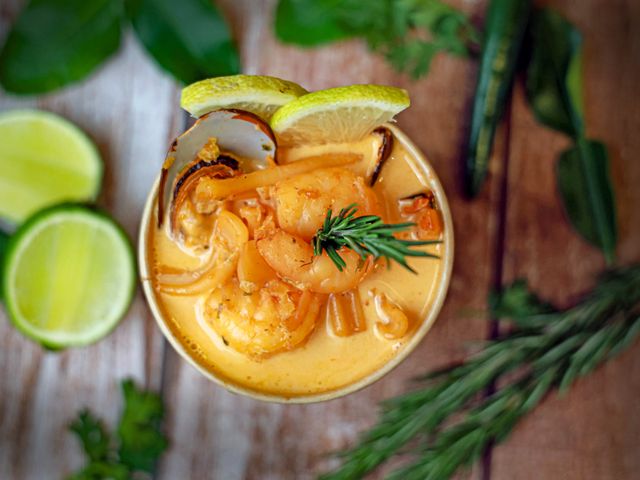
A luxurious Thai-inspired chowder that marries succulent braised duck with creamy coconut milk, sweet pineapple chunks, and the warm spice of panang curry paste. Kaffir lime leaves add bright citrus notes that cut through the richness. This one-pot dish is complex enough for company yet straightforward enough for a weeknight dinner.
- Prep
- 20 min
- Cook
- 50 min
- Wait
- 10 min
- Total
- 1 hr 20 min
- Makes
- 4 servings (about 1½ cups per bowl)
Steps
Before you start
- Pat duck breasts dry to ensure proper browning
- Have all ingredients prepped and within reach before you start cooking
- If kaffir lime leaves are frozen, you can use them directly without thawing
Brown the duck
- Heat your Dutch oven over medium-high heat.
- Season the duck breasts generously on both sides with kosher salt and black pepper.
- Once the pot is hot, place the duck skin-side down and sear for 6–7 minutes until the skin is golden and has rendered most of its fat.
- Flip and sear the other side for 3–4 minutes.
- Transfer the duck to a plate.
+ Show details− Hide details
Ready when: Duck skin is deep golden brown and crispy; meat shows slight resistance when pressed
Tip: Don't crowd the pan and be patient with the skin—it needs contact with the hot surface to render properly. Save 2 tablespoons of the rendered fat in the pot for the curry base.
Build the curry base
- Pour off all but 2 tablespoons of the duck fat from the pot, leaving the flavorful browned bits.
- Reduce heat to medium, add the sliced shallots, and cook for 3 minutes until softened.
- Stir in the minced garlic and ginger, cooking for 1 minute until fragrant.
- Add the panang curry paste and stir constantly for 2 minutes, letting it toast and bloom in the fat.
- The mixture should smell deeply aromatic and slightly darker.
+ Show details− Hide details
Ready when: Curry paste is fragrant and darkened slightly; shallots are translucent
Tip: Blooming the curry paste in fat deepens its flavor—don't skip this step or your chowder will taste thin and flat.
Add liquids
- Pour in the coconut milk and chicken stock, stirring well to dissolve any curry paste clinging to the bottom of the pot.
- Bring to a gentle simmer over medium heat, then return the duck breasts to the pot, skin-side up.
- Adjust the heat to maintain a low simmer.
+ Show details− Hide details
Ready when: Liquid is at a gentle simmer with small bubbles rising to the surface
Tip: Keeping the simmer low prevents the duck from toughening and allows the flavors to meld gently.
Braise the duckOven 165°F / 75°C
- Reduce heat to low, place the lid partially ajar on the pot, and braise for 25–28 minutes.
- The duck should be very tender when pierced with a fork, and an instant-read thermometer should register 165°F (74°C) in the thickest part.
- The liquid should be at a bare simmer—just the occasional bubble breaking the surface.
+ Show details− Hide details
Ready when: Duck is fork-tender; internal temperature is 165°F (74°C); liquid simmers gently
Tip: Partially cover the pot so some steam escapes but liquid doesn't reduce too quickly. Check the simmer halfway through.
Remove and shred the duck
- Transfer the cooked duck to a cutting board and let rest for 5 minutes.
- Once cool enough to handle, shred the meat with two forks or your fingers, discarding the bones and any tough connective tissue.
- You should have about 1½ cups of shredded duck.
- Keep the braising liquid on low heat.
+ Show details− Hide details
Ready when: Duck shreds easily with minimal pressure; meat is opaque throughout
Tip: Resting the duck makes it easier to handle and keeps the meat moist. Don't discard the skin if you enjoy crispy bits—tear it into small pieces.
Add pineapple and aromatics
- Add the pineapple chunks and kaffir lime leaves to the simmering broth.
- Return to a gentle simmer and cook uncovered for 8–10 minutes until the pineapple is just tender but still holds its shape.
- Stir in the fish sauce, palm sugar, and lime juice.
- Taste and adjust seasoning—you want a balance of sweet, salty, sour, and spicy.
+ Show details− Hide details
Ready when: Pineapple is translucent at the edges and tender when pierced; broth tastes balanced and aromatic
Tip: Add lime juice gradually and taste as you go—acidity varies by lime. The chowder should taste slightly sweet with a citrus edge.
Return duck and finish
- Stir the shredded duck back into the chowder.
- Bring everything to a gentle simmer for 2–3 minutes so the duck reheats through and flavors meld.
- Remove from heat and stir in the fresh Thai basil if using.
- Let the chowder rest for 5 minutes before serving—this allows the flavors to settle and mellow slightly.
+ Show details− Hide details
Ready when: Duck is heated through; basil has softened and released its aroma
Tip: Add Thai basil at the very end—its delicate anise flavor is best preserved when barely cooked. Fresh basil is superior to dried here.
Good to know
Tips
- Duck fat is liquid gold—that rendered fat carries intense, savory flavor. Don't drain it all off; use 2 tablespoons as the foundation for your curry base.
- Panang curry paste varies wildly by brand and origin. Taste the broth after step 6 and adjust: if it's too spicy, stir in a splash of coconut milk; if it's too mild, add another tablespoon of paste.
- Fresh kaffir lime leaves are far superior to dried, but frozen ones work beautifully—no need to thaw. Bruising them before adding helps release their essential oils and aroma.
- This chowder tastes even better the next day as the spices continue to mellow and distribute. Make it ahead for dinner parties or weeknight ease.
Make ahead
You can braise the duck and prepare the curry base up to 1 day ahead. Cool the braised duck in its liquid, cover, and refrigerate. When ready to serve, gently reheat the entire pot over medium-low heat, then add the pineapple, lime leaves, fish sauce, sugar, and lime juice, and proceed from step 6. This allows the spices to develop even more depth overnight.
Storage & reheating
Refrigerate in an airtight container for up to 3 days. Reheat gently on the stovetop over low heat, stirring occasionally, for 8–10 minutes until warmed through. The chowder can also be frozen for up to 2 months (allow to cool completely first); thaw overnight in the refrigerator and reheat as above. The Thai basil is best added fresh after reheating.
Substitutions
- duck breasts, skin on → Chicken thighs (boneless, skin-on) or pork shoulder. Use 1.5 lb (680 g) of chicken thighs and reduce braise time to 18–20 minutes. Pork shoulder will need 35–40 minutes to reach tenderness. Both will yield a different but delicious result.
- panang curry paste → Red curry paste. Use the same amount (4 tbsp / 60 g). Red curry is spicier and less sweet, so the final dish will be more assertive. You may want to add an extra ½ tbsp palm sugar to balance the heat.
- fresh pineapple → Mango, papaya, or a mix of both. Use the same weight. Mango adds creaminess; papaya is more delicate. Cut into similar-sized chunks so cooking times remain consistent.
- kaffir lime leaves, fresh or frozen → Lime zest or a combination of lime zest and a small strip of lime peel. Use the zest of 1 lime and thin strips of peel from ½ lime. You'll lose some of the complex citrus depth, but the brightness remains.