
Spanish Torrijas with Yogurt Cream Sauce
Torrijas are a beloved Spanish dessert and breakfast treat made from thick slices of bread dipped in an egg and milk mixture, then pan-fried until golden and crispy on the outside. Finished with a drizzle of honey and a dusting of cinnamon, they're served alongside a silky yogurt cream sauce for dipping. This version uses a skillet instead of deep frying for a lighter touch, while maintaining the custardy center and crispy exterior that make torrijas irresistible.
- Prep
- 6 min
- Cook
- 23 min
- Wait
- 1 min
- Total
- 30 min
- Makes
- 8 torrijas (2 per person)
Steps
Before you start
- Use bread that's at least 1 day old (fresh bread absorbs too much liquid and becomes mushy rather than custardy)
- Arrange your dipping stations before you start: the soaking liquid in one shallow dish, beaten eggs in another, and paper towels nearby for draining
- Bring eggs, milk, and yogurt to room temperature 30 minutes ahead for even cooking (optional but helpful)
- Read through all steps so you understand the quick dipping technique
Make the yogurt sauce
- In a small bowl, whisk together Greek yogurt (1 cup), honey (2 tbsp), vanilla extract (½ tsp), ground cinnamon (¼ tsp), and a small pinch of salt until smooth and creamy.
- Set aside at room temperature while you prepare the torrijas; the sauce will remain pourable and ready to serve.
+ Show details− Hide details
Ready when: Sauce is smooth, creamy, and pourable
Tip: Prepare the sauce first so it has time to chill slightly and flavors meld together.
Prepare the soaking mixture
- In a shallow dish (at least 9×5 inches), combine whole milk (1 cup), sherry if using (2 tbsp), vanilla extract (1 tsp), ground cinnamon (1.5 tsp), and salt (¼ tsp).
- Whisk well for about 30 seconds until the cinnamon is fully dissolved and the mixture is smooth, aromatic, and uniform.
+ Show details− Hide details
Tip: Use a dish wide and flat enough to lie a bread slice down horizontally for quick and easy dipping.
Whisk the eggs
- In another shallow dish, crack the 4 eggs and whisk them vigorously for about 30 seconds until well beaten with no streaks of white remaining; they should be light, frothy, and uniform in color.
+ Show details− Hide details
Ready when: Eggs are light, foamy, and uniform yellow in color
Heat the oil
- Place a 12-inch skillet over medium heat and add the neutral oil (¼ cup).
- Heat for 1 to 2 minutes until the oil shimmers and moves easily when you tilt the pan; it should be hot but not smoking.
- Test readiness by dipping a small piece of bread into the oil—it should sizzle immediately.
+ Show details− Hide details
Ready when: Oil shimmers; a piece of bread sizzles immediately when dipped
Tip: Never skip the preheating step; cold oil will result in soggy torrijas that absorb oil instead of a crispy golden crust.
Dip and coat one slice
- Working quickly, take one slice of bread and dip it into the soaking mixture for about 1 second on each side—just long enough to lightly coat and soak without letting it fall apart or become waterlogged.
- Immediately transfer the coated slice to the beaten egg and coat both sides thoroughly until glistening.
- Set the coated slice on a clean plate.
+ Show details− Hide details
Ready when: Bread is fully coated with egg and glistening; it holds together firmly
Tip: Speed is essential here; if you soak the bread too long, it will disintegrate. Have everything set up and within reach before you begin.
Fry one torrija
- Carefully place the egg-coated bread slice into the hot oil.
- Fry for about 3 minutes on the first side until deep golden brown and crispy-sounding when tapped gently, then carefully flip using a spatula.
- Fry the second side for another 2 to 3 minutes until also deep golden brown and crispy.
- The inside should be warm and slightly custardy.
- Transfer to a plate lined with paper towels to drain.
- Maintain medium heat throughout to avoid burning the exterior.
+ Show details− Hide details
Ready when: Both sides are deep golden brown; exterior is crispy and hollow-sounding when tapped
Tip: If oil isn't hot enough, torrijas absorb oil and become greasy. If too hot, the outside burns before the inside warms. Maintain steady medium heat throughout.
Repeat for remaining slices
- Repeat Steps 5 and 6 with the remaining 7 bread slices, working in batches of 1 to 2 torrijas at a time.
- A 12-inch skillet comfortably fits 2 slices side by side, with each batch taking about 6 minutes total.
- Adjust heat slightly if necessary to keep the oil at an optimal temperature—if it's smoking, reduce heat slightly; if it's not sizzling, increase heat slightly.
+ Show details− Hide details
Ready when: All torrijas are golden brown, crispy, and drained of excess oil
Tip: Don't overcrowd the pan; each torrija needs space around it to develop a good crust evenly on all sides.
Top and serve
- Arrange the warm torrijas on a serving plate or individual plates.
- Drizzle with the remaining honey (2 tbsp), dust lightly with a pinch of ground cinnamon, and serve immediately with the yogurt cream sauce on the side for dipping.
+ Show details− Hide details
Tip: Serve immediately while the torrijas are warm and crispy; they soften as they cool and lose much of their appeal.
Good to know
Tips
- Day-old bread is crucial to success—fresh bread absorbs too much soaking liquid and becomes mushy rather than developing a custardy interior.
- Work quickly when dipping; soaking bread too long causes it to fall apart or become waterlogged. Dip for 1 second per side, no more.
- Maintain medium heat throughout frying. Too hot and the exterior burns before the inside warms; too cool and they absorb oil and become greasy.
- For a more indulgent serving, drizzle the honey into a small pan and warm it over low heat for 30 seconds before drizzling over the warm torrijas.
- Torrijas are best enjoyed immediately after frying for the optimal contrast between the crispy exterior and the warm, custardy interior.
Make ahead
{"text": "The yogurt sauce can be made up to 24 hours ahead; store in an airtight container in the fridge and bring to room temperature before serving. Prepare the soaking mixture up to 4 hours ahead; cover and refrigerate. Torrijas are best enjoyed immediately after frying but can be made 1–2 hours ahead and gently reheated in a 300°F (150°C) oven for 5–8 minutes until warm and crispy again."}}
Storage & reheating
Room temperature: Best enjoyed immediately while warm and crispy; loosely covered torrijas can be kept for 2 hours before they soften. Refrigerator: Store cooked torrijas in an airtight container for up to 2 days; reheat in a 300°F (150°C) oven for 5–8 minutes until warm and crispy. Yogurt sauce keeps refrigerated for up to 3 days; stir gently before serving. Freezer: Freeze cooked torrijas on a baking sheet, then transfer to a freezer bag for up to 1 month; reheat from frozen in a 325°F (160°C) oven for 10–12 minutes until heated through and crispy.
Substitutions
- brioche or day-old white bread, cut into slices → challah, thick-sliced white bread, or brioche rolls. Avoid thin sandwich bread or whole wheat, which won't hold up to the soaking and frying process. The bread must be sturdy enough to hold together when wet.
- dry sherry or dry white wine → fresh orange juice, dry white wine, or brandy (same amount), or omit entirely. These add depth and aroma to the soaking mixture. Orange juice creates a fruit-forward note, while omitting it results in a plainer but still delicious custard.
- plain Greek yogurt, full-fat → crème fraîche, sour cream, full-fat regular yogurt thinned with 2 tbsp milk, or cashew cream. Greek yogurt's tang complements the honey and cinnamon well, but these alternatives work if you want a richer or lighter sauce. Full-fat versions yield the best texture.
- whole milk → half-and-half (for richer torrijas), almond milk, oat milk, or coconut milk (for dairy-free). Whole milk creates the traditional custardy interior. Dairy-free versions work well but may result in a slightly different texture. Use full-fat plant-based milks for best results.
More desserts
See all →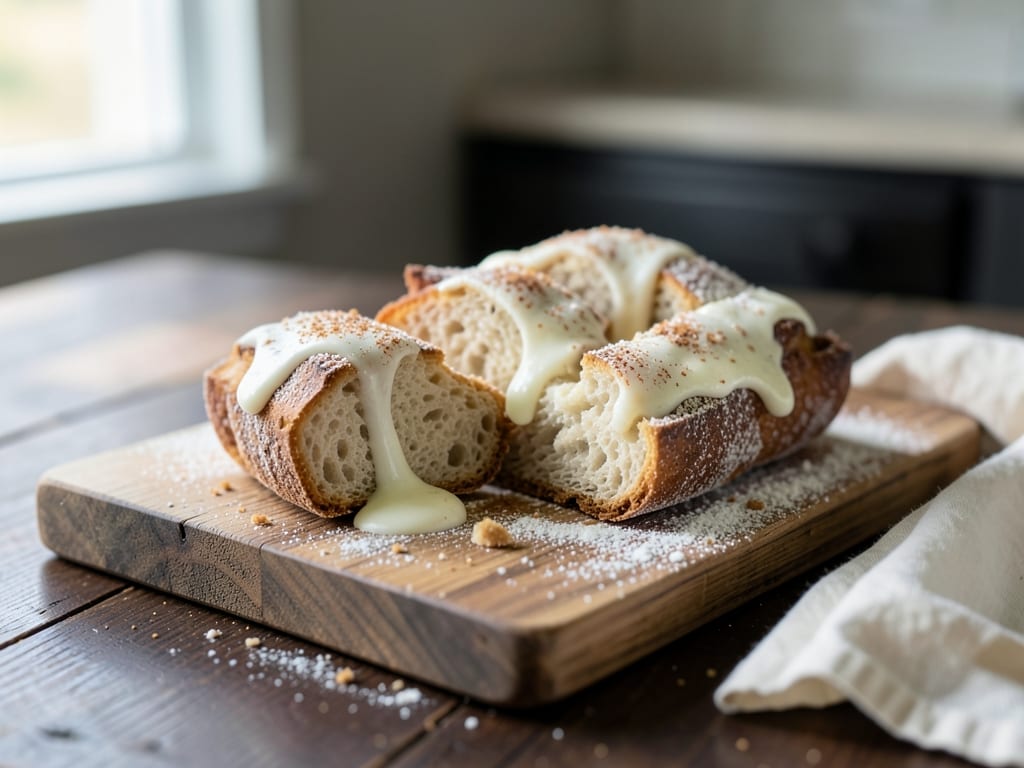


Find more like this
- Meal
- Dessert
- Cuisine
- Spanish
- Main ingredient
- Eggs
- Diet
- Vegetarian
- Method
- Stovetop