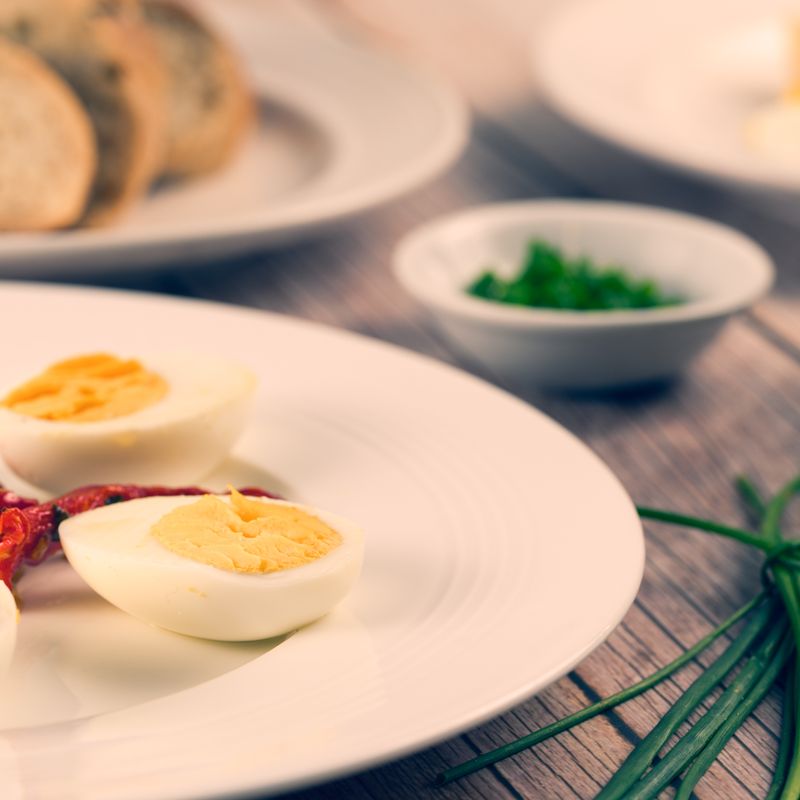
Spanish Hornazo with Chorizo and Hard-Boiled Eggs
A rustic Spanish savory pie with a golden, flaky pastry crust wrapped around spiced chorizo, hard-boiled eggs, and lard-enriched filling. Traditionally served at Easter, this empanada-style pastry is wonderfully portable and equally delicious warm or at room temperature. The combination of seasoned chorizo, tender egg, and cumin creates a deeply satisfying, aromatic filling.
- Prep
- 45 min
- Cook
- 45 min
- Wait
- 1 hr 15 min
- Total
- 2 hr 45 min
- Makes
- 1 hornazo (6 slices)
Steps
Before you start
- Remove pastry dough from refrigerator 10 minutes before rolling to make it pliable but still cold
- Hard-boil and cool the eggs 1 hour ahead, or boil them while the dough rests
- Preheat oven to 400°F (200°C) 20 minutes before baking
- Have a baking sheet lined with parchment paper ready
Make the pastry dough
- In a large bowl, whisk together 2½ cups (312 g) flour and ¾ tsp (4 g) fine sea salt.
- Add 6 oz (170 g) cold lard cubes and, using a fork or your fingertips, work the lard into the flour until the mixture resembles coarse breadcrumbs with some pea-sized pieces remaining.
- Add ½ cup (120 ml) ice water a few tablespoons at a time, mixing gently with a fork until the dough just comes together.
- Do not overmix.
- Form into a disk, wrap in plastic, and refrigerate for at least 30 minutes.
+ Show details− Hide details
Ready when: Dough is cohesive and slightly chilled
Tip: Keep all ingredients as cold as possible; if the dough feels warm or greasy, chill it an extra 10 minutes
Boil the eggs
- While the dough rests, bring a pot of water to a rolling boil.
- Gently add 4 large eggs and simmer for 10 minutes.
- Transfer them to an ice bath and let cool completely (about 10 minutes), then peel carefully and halve them lengthwise.
+ Show details− Hide details
Ready when: Eggs are pale yellow throughout with set whites and cooked yolks
Tip: Start timing after the water boils; this ensures a fully set yolk without a gray-green ring
Cook the chorizo filling
- In a skillet over medium heat, add 2 tbsp (28 g) lard.
- Once melted, add 8 oz (225 g) crumbled chorizo and cook for 5–6 minutes, stirring frequently, until the chorizo is browned and has released its oils.
- Stir in ¾ tsp (3.5 g) ground cumin and ¼ tsp (0.5 g) freshly ground black pepper.
- Cook for another 30 seconds until fragrant.
- Remove from heat and let cool for 5 minutes.
+ Show details− Hide details
Ready when: Chorizo is deeply browned and spices are fragrant; internal temperature reaches 160°F (71°C); excess fat can be drained if needed
Tip: Don't overcrowd the chorizo; let it brown properly to build flavor
Roll out the bottom pastryOven 400°F / 205°C
- Preheat the oven to 400°F (200°C).
- Remove the dough from the refrigerator and let it sit for 5 minutes to warm slightly.
- On a lightly floured surface, roll out two-thirds of the dough into a thin 12-inch (30 cm) round.
- Transfer it to a 9-inch (23 cm) round cake pan or pie pan, letting the excess hang over the edges.
+ Show details− Hide details
Ready when: Dough is thin and evenly lined in the pan
Tip: If the dough cracks, pinch it back together; lard-based pastry is forgiving. Work quickly so the dough doesn't warm up too much
Assemble the filling
- Spread the cooled chorizo mixture evenly over the bottom pastry.
- Arrange the 8 hard-boiled egg halves (yolk-side up) in a circular pattern on top of the chorizo, nestling them gently into place.
+ Show details− Hide details
Ready when: Filling is evenly distributed and eggs are arranged neatly
Tip: Keeping the eggs on top prevents them from cracking when you seal the pastry; handle them gently
Roll and seal the top pastry
- Roll out the remaining third of dough into a thin 10-inch (25 cm) round.
- Lay it over the filling, tucking the edges of both the top and bottom layers together and folding them under to seal all around.
- Crimp the edges with the tines of a fork to create a decorative seal.
- Using a sharp knife, poke 4–5 small steam vents in the top (about ½ inch / 1 cm long), avoiding the eggs if possible.
+ Show details− Hide details
Ready when: Pastry is sealed all around with an even, crimped edge and steam vents are open
Tip: Make sure the seal is tight so the filling doesn't leak during baking
Apply egg wash and seasoning
- In a small bowl, beat 1 large egg with 1 tbsp water until smooth.
- Brush the entire top and sides of the pastry evenly with the egg wash.
- Sprinkle lightly with coarse sea salt if desired.
+ Show details− Hide details
Ready when: Pastry is evenly glossy and salt adheres to the surface
Tip: Egg wash creates the traditional golden-brown crust; don't skip it
Bake until goldenOven 400°F / 205°C
- Transfer the hornazo to a baking sheet (for easier handling and to catch any drips).
- Bake in the preheated 400°F (200°C) oven for 40–45 minutes, until the pastry is deep golden brown and crisp.
- If the top browns too quickly, loosely tent it with foil after 25 minutes.
+ Show details− Hide details
Ready when: Pastry is deep golden brown, crisp to the touch, and the bottom is golden when lifted (check after 40 minutes)
Tip: Rotate the baking sheet halfway through baking if your oven has hot spots to ensure even browning
Cool and serve
- Remove the hornazo from the oven and let it rest on a cooling rack for 10 minutes before slicing.
- Serve warm, at room temperature, or even chilled.
- Cut into 6 wedges and serve with crusty bread or a simple green salad.
+ Show details− Hide details
Ready when: Hornazo is warm but firm enough to slice cleanly without the filling running
Tip: A warm hornazo is delicious, but it also holds together better after a short rest
Good to know
Tips
- Hornazo is a traditional Easter pastry in Spain, often given as a gift. It's wonderfully portable and equally delicious eaten warm, at room temperature, or even chilled, making it ideal for picnics and packed lunches.
- Lard is traditionally used in hornazo dough because it creates a supremely flaky, tender crust. If you can't find it, frozen butter works in a pinch, but the texture will be slightly less delicate.
- Do not skip the egg wash and crimped edge detail—they're both traditional and functional, ensuring a burnished crust and tight seal that prevents leakage.
- If your oven runs hot, monitor the hornazo from 35 minutes onward to prevent over-browning. Every oven is different, so start checking at 40 minutes rather than waiting the full 45.
Make ahead
Prepare the pastry dough up to 2 days ahead; wrap well and refrigerate. Assemble the hornazo up to 4 hours before baking, cover loosely with plastic, and bake when ready. Bake the complete hornazo, cool, wrap tightly, and refrigerate; reheat gently in a 350°F (175°C) oven for 15–20 minutes.
Storage & reheating
Store leftovers covered at room temperature for up to 1 day, in the refrigerator for up to 3 days, or wrapped tightly in the freezer for up to 1 month. Reheat thawed hornazo in a 350°F (175°C) oven for 15–20 minutes until warmed through. Slice and reheat in a toaster oven if you have only a small portion.
Substitutions
- cold lard or cold unsalted butter → Cold unsalted butter or cold leaf lard. Lard creates the most traditional and flaky crust, but cold butter works well too. Adjust quantity slightly if using butter as it may behave differently in the dough.
- Spanish chorizo sausage → Spanish-style chorizo can be replaced with Portuguese linguiça or Italian hot sausage, though the flavor profile will differ. Ensure the sausage is fully cooked before assembly. Remove from casing and crumble the same way.
- ground cumin → Smoked paprika (pimentón), using the same amount. Paprika adds a different but equally delicious Spanish flavor, especially if you prefer less earthiness than cumin provides.
- freshly ground black pepper → A small pinch of cayenne pepper or red pepper flakes for heat. Add ⅛ to ¼ tsp depending on spice preference. This adds gentle heat rather than just peppery warmth.
More pastries
See all →


Find more like this
- Meal
- Lunch
- Cuisine
- Spanish
- Main ingredient
- Sausage
- Diet
- Sugar-Free
- Occasion
- Easter