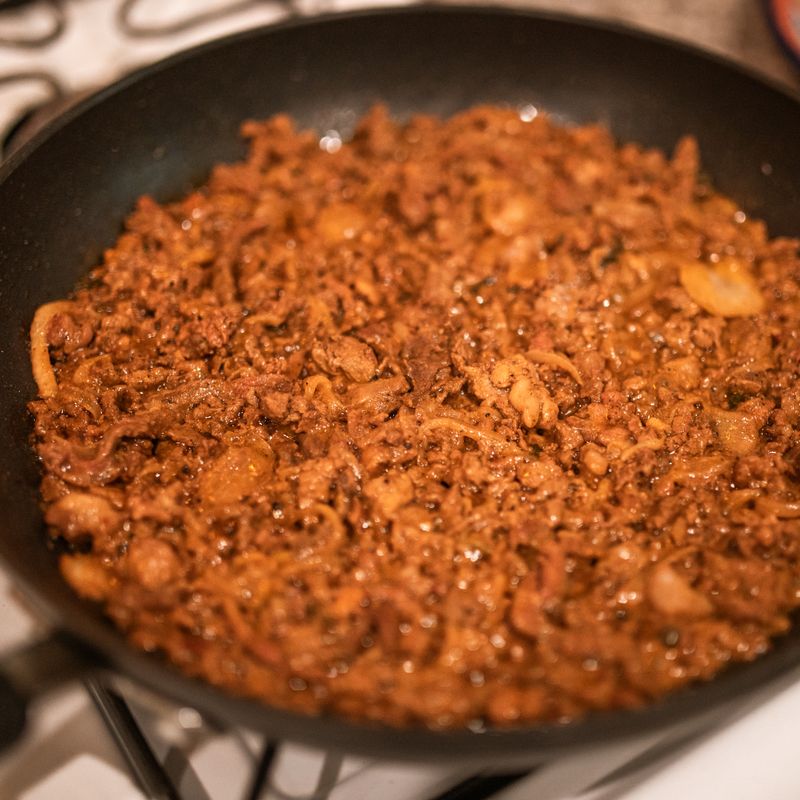
Sourdough Venezuelan Carne Asada and Black Bean Flatbread
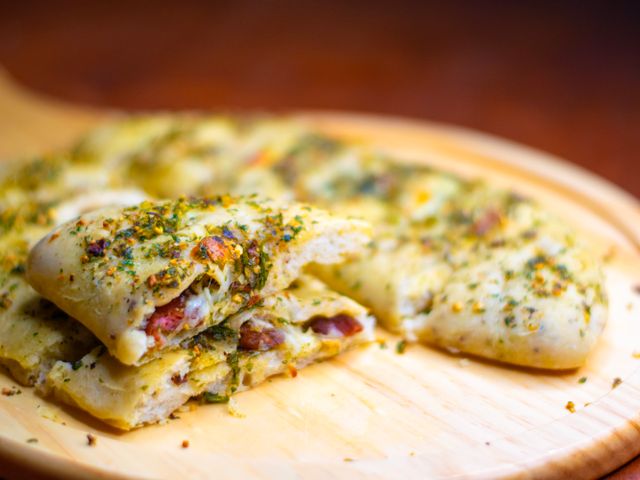
Grilled sourdough flatbreads split and stuffed with garlicky marinated beef carne asada and seasoned black beans. The tangy sourdough provides a perfect canvas for bold Venezuelan flavors—juicy strips of beef that have been marinated in garlic, cumin, and citrus, paired with creamy black beans and a touch of jalapeño heat. Grill marks char the outside while keeping the interior soft and chewy.
- Prep
- 25 min
- Cook
- 35 min
- Wait
- 9 hr
- Total
- 10 hr
- Makes
- 4 filled flatbreads
Steps
Before you start
- Remove sourdough starter from the refrigerator 1 hour ahead if cold-fed; ensure it is active and bubbly (at peak, about 2 hours after feeding).
- Make the carne asada marinade at least 6 hours ahead (or overnight) for maximum flavor.
- Preheat your grill (charcoal or gas) to medium-high heat about 15 minutes before cooking.
- Have all ingredients assembled and at hand—do not attempt to rush the beef marinading time.
Prepare the marinade
- In a large bowl, whisk together the minced garlic (8 cloves), cumin (1½ tsp), fresh lime juice (⅓ cup), orange juice (¼ cup), olive oil (¼ cup), dried oregano (1 tsp), bay leaves (2), kosher salt (1 tsp), and black pepper (½ tsp).
- The marinade should be bright, fragrant, and balanced between citrus and spice.
+ Show details− Hide details
Ready when: Marinade is well combined and fragrant with visible garlic pieces and herbs distributed throughout.
Tip: Whisk vigorously so the salt dissolves fully and the oil emulsifies slightly with the citrus juices.
Marinate the beef
- Add the beef strips (1½ lb) to the bowl and stir well, coating every piece evenly with the marinade.
- Cover with plastic wrap and refrigerate for at least 6 hours, ideally overnight (up to 18 hours).
- Stir once or twice during marinating if possible to ensure even flavor absorption.
+ Show details− Hide details
Ready when: Beef is deeply colored, smells fragrant, and feels slightly more tender when pierced.
Tip: Cold marinating time is essential for Venezuelan carne asada flavor. Do not skip or rush this step.
Mix the dough
- In a stand mixer bowl or large bowl, combine the active sourdough starter (1 cup at room temperature), warm water (¾ cup, 75–80°F), bread flour (2½ cups), and kosher salt (1¼ tsp).
- Using the dough hook attachment on low-medium speed, mix for 8–10 minutes until a shaggy, slightly sticky dough forms.
- If mixing by hand, stir vigorously with a wooden spoon for 12–15 minutes.
- The dough should hold together but stick lightly to your fingers.
+ Show details− Hide details
Ready when: Dough is shaggy, slightly sticky, and pulls away from the bowl sides as it develops gluten.
Tip: Do not overwork the dough at this stage; it will develop further during the rise.
Add oil and rest
- Drizzle the olive oil (2 tbsp) over the dough and gently work it in with wet hands, folding the dough over itself 4–5 times until the oil is fully incorporated and the dough feels smoother and more cohesive.
- Place the dough in a lightly oiled bowl, cover with plastic wrap, and let it rest at room temperature (68–72°F) for 1 hour.
+ Show details− Hide details
Ready when: Dough is noticeably less sticky, appears slightly puffed at the edges, and is smooth to the touch.
Tip: Wet hands make this task easier and prevent the dough from sticking to your fingers.
Stretch and fold
- Wet your hand and perform a series of stretch-and-folds directly in the bowl: grab the underside of the dough, stretch it up and fold it over the top, rotate the bowl 90 degrees, and repeat 4 times.
- This takes about 1 minute.
- Let the dough rest for 30 minutes uncovered, then repeat the stretch-and-fold sequence 2 more times at 30-minute intervals.
- After the final fold, cover and let the dough rise for 2–3 hours at room temperature, until roughly doubled in size and visibly airy.
+ Show details− Hide details
Ready when: Dough has increased in volume by about 50–100%, feels light when you jiggle the bowl, and shows visible bubbles at the surface.
Tip: Do not skip the stretch-and-folds; they build strength in the dough without aggressive kneading.
Prepare the black beans
- Heat the olive oil (1 tbsp) in a small saucepan over medium heat.
- Add the minced garlic (2 cloves) and sauté for 30–45 seconds until fragrant and just beginning to lighten in color (do not brown).
- Stir in the drained black beans (1½ cups) and ground cumin (¾ tsp), cooking for 3–4 minutes, stirring occasionally, until the beans are heated through and have absorbed the garlic-cumin aroma.
- If using jalapeño, add the minced pepper now and cook for 1 more minute.
- Season to taste with kosher salt.
- The beans should be warm, creamy, and well-seasoned.
- Set aside to cool slightly.
+ Show details− Hide details
Ready when: Beans are heated through, fragrant, and have absorbed the garlic and cumin; a spoon pressed into them leaves a brief impression.
Tip: Warm the beans just before assembling the flatbreads so they are still hot when grilled inside.
Shape the dough
- Turn the risen dough onto a lightly floured surface and gently divide it into 4 equal pieces (roughly 180 g each).
- Working with one piece at a time, shape each into a ball by folding the edges toward the center and then rolling it under your palms to tighten the surface.
- Place each ball on a small piece of parchment paper or a floured surface, cover loosely with plastic wrap, and let them rest for 20 minutes at room temperature.
- This relaxes the gluten before final shaping.
+ Show details− Hide details
Ready when: Dough balls are round, feel slightly puffy, and do not resist when gently poked.
Tip: A 20-minute rest allows the gluten to relax, preventing the dough from shrinking back when you shape it.
Stretch into flatbreads
- Working with one dough ball at a time, gently stretch it by hand into a 6×8-inch (15×20 cm) oval or rectangular shape about ¼ inch (6 mm) thick.
- Use your fingertips to gently press and stretch; do not use a rolling pin (the sourdough should retain some gentle airiness).
- If the dough resists, let it rest for 2–3 minutes and try again.
- Place each stretched flatbread on a parchment-lined sheet pan or board, spacing them at least 2 inches (5 cm) apart.
- Cover loosely with plastic wrap and let them proof for 20–30 minutes at room temperature until they are noticeably puffed but not fully risen.
+ Show details− Hide details
Ready when: Flatbreads are visibly puffed, feel light to the touch, and a gentle poke leaves a slow-recovering indentation.
Tip: Do not over-proof; if the dough springs back instantly, it needs more time; if it stays indented, it is ready to grill.
Grill the beefOven 400°F / 205°C
- Remove the beef from the marinade 10 minutes before grilling and pat dry with paper towels (this helps it brown better).
- Preheat your grill to medium-high heat (about 400°F / 200°C).
- Brush the grill grates lightly with vegetable oil.
- Working in batches so as not to crowd the grill, arrange the beef strips on the hot grates and cook for 2–3 minutes per side until charred at the edges and cooked to 160°F internal temperature (medium doneness).
- The meat should remain juicy with a slight pink center.
- Transfer to a plate and let rest for 5 minutes, loosely tented with foil.
+ Show details− Hide details
Ready when: Beef is charred on edges, feels firm but springy, and reaches 160°F on an instant-read thermometer inserted into the thickest piece.
Tip: Do not press the beef with the spatula; this squeezes out flavorful juices. Let it rest undisturbed for a juicier result.
Grill the flatbreads
- Keep the grill at medium-high heat and lightly brush the grill grates with vegetable oil.
- Carefully transfer one proofed flatbread directly onto the grates (discard the parchment) and cook for 2–3 minutes on the first side until golden-brown grill marks appear and the bottom is set but still tender.
- Flip carefully with a long spatula and cook the second side for another 1–2 minutes until set and lightly charred.
- Transfer to a plate.
- Repeat with the remaining flatbreads.
- Work quickly so they remain warm.
+ Show details− Hide details
Ready when: Flatbread is golden-brown with visible grill marks, feels firm and set underneath, and yields slightly when pressed (not hard or overly crispy).
Tip: If a flatbread puffs dramatically, gently press it with a spatula to prevent excessive air pockets that make filling difficult.
Assemble the flatbreads
- Working with one warm flatbread at a time, carefully slice it horizontally with a sharp serrated knife to create a pocket, cutting about ¾ of the way through so it stays connected on one edge (like pita bread).
- Open the pocket gently.
- Spread or spoon a portion of the warm seasoned black beans (about ⅓ cup per flatbread) into the pocket, then top with a portion of the rested beef carne asada (about 3–4 oz).
- Garnish with fresh cilantro if using.
- Repeat with the remaining flatbreads.
+ Show details− Hide details
Ready when: Each flatbread is filled evenly with beans and beef, pockets are not leaking, and ingredients are still warm.
Tip: Keep the flatbreads warm by covering with a clean kitchen towel while you fill the others; work quickly so everything stays hot.
Serve
- Arrange the filled flatbreads on a platter or individual plates.
- Serve immediately with lime wedges on the side so guests can squeeze fresh juice over their flatbread before eating.
- Offer hot sauce or additional jalapeños if desired.
+ Show details− Hide details
Ready when: Flatbreads are served hot, intact, and visibly glistening with the juices from the filling.
Tip: Serve within minutes of assembly; sourdough flatbreads begin to firm up as they cool, though they remain delicious even at room temperature.
Good to know
Tips
- Active sourdough starter is the soul of this recipe. If your starter is sluggish, feed it once or twice more and allow 2–4 hours for it to become visibly bubbly and peaked before using. A weak starter will result in dense, sour flatbread with poor rise.
- The beef marinade requires overnight (or at least 6 hours) refrigeration. This is not optional—cold marinating allows the citrus and spices to penetrate the meat deeply, resulting in the tender, flavorful carne asada characteristic of Venezuelan cooking.
- Sourdough flatbreads are best grilled fresh and served immediately. If you must make them ahead, grill them as directed, cool on a wire rack, wrap in foil, and reheat in a warm oven for 5–7 minutes just before serving to restore warmth and slight chewiness.
- If you do not have a grill, you can cook the flatbreads in a hot cast-iron skillet or griddle over medium-high heat on the stovetop (3–4 minutes per side) and the beef in the same skillet in batches (2–3 minutes per side). The grill imparts superior flavor, but the stovetop method is reliable.
Make ahead
The carne asada marinade and beef can be prepared up to 18 hours in advance and refrigerated. The sourdough flatbread dough can be made through the first rise (step 5) and then divided and shaped (step 7); the shaped flatbreads can be covered and refrigerated for up to 8 hours, though they should be brought to room temperature and given a brief 15–20 minute proof before grilling. The black beans can be prepared 1 day ahead and reheated gently over low heat before serving.
Storage & reheating
Store any leftover filled flatbreads wrapped loosely in foil at room temperature for up to 2 hours. Reheat gently on a grill or in a warm oven (350°F / 175°C) for 5–7 minutes until warmed through. Unfilled flatbreads can be stored in an airtight container at room temperature for 1 day, wrapped in foil and refrigerated for up to 3 days, or frozen (wrapped well) for up to 1 month. To reheat, wrap in foil and warm in a 350°F (175°C) oven for 10–15 minutes if refrigerated, or 20–25 minutes if frozen. Leftover carne asada and black beans can be refrigerated separately in airtight containers for up to 3 days and reheated gently before reuse.
Substitutions
- beef chuck or beef skirt, cut into ½-inch-thick strips → Beef skirt, flank, or short ribs. Any cut with good marbling and natural tenderness works; adjust cooking time slightly (thinner cuts like skirt may cook 1–2 minutes faster). Avoid very lean cuts such as sirloin, which can dry out.
- active sourdough starter (unfed, bubbly) → 1 cup (240 ml) of commercial unfed sourdough culture or liquid sourdough starter (if not bubbly, let sit at room temperature 2–4 hours until active), or substitute with ½ cup (120 ml) sourdough starter plus 2 tablespoons whole-wheat flour and 3 tablespoons water for a less tangy dough.. Active starter is essential for flavor and rise; if using stored starter, feed it and let it reach peak before using. The resulting flatbread will be less sour if starter is not fully active.
- canned black beans, drained and rinsed → Canned pinto beans or red kidney beans, drained and rinsed. Maintain the same amount and cooking method. Pinto beans are slightly milder and creamier; kidney beans are firmer. Both work well with the cumin and garlic seasoning.
- fresh jalapeño pepper → Diced serrano pepper (hotter) or diced poblano pepper (milder) or a pinch of cayenne pepper (⅛ tsp) mixed into the beans. Adjust quantity based on heat preference. If omitting entirely, add an extra ¼ tsp cumin for depth.
More flatbreads
See all →

Find more like this
- Meal
- Dinner
- Cuisine
- Tex-Mex
- Main ingredient
- Black Beans
- Method
- StovetopGrill & BBQ
- Quick & Easy
- Make Ahead