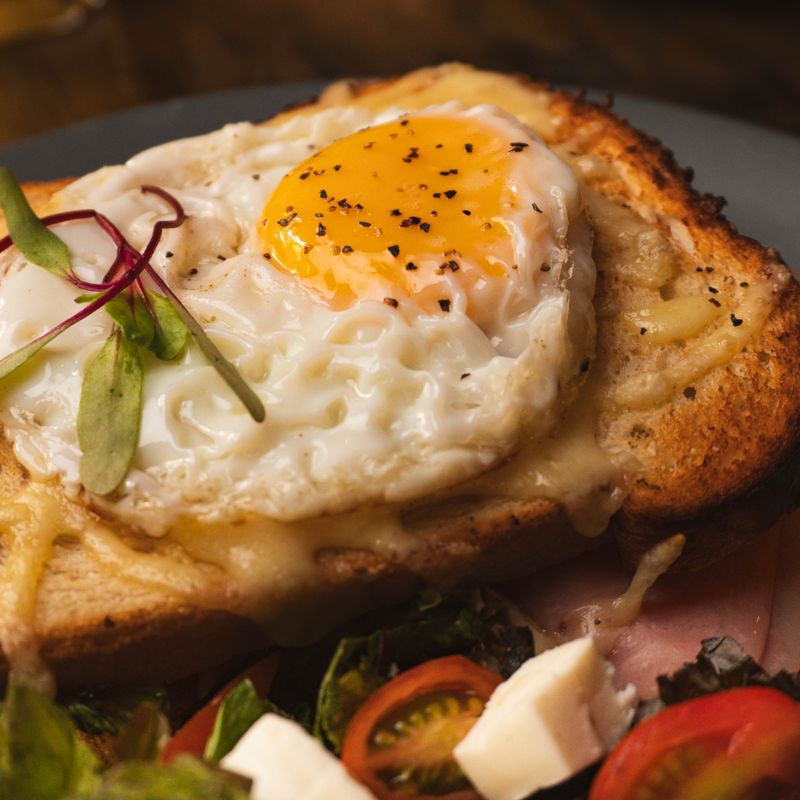
Sourdough Greek Discard Saganaki Fried Cheese Bread Pockets
Crispy, golden fried cheese bread pockets made with sourdough discard, filled with melting halloumi cheese. These Greek-inspired saganaki are finished with a squeeze of fresh lemon and a sprinkle of oregano. Crunchy on the outside, soft and tangy on the inside, they're perfect as an appetizer or snack.
- Prep
- 20 min
- Cook
- 15 min
- Wait
- 30 min
- Total
- 1 hr 5 min
- Makes
- 12 pockets (3 per person)
Steps
Before you start
- Have sourdough discard at room temperature
- Cut halloumi into 12 strips (about ⅓ inch / 8 mm thick)
- Heat oil in a deep pot or Dutch oven to 350°F (175°C) before frying
- Line a plate with paper towels for draining
Make the dough
- In a small bowl, combine 1 cup (240 ml) sourdough discard, ¾ cup (100 g) bread flour, ½ cup (65 g) all-purpose flour, and ½ teaspoon (3 g) kosher salt.
- Stir together with a fork or small spoon until a shaggy, sticky dough forms.
- Add 2 tablespoons (30 ml) water if the dough is too dry to come together; it should be slightly wetter than a standard bread dough but still manageable.
- Mix until there are no dry flour streaks, about 1 minute.
+ Show details− Hide details
Ready when: Shaggy dough with no dry flour visible
Tip: Don't overwork the dough; gentle mixing keeps these pockets tender.
Let dough rest
- Cover the bowl loosely with a clean kitchen towel or plastic wrap and let the dough rest at room temperature for 30 minutes.
- This allows the flour to fully hydrate and makes the dough easier to work with.
+ Show details− Hide details
Ready when: Dough is slightly puffy and relaxed
Tip: Use this time to prep the halloumi strips and heat your oil.
Divide and shape dough
- Turn the rested dough out onto a lightly floured surface.
- Gently divide it into 12 equal pieces (each about the size of a walnut).
- Working with one piece at a time, flatten it into a rough oval about 3 inches (7.5 cm) long.
- Place one halloumi strip in the center of the oval.
- Fold the dough over the cheese, pinching the edges together firmly to seal.
- The pocket should be about 2½ inches (6 cm) long and roughly 1½ inches (4 cm) wide.
- Repeat with the remaining dough and cheese.
+ Show details− Hide details
Ready when: 12 sealed cheese-filled pockets with no gaps
Tip: Seal the edges tightly so cheese doesn't leak during frying. If the dough tears, pinch it closed.
Prepare oil and dredge pocketsOven 350°F / 175°C
- Heat 1½ quarts (1400 ml) neutral oil in a deep pot or Dutch oven to 350°F (175°C).
- Use an instant-read thermometer to confirm the temperature.
- While the oil heats, dust each sealed pocket lightly on all sides with all-purpose flour from the dredging bowl, tapping off any excess.
- Arrange the floured pockets on parchment paper, not touching.
+ Show details− Hide details
Ready when: Oil reaches 350°F (175°C) on the thermometer
Tip: Use a deep-fry thermometer, not a meat thermometer, for accuracy. Oil that's too cool will absorb into the dough; too hot will burn the outside before the inside cooks.
Fry first batch
- Carefully lower 6 pockets into the hot oil using a slotted spoon.
- Do not crowd the pan—they need room to move and cook evenly.
- Fry for 2½ to 3 minutes, stirring gently halfway through to ensure even browning.
- The pockets are done when they're golden brown on all sides and make a hollow sound when tapped with a spoon.
- Remove with a slotted spoon and transfer to a paper-towel-lined plate.
+ Show details− Hide details
Ready when: All sides golden brown, sounds hollow when tapped
Tip: Keep oil at 350°F (175°C). If temperature drops, wait a moment before adding more pockets. Fried too fast and they'll be soggy; too slow and greasy.
Fry second batchOven 350°F / 175°C
- Return the oil to 350°F (175°C) if needed.
- Fry the remaining 6 pockets the same way, 2½ to 3 minutes, until golden and hollow-sounding.
- Drain on paper towels.
+ Show details− Hide details
Ready when: All sides golden brown, sounds hollow when tapped
Tip: Don't skip the temperature check between batches; a drop of 10–15°F (6–8°C) is normal.
Season and serve
- While the pockets are still warm, sprinkle lightly with dried oregano and sea salt flakes if desired.
- Arrange on a serving plate and surround with fresh lemon wedges.
- Serve immediately—the pockets are best enjoyed warm when the halloumi inside is still melting.
+ Show details− Hide details
Ready when: Pockets plated and garnished
Tip: Squeeze lemon over each pocket just before eating; the bright acidity cuts through the richness beautifully.
Good to know
Tips
- Sourdough discard does not need to be recently fed for this recipe; using 'unfed' discard (several days old) is fine and often preferred for deeper tang.
- Halloumi has a high melting point, making it ideal for frying. If you substitute another cheese, ensure it won't leak by using slices thick enough to hold their shape.
- For extra flavor, brush warm pockets with garlic-infused oil or sprinkle with grated lemon zest before the oregano.
- Squeeze honey over the pockets instead of lemon for a sweet–savory contrast, Greek dessert-style.
Make ahead
Shaped pockets (unfired) can be frozen on a baking sheet for up to 3 days, then fried straight from the freezer, adding 1 minute to frying time. Do not thaw before frying.
Storage & reheating
Best served immediately while warm and crispy. Leftovers (if any) keep at room temperature in an airtight container for up to 4 hours, though texture will soften. To reheat, place on a baking sheet in a 300°F (150°C) oven for 5–7 minutes to re-crisp. Do not refrigerate or freeze cooked pockets.
Substitutions
- halloumi cheese → feta cheese (firmer varieties work best). Feta is softer and will melt more, creating a creamier center. Use the same weight and prepare the same way.
- halloumi cheese → kasseri or graviera cheese. Greek hard cheeses with similar melting properties; use the same weight and thickness.
- bread flour → all-purpose flour (use 1⅛ cups / 165 g total). Sourdough discard already provides some gluten development; the pockets will be slightly more delicate but still good.
- neutral oil (vegetable, canola, or peanut) → extra-virgin olive oil. Use a light or refined olive oil to avoid overpowering flavor, and monitor temperature carefully as it can degrade at high heat.
More finger food
See all →

Find more like this
- Meal
- Snack
- Cuisine
- Greek
- Main ingredient
- Halloumi
- Method
- Stovetop
- Quick & Easy
- Make Ahead