Greek Saganaki Fried Cheese
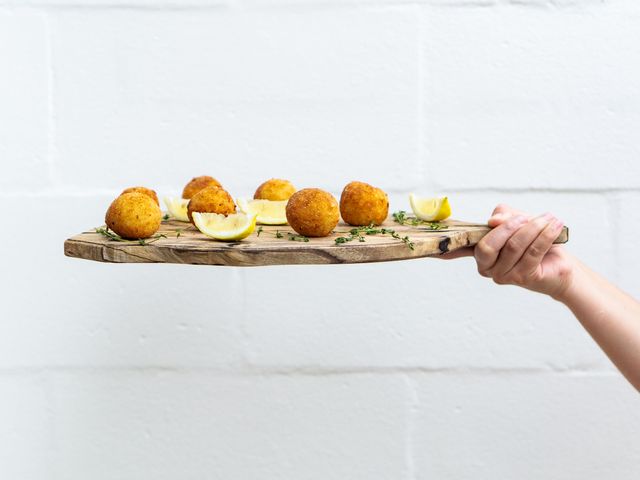
Saganaki is a beloved Greek appetizer of crispy golden-fried cheese wedges with a molten interior and a dramatic squeeze of fresh lemon. Graviera cheese—nutty, semi-hard, and melting beautifully when warm—is dredged in seasoned breadcrumbs and egg, then fried until the exterior crisps and the inside becomes silky. Serve immediately while the cheese is still gooey. This is street food and taverna fare at its best: simple, bold, and utterly addictive.
Steps
Before you start
- Have all ingredients and equipment ready before you start frying (mise en place)
- Fill a shallow bowl with the beaten eggs and have breadcrumbs ready in a second bowl
- Heat the oil to the correct temperature before coating the first piece of cheese
- Line a plate with paper towels for draining
Cut cheese into wedges
- Remove the graviera cheese block from the refrigerator.
- Place it on a cutting board and use a sharp knife to cut the block diagonally into 8 equal wedges, each about ½ inch (1.25 cm) thick.
- (If your cheese block is very thick, you can cut it horizontally first into two thinner slabs, then cut each into 4 wedges.) Lay the wedges on a plate and refrigerate until ready to coat.
+ Show details− Hide details
Ready when: Wedges are uniform in thickness and cold
Tip: Keep the cheese cold so it won't fall apart during frying; handle it gently.
Set up breading stations
- Pour the flour into the first shallow bowl and add a pinch of salt and pepper.
- In the second bowl, place the beaten eggs.
- In the third bowl, combine the panko breadcrumbs with the sea salt, black pepper, and dried oregano, stirring to distribute the seasonings evenly.
+ Show details− Hide details
Ready when: Three bowls are ready: flour, beaten egg, and seasoned breadcrumbs
Tip: Organize your stations from left to right in order of use—flour, egg, breadcrumbs, then the skillet.
Heat the oilOven 350°F / 175°C
- Pour the vegetable oil into a heavy-bottomed skillet or deep frying pan (10–12 inches / 25–30 cm) to a depth of about 1 inch (2.5 cm).
- Insert an instant-read thermometer and heat the oil over medium-high heat until it reaches 350°F (175°C).
- Maintain this temperature throughout frying to avoid oil that is too cool (soggy cheese) or too hot (burnt exterior, cold interior).
+ Show details− Hide details
Ready when: Oil thermometer reads 350°F (175°C); a small piece of breadcrumb sizzles and floats immediately when dropped in
Tip: Use a thermometer for accuracy; guessing temperature is the main cause of uneven cooking or burnt exteriors.
Coat first cheese wedge
- Working quickly, remove one cold cheese wedge from the refrigerator.
- Dredge it thoroughly in the flour, shaking off excess, then dip it completely in the beaten egg, letting excess drip back into the bowl.
- Finally, press the wedge into the seasoned breadcrumbs, coating all sides evenly and pressing gently so the crumbs adhere.
- Place the coated wedge on a clean plate.
+ Show details− Hide details
Ready when: Wedge is fully coated and ready to fry, breadcrumbs are adhered
Tip: Coat just before frying so the breadcrumb crust stays dry and crispy; if coated too early, the egg can soften the crumbs.
Fry first batchOven 350°F / 175°C
- Carefully slide the coated cheese wedge into the 350°F (175°C) oil.
- Fry for 1 to 1.5 minutes until the exterior is golden brown and crispy, then use a slotted spatula or spider skimmer to flip it carefully.
- Fry the second side for another 1 to 1.5 minutes until equally golden.
- Transfer the fried wedge to a plate lined with paper towels to drain.
- The cheese inside should be just beginning to melt but still hold its shape.
+ Show details− Hide details
Ready when: Exterior is deep golden brown and crispy; cheese is slightly soft to the touch but not leaking
Tip: Don't overcrowd the pan and don't fry longer than 3 minutes total or the interior will seep out; watch for golden color, not deep brown.
Coat and fry remaining wedgesOven 350°F / 175°C
- Repeat the coating and frying process with the remaining 7 cheese wedges, working one at a time or in pairs if your pan is large enough.
- Maintain the oil temperature at 350°F (175°C) using your thermometer; adjust heat as needed if the oil drifts above or below target.
- Allow 1 to 1.5 minutes per side for each wedge.
+ Show details− Hide details
Ready when: All wedges are golden brown and draining on paper towels
Tip: If the oil begins to foam excessively, lower the heat slightly to prevent overflow; skim away any burnt breadcrumb bits between batches.
Serve with lemon
- Arrange the warm saganaki wedges on a serving plate immediately, while the cheese is still hot and gooey inside.
- Serve with lemon wedges on the side.
- Squeeze fresh lemon juice over each piece just before eating—the contrast of bright citrus against the rich, melted cheese is essential to the dish.
+ Show details− Hide details
Ready when: Saganaki are arranged on a plate and ready to serve
Tip: Serve within 1–2 minutes of frying while the interior is still molten; saganaki hardens and becomes unpleasant as it cools.
Good to know
Tips
- Keep the cheese wedges cold until the moment you coat them. Warm cheese will fall apart during frying; a 30-minute chill in the freezer (not the fridge) ensures structural integrity.
- An instant-read thermometer is essential—oil that's too cool produces a soggy, greasy crust; oil that's too hot burns the exterior before the cheese inside melts.
- Work methodically and coat just one or two wedges at a time. If you coat them all at once, the breadcrumbs will absorb moisture from the egg and lose their crisp texture before they hit the oil.
- Traditional Greek tavernas cry 'Opa!' and sometimes ignite saganaki at the table with a brandy splash for drama. This is optional but adds theater to the moment.
Storage & reheating
Saganaki is best served immediately. Leftovers can be refrigerated in an airtight container for up to 2 days, but the crispy exterior will soften. Reheat gently on a sheet pan at 325°F (160°C) for 3–5 minutes to restore some crispness, though the cheese will not re-melt to its original molten state.
Substitutions
- graviera cheese, in one thick block → halloumi or kefalotyri cheese. Both have high melting points and will hold their shape when fried. Halloumi produces a slightly softer interior; kefalotyri is firmer and more similar to graviera in texture and flavor.
- panko breadcrumbs → regular breadcrumbs or crushed crackers. Regular breadcrumbs will produce a finer, less airy crust. Crushed saline crackers (like Ritz) add extra flavor but may brown faster—watch carefully.
- vegetable oil or olive oil, for frying → olive oil. Extra-virgin olive oil has a lower smoke point (350°F / 175°C), so use regular or light olive oil instead. The flavor is more Mediterranean and authentic.
- dried oregano → dried thyme or a pinch of garlic powder. Thyme gives a more herbaceous note; garlic powder adds savory depth. Omit seasoning entirely for a plainer cheese flavor.