Sourdough French Reblochon and Caramelized Onion Pockets
Crispy-edged hand pies filled with melting Reblochon cheese and deeply caramelized sweet onions, made with active sourdough discard and finished in a hot skillet. The dough is tender and chewy, the filling luxurious and savory—a rustic French-inspired snack or light meal.
- Prep
- 45 min
- Cook
- 35 min
- Wait
- 1 hr 30 min
- Total
- 2 hr 50 min
- Makes
- 8 pockets (2 per serving)
Steps
Before you start
- Use active sourdough discard at room temperature (fed 4–8 hours prior, bubbly and at peak)
- Have Reblochon cheese at room temperature so it melts evenly into pockets
- Caramelize onions ahead of time (they need 30–40 minutes; can be done a day early)
- Clear a clean work surface for shaping
Caramelize the onions
- In a large skillet over medium heat, melt the 3 tablespoons (45 g) butter.
- Add the sliced onions and thyme sprigs, stirring to coat.
- Cook uncovered for 30–40 minutes, stirring every 5 minutes to prevent sticking and ensure even caramelization.
- The onions should turn deep golden brown and smell sweet and jammy.
- Season with salt and pepper to taste.
- Remove the thyme sprigs and transfer the onions to a small bowl to cool.
- (This can be done up to 1 day ahead and refrigerated.)
+ Show details− Hide details
Ready when: Onions are deep golden brown, very soft, and smell sweet and caramelized
Tip: Stir frequently to avoid burning; onions should be sweet, not charred
Mix the dough
- In a large mixing bowl, combine the sourdough discard (300 g), all-purpose flour (220 g), water (60 ml), and salt (3 g).
- Stir with a wooden spoon or dough whisk until a shaggy dough forms with no dry flour remaining.
- The dough should be sticky but cohesive.
+ Show details− Hide details
Ready when: All flour is incorporated and dough comes together
Incorporate the butter
- Add the soft butter (30 g) to the dough in 3 additions, mixing thoroughly after each addition with your hand or the dough whisk.
- The dough will look rough at first, but continue mixing until the butter is fully incorporated and the dough is smooth and slightly elastic.
- This takes about 3–4 minutes of mixing.
+ Show details− Hide details
Ready when: Dough is smooth, glossy, and no visible butter streaks
Tip: Mixing in soft butter at room temperature helps it incorporate smoothly without overworking the dough
First rise
- Cover the bowl with a damp kitchen towel.
- Let the dough rest at room temperature for 60 minutes.
- It should rise slightly and become a bit more puffy and relaxed.
+ Show details− Hide details
Ready when: Dough has risen about 25–30% and feels airy
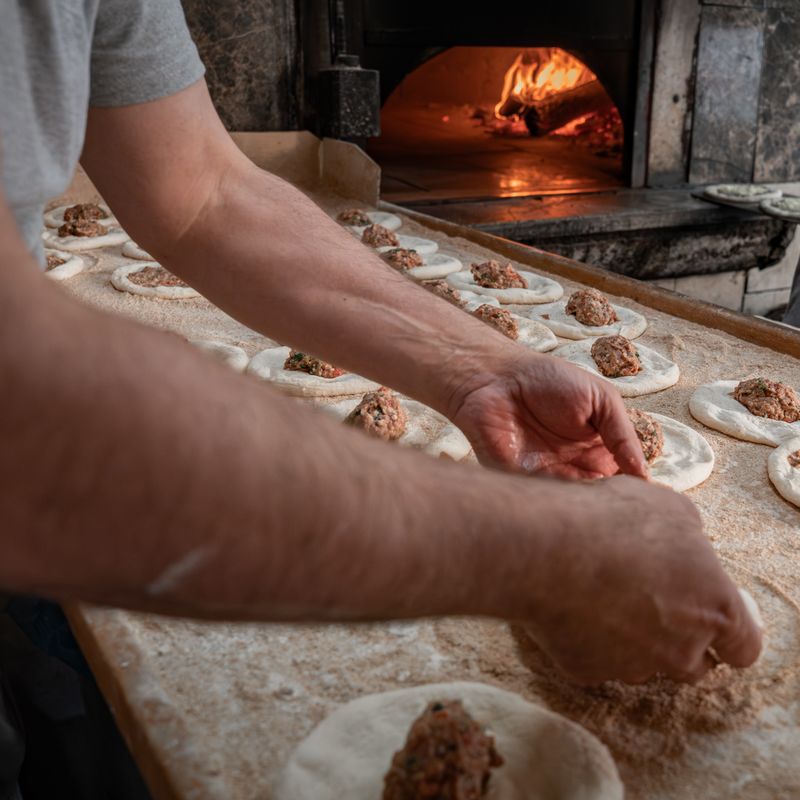
Shape the pockets
- Turn the dough out onto a lightly floured surface.
- Divide it into 8 equal pieces (about 75 g each) by cutting or tearing.
- Working with one piece at a time, gently stretch it into a 4-inch (10 cm) round by pulling the edges toward the center and rotating it.
- Place about 1 heaping tablespoon (20 g) of cooled caramelized onions in the center of each round.
- Top with one piece of Reblochon cheese.
- Fold the dough in half to create a half-moon, pinching the edges firmly together to seal.
- Transfer each pocket to a sheet of parchment paper as you finish.
- Arrange them on the parchment so they are not touching.
+ Show details− Hide details
Ready when: All 8 pockets are sealed and lying on parchment
Tip: Pinch edges very firmly so they don't burst open during cooking; a wet finger helps seal
Second rise
- Cover the pockets loosely with a damp towel.
- Let them rest at room temperature for 25–30 minutes.
- They should puff slightly and feel light to the touch.
+ Show details− Hide details
Ready when: Pockets are visibly puffed and light
Heat the skillet
- Place a 9-inch (23 cm) cast-iron or stainless steel skillet over medium-high heat.
- Add 2 tablespoons (30 ml) oil and let it heat until shimmering and just starting to smoke lightly, about 2 minutes.
+ Show details− Hide details
Ready when: Oil is shimmering and nearly smoking
Tip: A hot skillet creates a crispy golden crust; don't skip the preheating
Cook the first batch
- Carefully transfer 4 pockets to the hot skillet (they can be slightly overlapped if needed).
- Cook for 4–5 minutes on the first side without moving them.
- The bottom should be deep golden brown and crispy.
- Flip carefully with a spatula and cook the second side for 3–4 minutes until also golden brown and the cheese inside is melting.
- The pockets should feel soft and pillowy when gently pressed.
- Transfer to a plate and keep warm.
+ Show details− Hide details
Ready when: Both sides are deep golden brown and cheese is visibly melting through seams
Tip: Don't move the pockets once they hit the pan; let them develop a crispy crust undisturbed
Cook the second batch
- If the oil has mostly evaporated, add another 1 tablespoon (15 ml) to the skillet and let it heat for 30 seconds.
- Cook the remaining 4 pockets the same way: 4–5 minutes on the first side, then 3–4 minutes on the second side, until deep golden and the cheese is melting.
+ Show details− Hide details
Ready when: Both sides are deep golden brown and cheese is visibly melting
Tip: Work quickly so the first batch stays warm; keep it on a plate
Finish and serve
- Transfer all pockets to a serving plate.
- If desired, sprinkle with fleur de sel.
- Serve immediately while the cheese is hot and melting and the crust is still warm and crispy.
+ Show details− Hide details
Tip: Eat these fresh; they are best enjoyed right after cooking when contrast between crispy exterior and soft, melting interior is greatest
Good to know
Tips
- The quality of sourdough discard matters: it should be active, bubbly, and at peak (fed 4–8 hours prior). Flat or weak discard will result in dense, sluggish pockets.
- Reblochon has a natural washed rind that you must remove before using; it's easier when the cheese is at room temperature and you use a small sharp knife.
- Don't overstuff the pockets or the filling will leak out during cooking. A heaping tablespoon of onions and one piece of cheese per pocket is the right amount.
- A cast-iron skillet holds heat better than stainless steel, resulting in a crispier, more golden crust, but either works.
Make ahead
Caramelized onions can be made up to 1 day ahead and stored in an airtight container in the refrigerator. The dough can be mixed and allowed to rise for the full 60 minutes, then shaped and refrigerated on parchment paper for up to 4 hours before the final rise and cooking (add 5–10 extra minutes to the second rise if cooking from cold).
Storage & reheating
Best eaten fresh on the day of making. Leftover pockets can be stored in an airtight container in the refrigerator for up to 2 days; reheat in a 350°F (175°C) oven for 8–10 minutes to restore crispness. Do not freeze (the sourdough and cheese don't reheat well after freezing). Leftover caramelized onions keep for up to 5 days refrigerated.
Substitutions
- Reblochon cheese → Taleggio or Fontina cheese. Both are creamy, melting cheeses with nutty undertones. Use the same amount and cut into similar-sized pieces.
- active sourdough discard (bubbly, at room temperature) → All-purpose flour mixed with ½ teaspoon active dry yeast and 50 ml warm water (let it sit 10 minutes before using). The tangy sourdough flavor will be less pronounced, but the texture will be similar. Use this if you don't have sourdough discard.
- all-purpose flour → Bread flour in the same amount by weight. Will produce slightly chewier pockets. Reduce water to 50 ml if the dough feels too wet.
- fresh thyme sprigs → Sage sprigs or a mix of rosemary and thyme. Sage adds an earthier note; use sparingly as it's strong. Remove sprigs before filling, as with thyme.