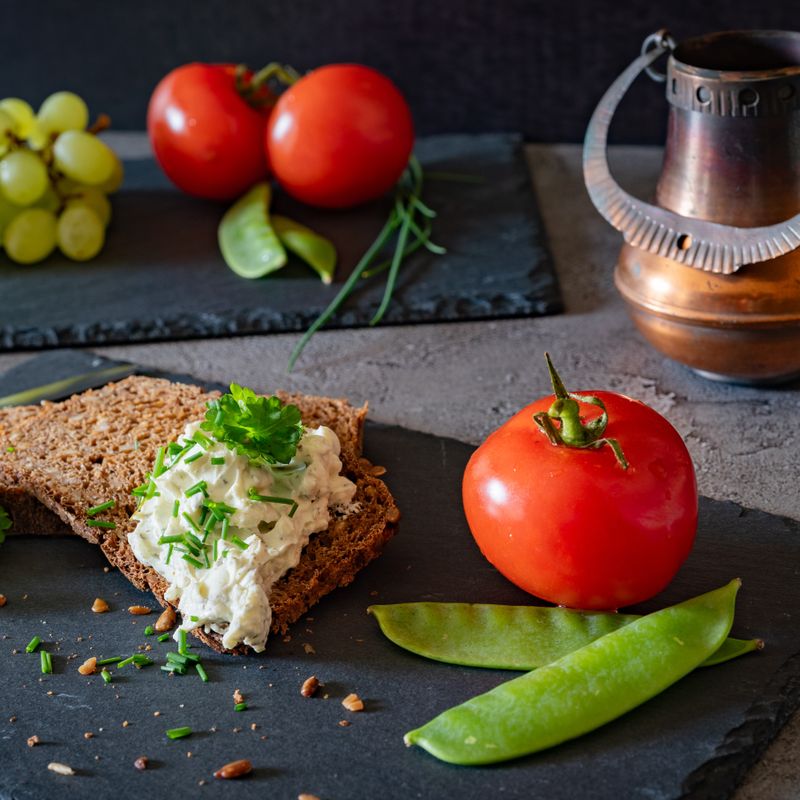
Sourdough Discard Cottage Cheese Bread
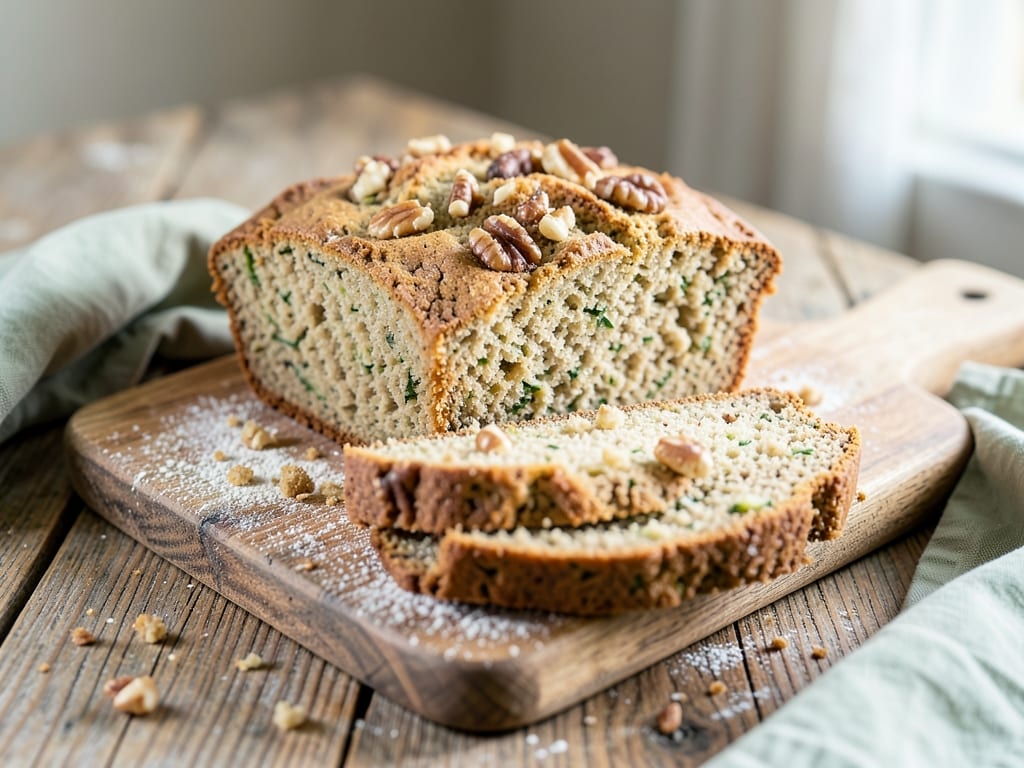
A tender, slightly tangy quick bread made with sourdough discard and creamy cottage cheese. The cottage cheese creates a moist crumb while the sourdough adds complex flavor without requiring long fermentation. Perfect for breakfast, snacks, or alongside soup and salad.
- Prep
- 10 min
- Cook
- 50 min
- Wait
- 15 min
- Total
- 1 hr 15 min
- Makes
- 1 loaf (10–12 slices)
Steps
Before you start
- Preheat oven to 375°F (190°C) and position a rack in the middle
- Grease a 9×5-inch (23×13 cm) loaf pan generously with butter or oil
- Bring sourdough discard and cottage cheese to room temperature (15 minutes at the counter)
- Have all ingredients measured and ready
Mix wet ingredients
- In a large mixing bowl, whisk together the sourdough discard, cottage cheese, eggs, melted butter, and sugar until smooth and well combined.
- The mixture should be thick and slightly chunky from the cottage cheese.
- This takes about 1 minute of whisking.
+ Show details− Hide details
Ready when: mixture is smooth and well combined
Tip: Use room-temperature ingredients so the wet mixture combines evenly without lumps
Combine dry ingredients
- In a medium bowl, whisk together the flour, baking powder, baking soda, and salt.
- Whisk thoroughly to distribute the leavening agents evenly, about 30 seconds.
- This prevents dense patches or uneven rise.
+ Show details− Hide details
Ready when: no streaks of baking powder or soda visible
Tip: Whisk the dry ingredients thoroughly to ensure even rise and texture throughout the loaf
Fold wet and dry together
- Add the dry mixture to the wet ingredients in the large bowl.
- Using a rubber spatula, fold gently until just combined—the batter should be thick and slightly lumpy.
- Stop folding once no streaks of flour remain.
- Overmixing will toughen the crumb.
+ Show details− Hide details
Ready when: no streaks of flour visible, batter is thick and lumpy
Tip: Fold gently and stop as soon as flour is incorporated—overworking gluten will create a dense, tough crumb
Fill and smooth loaf pan
- Scrape the batter into the prepared 9×5-inch loaf pan, using the spatula to smooth the top into an even layer.
- The batter should fill the pan about three-quarters full.
- If it's higher, the top may dome and crack excessively; if lower, the loaf will be short.
+ Show details− Hide details
Ready when: batter is level and fills pan three-quarters full
Tip: Fill the pan to the right level so the bread rises evenly and bakes through without doming too much
Bake the loafOven 375°F / 190°C
- Place the loaf pan in the preheated 375°F (190°C) oven.
- Bake for 48–52 minutes, until a toothpick inserted into the center comes out clean or with just a few moist crumbs.
- The top should be deep golden brown.
- If the top is browning too quickly after 35 minutes, loosely tent it with aluminum foil to prevent burning while the inside finishes baking.
+ Show details− Hide details
Ready when: toothpick inserted in center comes out clean or with just a few moist crumbs, top is deep golden brown
Tip: Tent with foil if the top browns too quickly to prevent a burnt exterior and underbaked interior
Cool in pan
- Remove the loaf pan from the oven and set it on a wire rack or countertop.
- Let the bread cool in the pan for 10 minutes.
- This allows the structure to firm up enough to remove without falling apart.
+ Show details− Hide details
Ready when: bread has pulled slightly from the sides of the pan and is cool enough to touch
Tip: Do not skip this resting period or the bread may crumble when you remove it from the pan
Turn out and cool completely
- Run a knife around the inside edges of the pan and turn the loaf out onto a wire rack (or the countertop if you don't have a rack).
- Place it top-side up and let it cool completely to room temperature, about 5 more minutes.
- Do not slice until fully cooled, as warm bread will be gummy.
+ Show details− Hide details
Ready when: loaf is completely cool to the touch and feels dry on the surface
Tip: A cool loaf will slice neatly without crumbling or tearing
Good to know
Tips
- Room-temperature ingredients blend more smoothly and create a more uniform crumb. Set the sourdough discard and cottage cheese out for 15 minutes before starting.
- The sourdough discard adds tang without requiring a long fermentation time—this is a quick bread, not a yeasted loaf. Unfed discard (straight from the jar after a feeding or discard) works best.
- Cottage cheese chunks in the finished bread are normal and desirable—they create moist pockets. If you prefer a smoother texture, blend the cottage cheese briefly before adding it to the batter.
- The loaf will keep well and actually tastes slightly better the next day as flavors meld and the crumb sets.
Make ahead
Bake the loaf up to 1 day ahead. Store it at room temperature in an airtight container or wrapped tightly in plastic wrap, and slice as needed. The bread keeps best for 1–2 days and can be gently reheated in a low oven (300°F / 150°C for 10–15 minutes) if it dries out slightly.
Storage & reheating
Room temperature: up to 2 days, wrapped tightly in plastic wrap or in an airtight container. Refrigerator: up to 5 days in an airtight container (the crumb will firm and toast well). Freezer: up to 3 months, wrapped tightly in plastic wrap and then foil; thaw at room temperature for 2–3 hours, or slice while frozen and toast directly. Reheat: Wrap gently in foil and warm in a 300°F (150°C) oven for 10–15 minutes.
Substitutions
- cottage cheese (full-fat or 2%) → Greek yogurt or sour cream (1 cup / 240 ml). Greek yogurt will make the crumb slightly denser and tannier; sour cream will add richness and lift. Both work well and keep the loaf moist.
- all-purpose flour → whole wheat flour for up to half the all-purpose flour (e.g., 0.875 cups all-purpose + 0.875 cups whole wheat). Whole wheat will make the loaf denser, nuttier, and require you to increase the baking soda slightly (add an extra 1/4 teaspoon) for better rise.
- granulated sugar → honey or maple syrup (1.5 tablespoons / 22 ml). These sweeteners will add moisture and subtle flavor. Use liquid sweeteners only; they won't crystallize like granulated sugar.
- unsalted butter, melted → neutral oil such as vegetable, canola, or light olive oil (3 tablespoons / 45 ml). Oil makes a slightly more tender crumb. The flavor will be more neutral without the butter's richness.
More quick breads
See all →

Find more like this
- Meal
- Breakfast
- Main ingredient
- Eggs
- Diet
- VegetarianHalal
- Method
- Oven