Sourdough Holiday Eggnog Custard Discard Bread
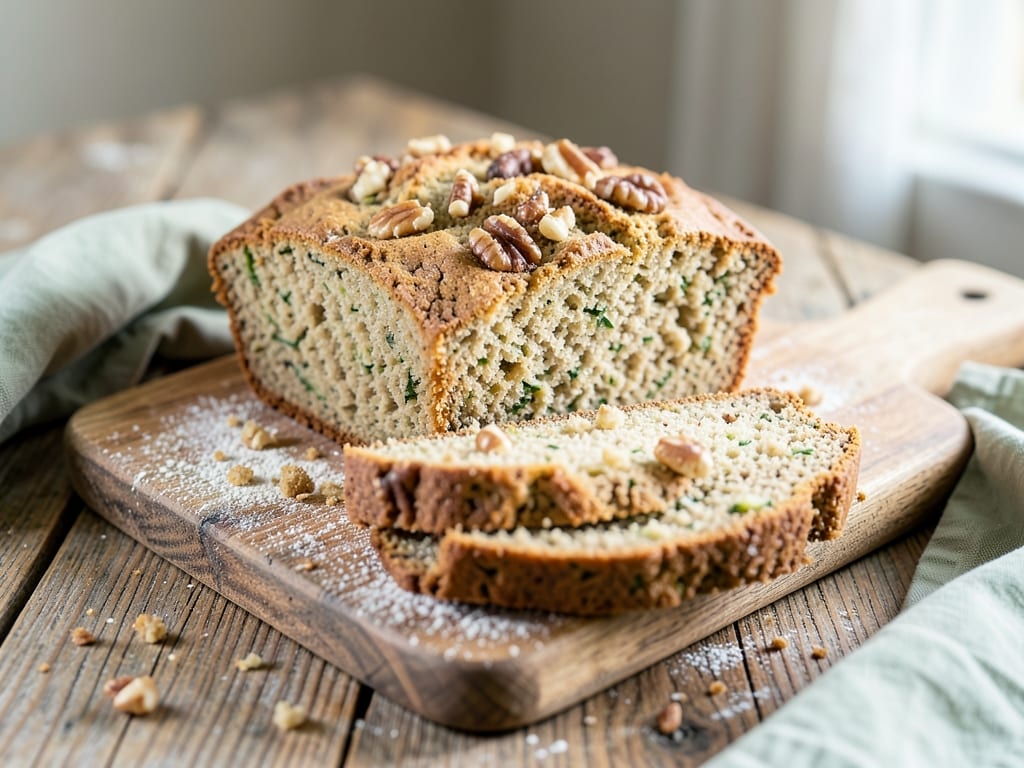
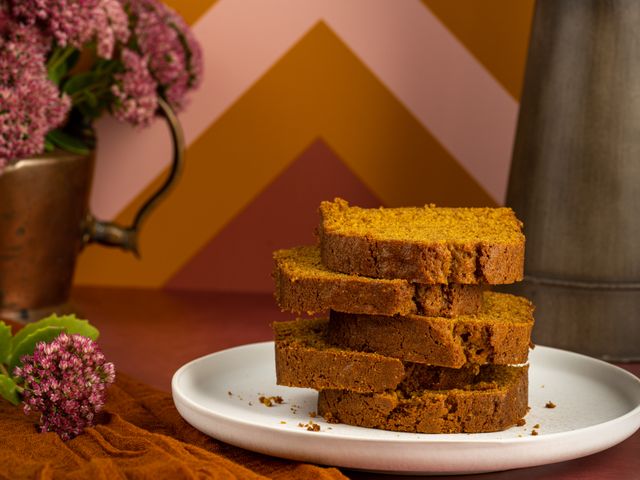
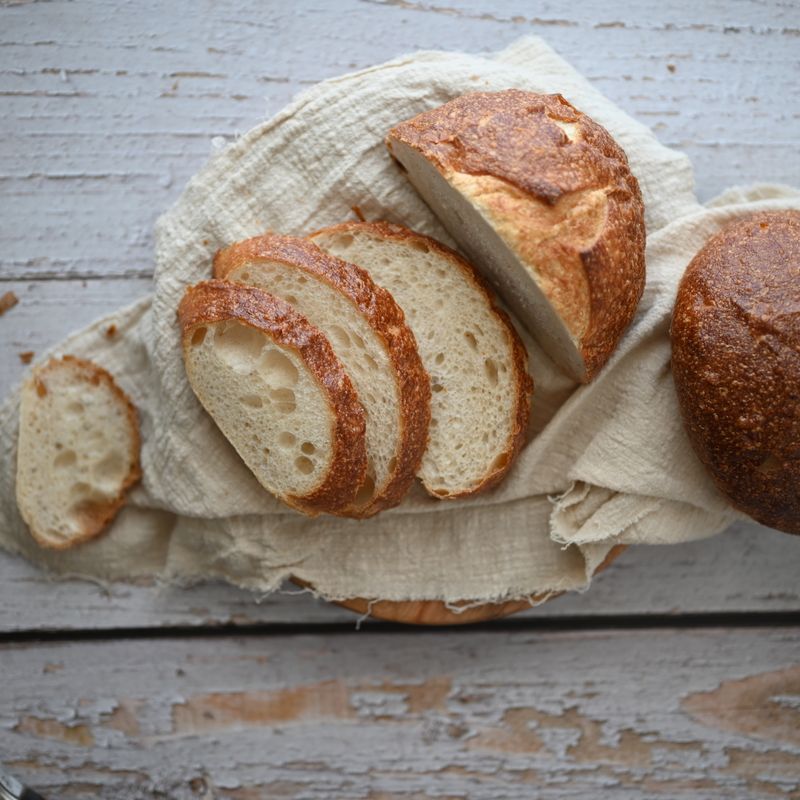
A rich, spiced loaf bread that transforms sourdough starter discard into a festive holiday treat. Eggnog and warm spices—nutmeg, cinnamon, and allspice—create a tender, custard-like crumb that's perfect alongside coffee or served warm with butter. The optional eggnog glaze adds extra indulgence. This bread is a wonderful way to use your sourdough discard, making the most of every bit of starter.
- Prep
- 15 min
- Cook
- 1 hr
- Wait
- 25 min
- Total
- 1 hr 40 min
- Makes
- 1 loaf (10–12 slices)
Steps
Before you start
- Activate your sourdough starter: feed it and let it bubble for 4–8 hours until bubbly and active with risen dough. You want it at peak or just past peak.
- Preheat your oven to 350°F (175°C) at least 15 minutes before you start mixing.
- Use room-temperature eggs and eggnog if possible; they blend more smoothly and create a better emulsion with the sourdough discard.
- Read through the method once before you begin so you're familiar with the timing and steps.
Preheat oven and prepare panOven 350°F / 175°C
- Position a rack in the center of the oven and preheat to 350°F (175°C).
- Generously butter a 9×5-inch (23×13 cm) loaf pan, then line the bottom with a strip of parchment paper.
- The butter helps the parchment stick, and the parchment ensures easy removal and prevents sticking.
- Make sure to butter the corners well.
+ Show details− Hide details
Tip: Having the oven fully preheated prevents the bottom from burning and ensures even baking
Combine sourdough discard with eggnog and eggs
- In a large mixing bowl, whisk together the sourdough discard, eggnog, eggs, melted butter, and vanilla extract.
- Whisk vigorously for 1–2 minutes until the mixture is smooth and homogeneous.
- The sourdough discard will break down and incorporate smoothly; the mixture should be pourable, thick, and uniform in color.
+ Show details− Hide details
Ready when: Mixture is smooth with no streaks or lumps of discard visible
Tip: If your sourdough discard is very thick or stringy, whisk longer to break it down fully
Combine dry ingredients
- In a separate medium bowl, whisk together the all-purpose flour, brown sugar, baking powder, salt, freshly grated nutmeg, cinnamon, and allspice.
- Whisk for about 30 seconds to distribute the spices and leavening evenly throughout the flour.
- The mixture should be fragrant and uniformly speckled with brown spices.
+ Show details− Hide details
Ready when: Spices and sugar are evenly distributed throughout the flour
Tip: Freshly grated nutmeg is worth the extra effort here; pre-ground nutmeg loses potency and will give a muted holiday flavor
Fold ingredients until just combined
- Add the dry mixture to the wet ingredients in the large bowl.
- Using a spatula or wooden spoon, fold gently, rotating the bowl as you go, until just combined.
- Stop folding as soon as you see no white streaks of flour.
- The batter should be thick and lumpy; you'll see small pockets of unmixed flour, which is fine.
- Do not stir or whisk vigorously, as overmixing will toughen the crumb.
+ Show details− Hide details
Ready when: No white flour streaks remain; some small lumps are visible
Tip: Overmixing develops gluten and will result in a dense, tough loaf instead of a tender, cakelike crumb. Stop folding as soon as the flour disappears.
Pour into prepared loaf pan
- Pour the batter into the prepared loaf pan, using a spatula to help scrape it all out.
- Distribute it evenly.
- Use the spatula to gently smooth the surface, but don't press down or compact the batter.
- The batter should fill the pan about 2/3 of the way, leaving room for a small rise and spread as it bakes.
+ Show details− Hide details
Ready when: Batter is level and fills the pan about 2/3 full
Bake in the ovenOven 350°F / 175°C
- Bake at 350°F (175°C) for 55–65 minutes.
- The loaf is done when a cake tester or wooden toothpick inserted into the center comes out clean or with just a few moist crumbs clinging to it.
- The top should be deep golden brown, and when you gently press the top, it should spring back slightly.
- If the top is browning too quickly (check around 40 minutes), tent it loosely with foil to prevent over-browning while the interior finishes baking.
+ Show details− Hide details
Ready when: Toothpick inserted into center comes out clean; top is deep golden brown; sides spring back when lightly pressed
Tip: If the top is browning too quickly, tent with foil for the last 10–15 minutes. If the loaf seems dry when you test it but the top isn't golden, the oven may be too hot; check your oven temperature with a separate thermometer.
Cool loaf in pan
- Remove the loaf from the oven and let it cool in the pan for 15 minutes at room temperature.
- The bread will set slightly and become easier to remove.
- Run a thin knife around all four sides of the pan to loosen the loaf.
- Invert it onto a wire cooling rack and gently peel off the parchment paper.
- The loaf can be sliced warm (though it will be slightly tender and may crumble) or cooled completely for neater slices.
- If serving warm, let it cool for at least 5 minutes before slicing to avoid burns.
+ Show details− Hide details
Ready when: Loaf is firm enough to turn out without crumbling; parchment peels away easily
Tip: If the loaf sticks, let it cool an additional 5 minutes and try again; rushing can cause it to crumble or split
Make eggnog glaze (optional)
- If desired, make a simple glaze: in a small bowl, whisk together 1 cup powdered sugar and 3–4 tablespoons additional eggnog until smooth and pourable.
- Add eggnog one tablespoon at a time to reach your desired consistency.
- Once the loaf has cooled completely to room temperature, drizzle the glaze in a thin stream over the top of the loaf, letting it drip down the sides slightly.
- Immediately sprinkle a pinch of freshly grated nutmeg over the wet glaze for garnish.
- Let the glaze set for 10 minutes at room temperature before slicing.
+ Show details− Hide details
Ready when: Glaze is smooth and pourable; drapes over the loaf and sets to a light coating
Tip: Apply glaze only to a fully cooled loaf; a warm or hot loaf will soak up the glaze quickly, and it may disappear entirely. The glaze should sit on the surface.
Good to know
Tips
- Freshly grated nutmeg is essential for this recipe. Pre-ground nutmeg loses volatile oils quickly and will give a muted, dusty flavor. A whole nutmeg, microplane, and 30 seconds of grating will transform this bread's flavor. Nutmeg from a small tin that's been open for more than a year should be replaced.
- Don't overmix the batter. Once the flour is incorporated with no visible white streaks, stop folding. Overmixing develops gluten, which creates a tough, dense crumb instead of the tender, custard-like interior you want.
- This bread benefits enormously from sitting overnight. The flavors deepen, the crumb becomes more tender, and it becomes easier to slice neatly. Bake it a day or two ahead of serving and wrap it tightly.
- Make sure your sourdough starter is active and bubbly when you use the discard. Discard from a lethargic starter will add little fermentation flavor. If your starter is thick and past-peak, you can thin the discard with a tablespoon of water before adding it to the batter.
Make ahead
Yes. This loaf actually improves after a day as the flavors meld and the crumb becomes even more tender. Bake it a day or two before serving. Store wrapped at room temperature or refrigerated.
Storage & reheating
Room temperature (wrapped tightly in plastic wrap or foil): 3 days. Refrigerator (wrapped in plastic wrap or in an airtight container): 7 days. Freezer (wrapped in plastic wrap, then foil, in a freezer bag): 3 months. To reheat: Wrap in foil and warm at 300°F (150°C) for 10 minutes, or slice and serve at room temperature. Freezer-to-room-temperature thawing takes about 4 hours.
Substitutions
- sourdough starter discard, active and bubbly → Plain Greek yogurt or sour cream (1:1 ratio, 1 cup). The bread will be less tangy and won't have the sourdough flavor, but will be similarly tender. If using sour cream, you may need a tiny pinch more baking powder (add 1/4 teaspoon) to account for the extra acidity.
- whole milk eggnog → Heavy cream mixed with 1 teaspoon vanilla extract and 1/4 teaspoon freshly grated nutmeg per 3/4 cup (180 ml). This approximates eggnog in flavor and richness, though it won't have the dairy tang. Mix the heavy cream, vanilla, and nutmeg together and use as directed.
- brown sugar → Granulated white sugar (use same weight, 150 g). The bread will be slightly less moist and the darker color will be less pronounced, but will still taste good. Or mix white sugar with 1 tablespoon molasses to approximate brown sugar.
- nutmeg → Ground ginger (3/4 teaspoon, 1.5 g) or pumpkin pie spice (1 1/2 teaspoons, 4 g). Both give a warm, spiced holiday flavor, though different from the original. Pumpkin pie spice adds clove and allspice, so you might reduce the allspice called for in the recipe.